
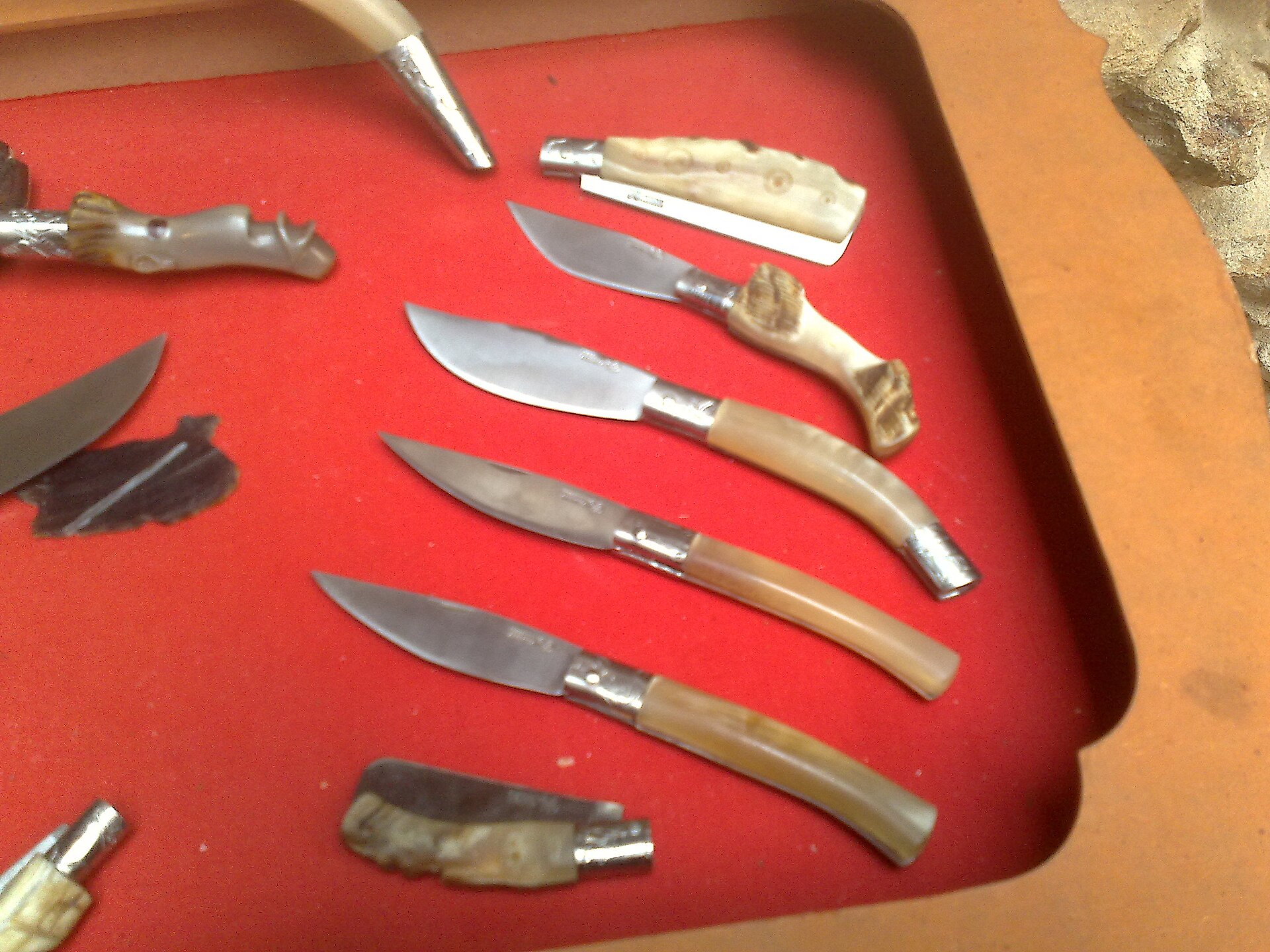
The Sardinian Knife Museum in Arbus, in the Medio Campidano area of south-western Sardinia, is dedicated to the island’s centuries-old tradition of hand-forged knives. The museum preserves and presents the “Arburesa” — a distinctive folding knife produced in Arbus — alongside a broader panorama of Sardinian blade-making, one of the most characterful craft traditions of the Mediterranean island.
At a glance
- Type
- Craft heritage and ethnographic museum
- Period
- Documents a knife-making tradition spanning several centuries
- Style
- Local museum in historic town centre
- Location
- Arbus, Medio Campidano, Sardinia, Italy
- Coordinates
- 39.5266° N, 8.5959° E
Overview
Arbus has long been recognised as one of Sardinia’s principal centres of knife-making, with artisans producing blades prized across the island for their balance, finish, and distinctive ram’s-horn or myrtle-wood handles. The museum brings together historic and contemporary examples of the Arburesa knife alongside the tools, bellows, and forging equipment of traditional smiths. It is one of several specialist craft museums on the island that document Sardinia’s exceptionally rich material culture.
History
The art of knife-making in Sardinia developed over centuries as both a practical craft — shepherds and farmers relied on quality blades for daily work — and a symbolic one, as knives were traditionally exchanged as gifts at weddings and rites of passage. Arbus became particularly associated with the folding knife, whose compact design suited pastoral life in the Campidanese interior. The museum was established to safeguard knowledge that was at risk of disappearing as industrial production replaced traditional forge work, and to draw heritage tourism to the Medio Campidano territory.
What you see
The collection displays blades ranging from everyday working knives to ceremonial pieces with elaborately carved handles of deer antler, olive wood, and ram’s horn. Visitors can examine the forging and tempering process through original tools and photographic documentation of local masters at work. The museum also contextualises Sardinian knife culture within the island’s pastoral economy, showing how blade types varied by region and function — from the slender resolza of the Barbagia highlands to the broader forms of the south.
Cultural significance
Sardinian decorative knives are recognised by the Italian government as a product of traditional artisanship (artigianato tipico) and are one of the island’s most internationally recognised cultural exports. The museum plays a key role in transmitting the craft to new generations and in supporting local artisans who continue to produce knives for collectors and cultural events.
Practical information
Address: Arbus, Medio Campidano, Sardinia. Arbus is a small inland town; opening hours and admission are limited — check with the local tourist office (Pro Loco Arbus) or the Comune di Arbus before visiting. The surrounding Costa Verde coastline makes the area worth a wider day-trip itinerary.
Getting there
Arbus lies approximately 70 km north-west of Cagliari. There is no direct public transport link; a car or hired vehicle is the practical option. From Cagliari take the SS130 towards Iglesias, then follow signs north toward Arbus via Guspini. The nearest airports are Cagliari-Elmas (Cagliari) and, secondarily, Oristano-Fenosu.
Sources & resources
See the place
Find it on the map
See this place and what’s around it →📷 Become a Cultural Heritage Online photographer
Share your photos of places: they stay published under your name as the author. The more they're seen, the more you get noticed — and soon a contest will reward the most appreciated photos.
Log in or sign up free to add a photo