
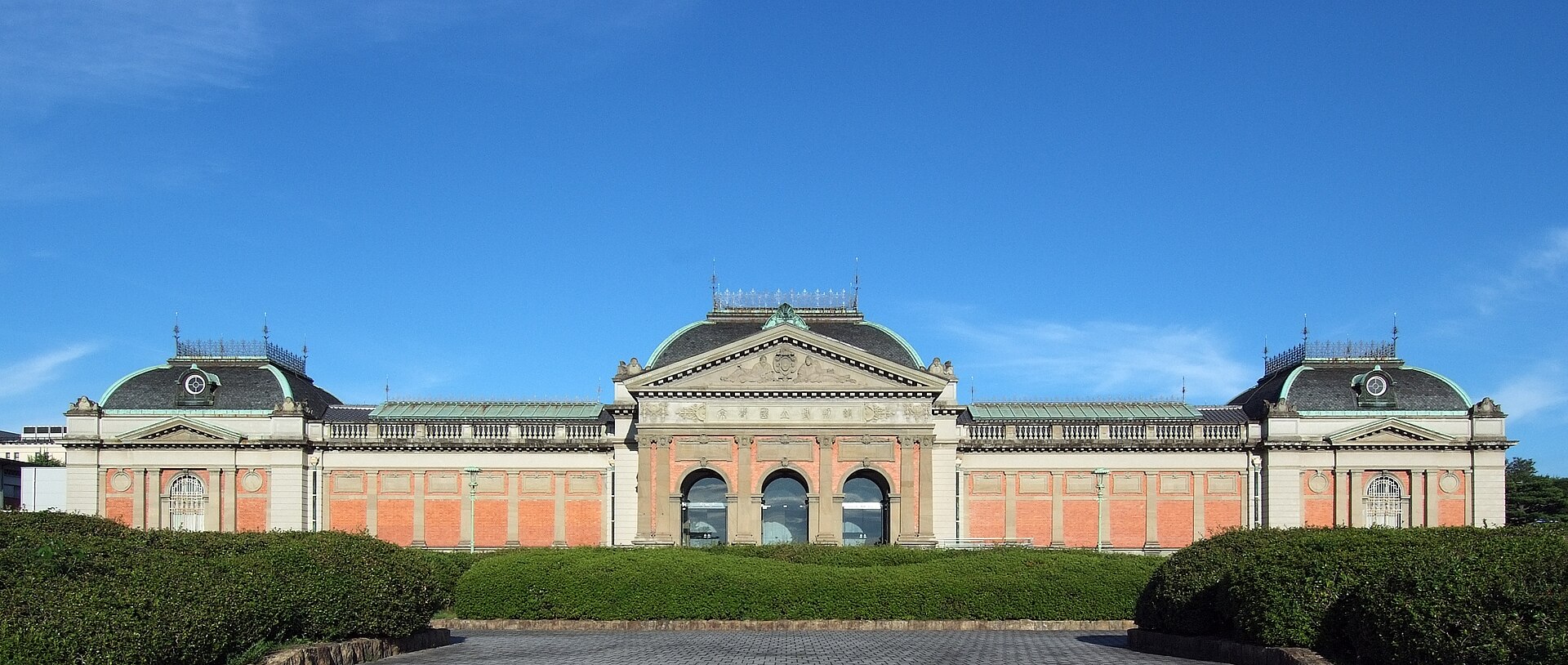
The Kyoto National Museum is one of Japan’s principal art museums, situated in the Higashiyama ward of Kyoto adjacent to Sanjusangendo temple. Founded in 1897, it specialises in pre-modern Japanese and Asian art, and its permanent collection of over 13,000 objects includes national treasures and important cultural properties spanning painting, sculpture, calligraphy, ceramics, and lacquerwork.
At a glance
- Type
- National museum of pre-modern Japanese and Asian art
- Period
- Founded 1897; Meiji-era main building (1895); Heisei Chishinkan wing opened 2014
- Style
- Meiji-era French Renaissance (original building); contemporary glass and steel (Heisei wing, architect Yoshio Taniguchi)
- Location
- Higashiyama ward, Kyoto, Japan
- Coordinates
- 34.9899° N, 135.7729° E
Overview
The Kyoto National Museum is one of the major art museums in Japan, with a focus on pre-modern Japanese and Asian art. Located in Kyoto’s Higashiyama ward, it sits beside the historic Sanjusangendo hall and within easy reach of Fushimi Inari and Tofukuji. The museum administers a collection of over 13,000 registered works, supplemented by the care and study of objects on long-term deposit from Kyoto’s many temples and shrines.
History
The museum was established in 1897 as the Kyoto Imperial Household Museum, one of the first three national museums created during Japan’s Meiji-era modernisation. Its original red-brick building, completed in 1895 and designed in French Renaissance style by architect Katayama Tōkuma, remains standing today and is itself a nationally designated Important Cultural Property. A new permanent gallery wing, the Heisei Chishinkan, was designed by Yoshio Taniguchi (architect of the MoMA expansion in New York) and opened in 2014, substantially expanding the museum’s capacity.
What you see
The permanent collection is organised into galleries covering Buddhist sculpture, ceramics, lacquerwork, textiles, calligraphy, paintings, and metalwork. Highlights include National Treasure-designated Buddhist bronzes, Heian-period paintings, and Nishijin woven textiles. The Heisei Chishinkan wing features the primary permanent displays, while the Meiji building hosts special exhibitions. The museum’s gardens display outdoor sculpture and offer views of the surrounding Higashiyama hills.
Cultural significance
As a custodian of objects entrusted by Kyoto’s ancient temples and shrines, the museum plays a critical role in preserving and presenting Japan’s pre-modern spiritual and artistic heritage. Its location in Higashiyama places it at the heart of Kyoto’s historic cultural corridor, reinforcing the city’s status as the country’s pre-eminent centre of traditional arts.
Practical information
- Address
- 527 Chayacho, Higashiyama Ward, Kyoto 605-0931, Japan
- Opening hours
- Tuesday–Sunday, 9:30–17:00 (entry until 16:30); closed Mondays and during exhibition changeovers — check official website for current schedule
- Admission
- Paid entry; fees vary by exhibition; free for under-18s — check official website for current prices
Getting there
From Kyoto Station take City Bus 206 or 208 to Sanjusangendo-mae stop (about 15 minutes). The museum is also reachable on foot from Keihan Shichijo Station (7 minutes). Taxis from Kyoto Station take approximately 10 minutes. There is no on-site car parking for general visitors; use public transport or nearby pay car parks.
Sources & resources
See the place
Find it on the map
See this place and what’s around it →📷 Become a Cultural Heritage Online photographer
Share your photos of places: they stay published under your name as the author. The more they're seen, the more you get noticed — and soon a contest will reward the most appreciated photos.
Log in or sign up free to add a photoIs this page about you?
This page is read by travellers and heritage enthusiasts who find it on Google. Tell us how you are connected to this place and we will take it from there.