

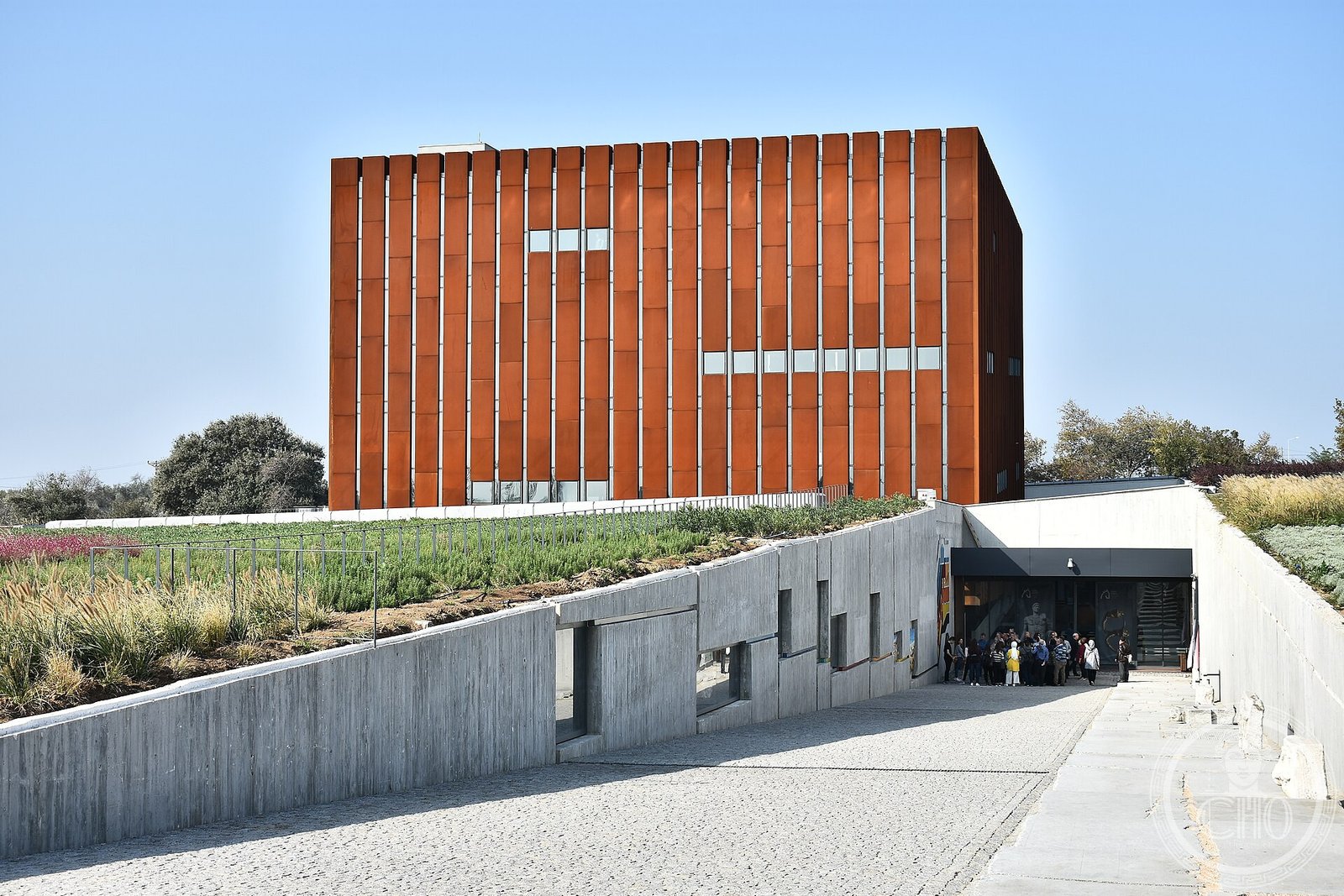
The Museum of Troy (Troya Müzesi) is a purpose-built archaeological museum located 800 metres east of the Troy archaeological site near Tevfikiye village in Çanakkale Province, northwestern Turkey. Opened on 10 October 2018 — the year the Turkish government declared “Year of Troy” — the museum houses more than 40,000 artefacts spanning 5,000 years of regional history, with approximately 2,000 pieces on display. In 2020 it received the European Museum of the Year Special Appreciation Award.
At a glance
- Type
- State archaeological museum
- Period
- Opened 2018; artefacts spanning c. 3000 BCE to Byzantine era
- Style
- Contemporary minimalist architecture (weathering steel cladding)
- Location
- Tevfikiye village, Çanakkale Province, northwestern Turkey
- Coordinates
- 39.9553° N, 26.2493° E
Overview
The Museum of Troy was conceived as the permanent showcase for the vast archaeological wealth recovered from the UNESCO World Heritage Site of Troy (Hisarlık) and its surrounding region. Its four-floor building, designed by the Turkish firm Yalın Mimarlık, is clad in rust-coloured weathering steel chosen to evoke the colour and texture of freshly excavated earth. The structure’s height deliberately echoes the depth of the excavation layers at Troy, making the architecture itself a statement about the passage of time and the act of uncovering the past.
History
Archaeological excavation at Troy began in the 1870s under Heinrich Schliemann and continued through the 20th century under teams from the University of Cincinnati and the University of Tübingen. For decades, artefacts from the site were distributed among institutions in Istanbul, Çanakkale, and abroad. The new museum, completed at a cost of approximately ₺45 million (around $8 million), was designed to consolidate these collections and provide a world-class interpretive framework for one of antiquity’s most mythologised sites. It opened in October 2018 as the centrepiece of Turkey’s year-long Troy commemorations.
What you see
The approximately 2,000 objects on display range from Early Bronze Age ceramics and gold jewellery to Hellenistic and Roman-era glass, terracotta figurines, coins, and architectural fragments. The Polyxena sarcophagus — a remarkable 6th-century BCE carved marble coffin excavated nearby in 1994 — is one of the museum’s centrepieces. A colossal statue of the sea-god Triton, discovered in 2012, anchors another gallery. Multimedia installations and bilingual (Turkish and English) interpretation help visitors navigate 5,000 years of stratified history.
Cultural significance
Troy occupies a singular place in world literature and historical imagination as the setting of Homer’s Iliad. The Museum of Troy — awarded the European Museum of the Year Special Appreciation Award in 2020 and the European Museum Academy Special Award — has been recognised internationally for making this mythic and archaeological heritage accessible in a rigorous yet engaging way. It anchors a cultural tourism circuit that includes the Troy archaeological site, the replica Wooden Horse, and the Çanakkale region’s First World War memorials.
Practical information
The museum is open to visitors year-round. Check the official Turkish Ministry of Culture and Tourism website for current opening hours, admission fees, and any temporary exhibition schedules. The adjacent Troy archaeological site (Hisarlık) can be visited on the same ticket.
Getting there
The museum is located near Tevfikiye village, approximately 30 km south of Çanakkale city centre. From Çanakkale, dolmuş (shared minibus) services run to Troy throughout the day during tourist season. Visitors arriving by ferry cross the Dardanelles from Eceabat (European side) to Çanakkale, then continue by road. The site is also reachable by private car via the D550 highway.
Sources & resources
Find it on the map
See this place and what’s around it →📷 Become a Cultural Heritage Online photographer
Share your photos of places: they stay published under your name as the author. The more they're seen, the more you get noticed — and soon a contest will reward the most appreciated photos.
Log in or sign up free to add a photoIs this page about you?
This page is read by travellers and heritage enthusiasts who find it on Google. Tell us how you are connected to this place and we will take it from there.