
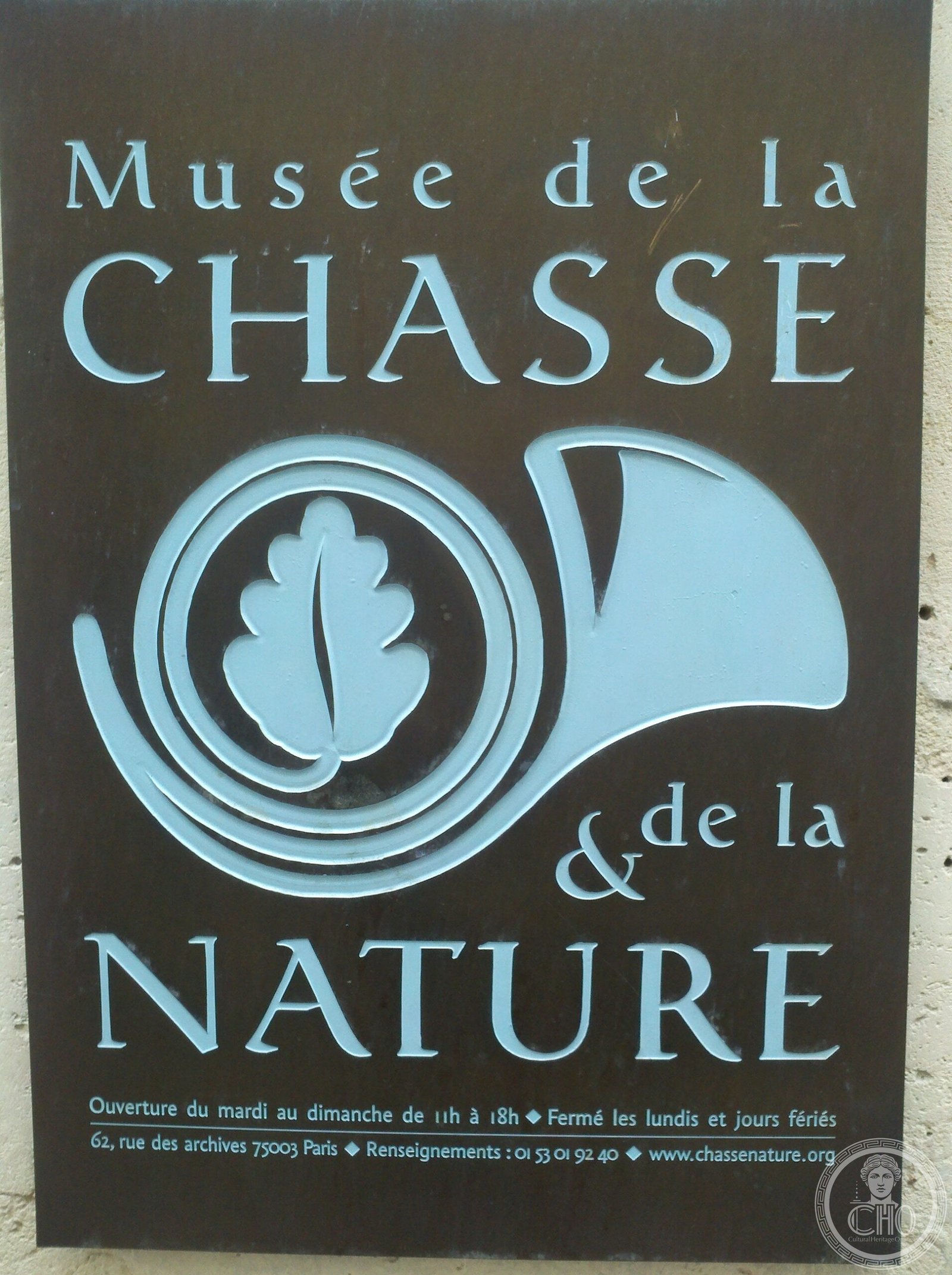
The Musée de la Chasse et de la Nature is a private museum in the Marais district of Paris, occupying two interconnected 17th-century hôtels particuliers — the Hôtel Guénégaud and the Hôtel de Mongelas — dedicated to the relationship between humanity and the natural world through the theme of hunting. Far from a conventional trophy room, the museum blends Old Master paintings, tapestries, antique firearms, and contemporary art installations in a deliberately ambiguous dialogue between culture and nature, offering one of the most unexpected and atmospherically rich museum experiences in Paris.
At a glance
- Type
- Private museum (hunting, nature, art)
- Period
- Buildings 17th century; museum founded 1964
- Style
- Classical French Baroque hôtel particulier
- Location
- 3rd arrondissement, Paris, France · 48.8614° N, 2.3566° E
Overview
The Musée de la Chasse et de la Nature occupies two adjoining aristocratic townhouses in the historic Marais neighbourhood and is served by the Rambuteau Métro station. Founded in 1964 by François Sommer, a noted philanthropist and hunting enthusiast, and classified as a museum of France, the institution has evolved over the decades into a space that interrogates rather than simply celebrates hunting culture. Its collections range from Flemish and French hunting paintings by Rubens, Desportes and Oudry to contemporary works by artists including Jan Fabre, and the rooms themselves are curated as immersive theatrical environments rather than neutral white-wall galleries.
History
The Hôtel Guénégaud was built in the 1650s to designs attributed to François Mansart and is one of the best-preserved 17th-century hôtels particuliers in Paris. The Sommer Foundation acquired the building in the 1960s and opened the museum in 1964 to house the hunting art and artefact collections assembled by François Sommer and his wife Jacqueline. An adjacent building, the Hôtel de Mongelas, was incorporated later to provide additional gallery space. A major renovation completed in 2007 transformed the presentation of the collections, introducing contemporary installations alongside the historic objects and earning the museum international critical recognition for its unconventional curatorial approach.
What you see
Visitors move through a sequence of richly decorated rooms that place 17th- and 18th-century hunting paintings alongside mounted animals, antique weapons, stuffed trophies and contemporary art in deliberately unsettling juxtapositions. Highlights include a cabinet of curiosities, a room dedicated to owls that changes its character completely under ultraviolet light, and a monumental stag’s head whose antlers frame a flat-screen video. The grand staircase and period woodwork of the Hôtel Guénégaud are themselves significant architectural features. Temporary exhibitions regularly complement the permanent collections, frequently with strong contemporary art commissions.
Cultural significance
The museum is widely regarded as one of the most intellectually stimulating small museums in Paris, praised for its willingness to hold hunting culture and ecological anxiety in creative tension rather than resolving them into a simple message. Its location in a listed 17th-century building, itself a monument to Baroque domestic architecture, adds a further layer to the experience of collections that span four centuries of European culture.
Practical information
- Address
- 62 rue des Archives, 75003 Paris, France
- Admission
- Paid entry; free for under-26s (EU residents)
Getting there
The museum is served directly by Rambuteau station on Metro Line 11. Hôtel de Ville station on Lines 1 and 11 is also within easy walking distance. The area is well served by Vélib’ bicycle hire stations. The museum is located in the heart of the Marais, making it easy to combine with visits to the Centre Pompidou, the Musée Picasso and other nearby cultural sites.
Sources & resources
See the place
Find it on the map
See this place and what’s around it →📷 Become a Cultural Heritage Online photographer
Share your photos of places: they stay published under your name as the author. The more they're seen, the more you get noticed — and soon a contest will reward the most appreciated photos.
Log in or sign up free to add a photo