
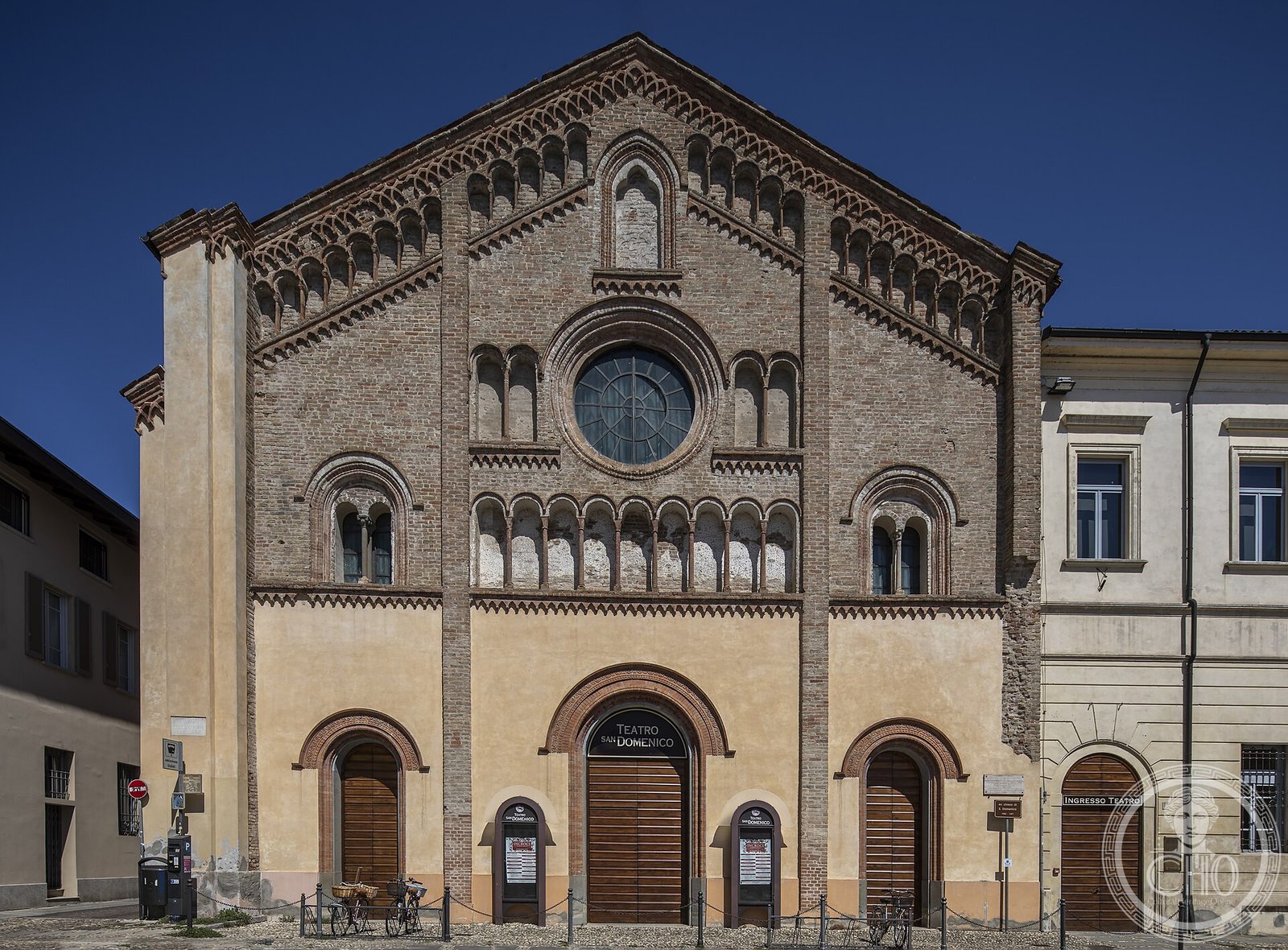
Teatro San Domenico is the historic civic theatre of Crema, a small but culturally rich city in the Province of Cremona, Lombardy. Founded in the 18th century on the site of a former Dominican convent from which it takes its name, the theatre has served as the centre of Crema’s theatrical and musical life for over two centuries. Its intimate horseshoe-plan auditorium, characteristic of the Italian provincial opera house tradition, makes the San Domenico one of the best-preserved and most evocative smaller theatres in northern Italy.
At a glance
- Type
- Historic civic theatre
- Period
- 18th century; on the site of a former Dominican convent
- Style
- Neoclassical interior; Italian horseshoe-plan auditorium
- Named after
- The former Convento di San Domenico on the same site
- Location
- Crema, Province of Cremona, Lombardy, Italy
- Coordinates
- 45.3621° N, 9.6876° E
Overview
Crema is a compact walled city that retains an unusually intact historic centre — its Duomo, Palazzo Comunale and Teatro San Domenico together constitute a coherent urban ensemble of considerable distinction. The theatre was and remains the focus of the city’s civic cultural calendar, hosting opera productions, drama, concerts and community events. Despite Crema’s modest size, the San Domenico has attracted significant artistic programming over its history, reflecting the ambition of its citizens and the broader Lombard tradition of theatrical culture.
History
The theatre occupies the site — and in part the fabric — of the Convento di San Domenico, a Dominican religious house suppressed during the Napoleonic reorganisation of northern Italy in the late 18th century. As was common throughout the Po Valley, the buildings of suppressed convents were repurposed for civic functions; in Crema’s case, the former religious complex provided the foundations for the new theatre, which was built and inaugurated in the early 19th century. The name San Domenico was retained from the original convent, preserving the memory of the site’s earlier history. The theatre was subsequently maintained and periodically restored by the municipal authorities, serving continuously as Crema’s principal venue for the performing arts.
What you see
The Teatro San Domenico presents a restrained classical facade appropriate to a provincial civic building of the early 19th century. The interior auditorium follows the standard Italian formula — a horseshoe plan with two or three tiers of private boxes rising above an orchestra stalls level — giving the space an intimate and acoustically warm character ideal for opera and chamber music. The decoration, though more modest than a metropolitan opera house, includes carved wooden box fronts, painted ceiling elements and period lighting fixtures. The stage, though small, has been maintained to support contemporary theatrical and operatic productions.
Cultural significance
The San Domenico belongs to the rich network of provincial Italian theatres — often called “teatri storici” — that represent one of the most distinctive achievements of Italian civic culture. Spread across every city and town of any size, these intimate opera houses enabled the opera and theatrical traditions of the great metropolitan centres to permeate Italian provincial life. Crema’s theatre is a well-preserved and functioning example of this tradition, protected as a heritage building by Italian cultural patrimony law.
Practical information
- Address
- Piazza Winifred Davies, 1, 26013 Crema CR, Italy
- Website
- comune.crema.cr.it
Getting there
Crema has a railway station on the Milan–Treviglio–Crema line, with regular services to Milan Porta Garibaldi (approximately 1 hour). The theatre is in the historic centre, a 15-minute walk from the station or reachable by local bus. By car, Crema is accessible via the A35 BreBeMi motorway (exit Caravaggio) or via SS11/SP62 from Cremona (approximately 30 km). Parking is available on the periphery of the historic centre.
Sources & resources
Find it on the map
See this place and what’s around it →📷 Become a Cultural Heritage Online photographer
Share your photos of places: they stay published under your name as the author. The more they're seen, the more you get noticed — and soon a contest will reward the most appreciated photos.
Log in or sign up free to add a photoIs this page about you?
This page is read by travellers and heritage enthusiasts who find it on Google. Tell us how you are connected to this place and we will take it from there.