
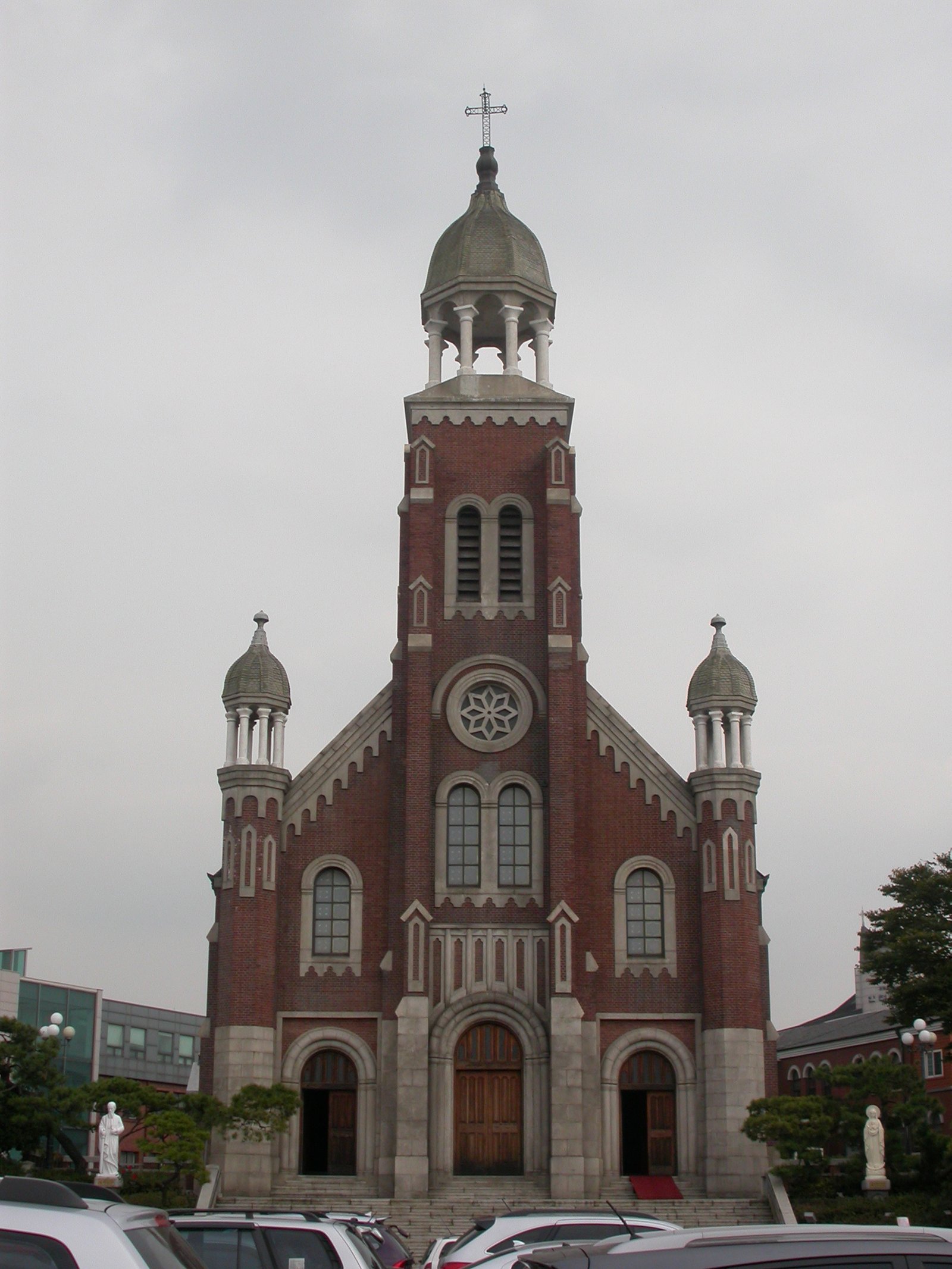
St. Paul’s Cathedral
A Neo-Gothic and Neo-Romanesque cathedral serving as the seat of the Diocese of Incheon, this Roman Catholic landmark reflects the architectural ambitions of Korea’s third largest city.
At a glance
St. Paul’s Cathedral, also known as Incheon Cathedral or Dapdong Cathedral, stands as a significant religious and architectural presence in Incheon. The cathedral serves the Latin rite Catholic community and functions as the ecclesiastical seat of the Diocese of Incheon.
History
The Diocese of Incheon was established in 1962 by Pope John XXIII, marking a formal expansion of the Catholic Church’s institutional presence in the region. The cathedral was designed by Fr. Eugene Cost, a member of the Paris Foreign Missions Society, who brought European architectural expertise to Korea.
What you see
Fr. Cost designed the structure in a mixture of styles, drawing principally from Neo-Gothic and Neo-Romanesque traditions. This eclecticism reflects the early 20th-century approach to Catholic cathedral design, which sought to balance European heritage with local context.
Cultural significance
The cathedral represents an important chapter in Korean Catholicism and stands as evidence of the Paris Foreign Missions Society’s historical role in East Asia. Its architectural style bridges European ecclesiastical traditions with the Korean urban landscape.
Key facts
- Country: South Korea
- City: Incheon
- Coordinates: 37.471°N, 126.6305°E
- Architect: Fr. Eugene Cost (Paris Foreign Missions Society)
- Architectural styles: Neo-Gothic, Neo-Romanesque
- Diocese established: 1962 (Pope John XXIII)
Practical information & getting there
St. Paul’s Cathedral is located in Incheon, accessible by public transport from Incheon International Airport and Seoul. The exact visiting hours and mass schedules should be confirmed with the Diocese of Incheon before your visit.
Sources & resources
Find it on the map
See this place and what’s around it →📷 Diventa un fotografo di Cultural Heritage Online
Condividi le tue foto dei luoghi: restano pubblicate con la tua firma come autore. Più vengono viste, più ti fai conoscere — e presto un concorso premierà le foto più apprezzate.
Accedi o registrati gratis per aggiungere una fotoDo you manage this place?
This page is read by travellers and heritage enthusiasts who find it on Google. Keep it accurate — and make it work for you. Free for non-profit heritage institutions.