
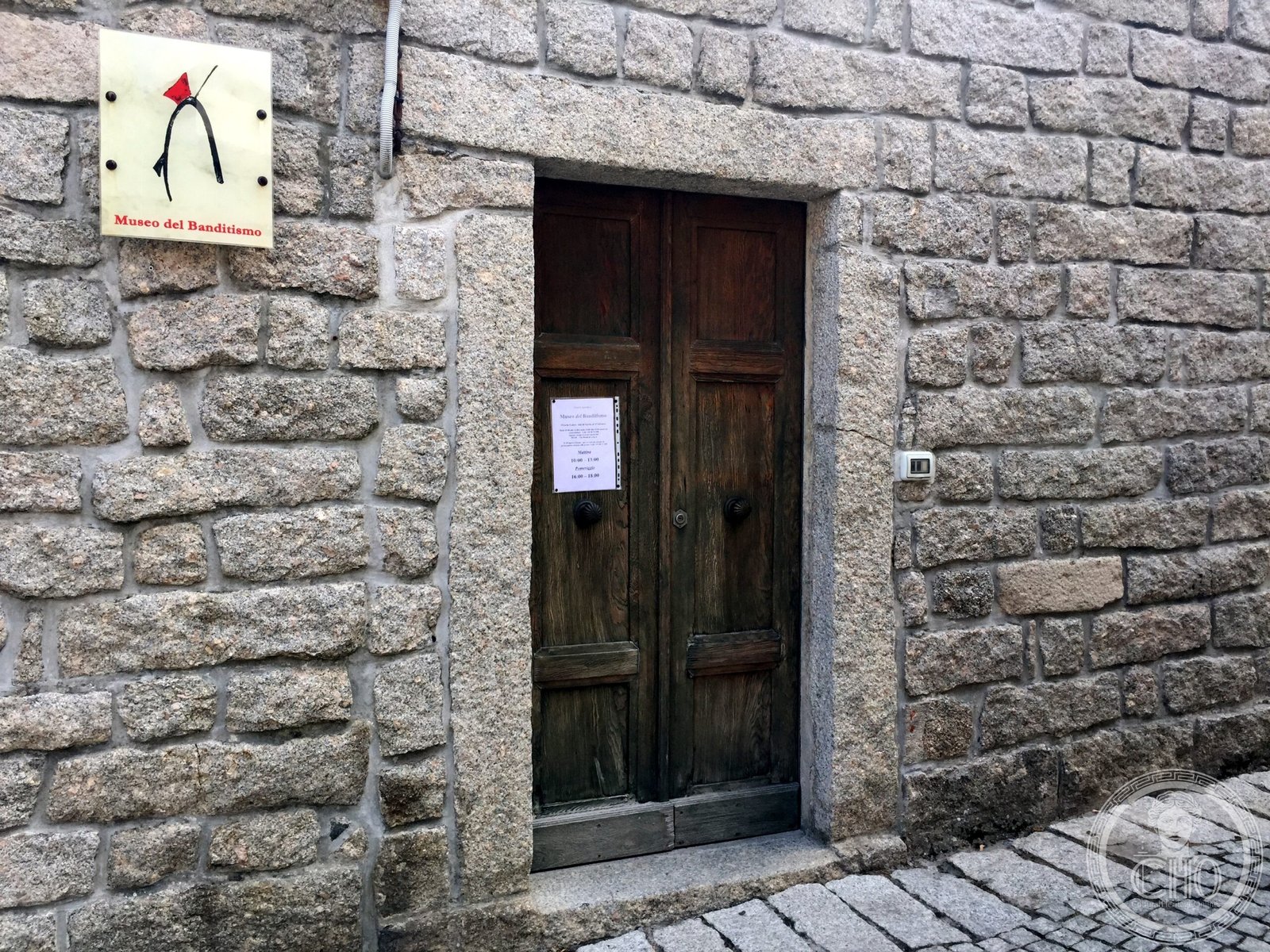
The Sardinian Banditry Museum (Museo del Banditismo) is an ethnographic museum in Orgosolo, a mountain village in the Barbagia region of central Sardinia. It documents the complex social history of banditry in Sardinia — a phenomenon deeply rooted in pastoral traditions, land conflicts, and the island's troubled relationship with mainland Italian authority — through historical artefacts, documents, photographs, and reconstructed environments.
At a glance
- Type
- Ethnographic and social history museum
- Period
- Established 20th century; ongoing collection
- Style
- Documentary ethnographic museum
- Location
- Orgosolo, Province of Nuoro, Sardinia, Italy
- Coordinates
- 40.9295° N, 9.0657° E
Overview
Orgosolo is internationally known for its vivid political murals and its association with the tradition of Sardinian banditry — a social and criminal phenomenon that shaped island life from the 19th century into the 20th. The Sardinian Banditry Museum addresses this chapter of the island's history with scholarly rigour, presenting documents, artefacts, and testimonies that illuminate both the structural causes of banditry and its cultural afterlife in Sardinian memory. The museum sits within the broader cultural landscape of Orgosolo, a village that has become a landmark destination for those exploring the authentic interior of Sardinia.
History
Banditry in Sardinia emerged from centuries of pastoral conflict, absentee landownership, and limited state presence in the mountainous interior of the island. The Barbagia region, where Orgosolo is located, became synonymous with this phenomenon in the 19th and early 20th centuries, attracting national and international attention. The museum was established to preserve and critically examine primary sources related to this history — court records, police files, personal testimonies, and material culture — providing an alternative to romanticised or criminalising narratives.
What you see
The museum displays original documents, weapons, agricultural tools, and photographs that contextualise banditry within the social structures of Sardinian pastoral society. Reconstructed environments evoke the daily life of the Barbagia highlands. Particular attention is given to the legal history of anti-banditry legislation and its effects on local communities. The collection is complemented by Orgosolo's famous outdoor murals, which line the village streets and provide a vivid parallel commentary on the island's history.
Cultural significance
The museum is a rare institution that treats a contested and stigmatised chapter of local history with documentary seriousness, making it a valuable resource for scholars of social history, criminology, and Mediterranean rural culture. Orgosolo's position as a cultural landmark of Sardinian identity gives the museum a significance that extends well beyond its physical collection.
Practical information
- Address
- Orgosolo, 08027, Province of Nuoro, Sardinia
Getting there
Orgosolo is located approximately 18 km south of Nuoro, the provincial capital of central Sardinia. The most practical access is by car via the SS125 and local roads from Nuoro. Nuoro is connected to Cagliari and other Sardinian cities by regional bus (ARST) and by a narrow-gauge railway (Ferrovie della Sardegna). From Nuoro, local buses run to Orgosolo, though a car is recommended for greater flexibility in the surrounding Barbagia landscape.
Sources & resources
See the place
Find it on the map
See this place and what’s around it →📷 Become a Cultural Heritage Online photographer
Share your photos of places: they stay published under your name as the author. The more they're seen, the more you get noticed — and soon a contest will reward the most appreciated photos.
Log in or sign up free to add a photoIs this page about you?
This page is read by travellers and heritage enthusiasts who find it on Google. Tell us how you are connected to this place and we will take it from there.