
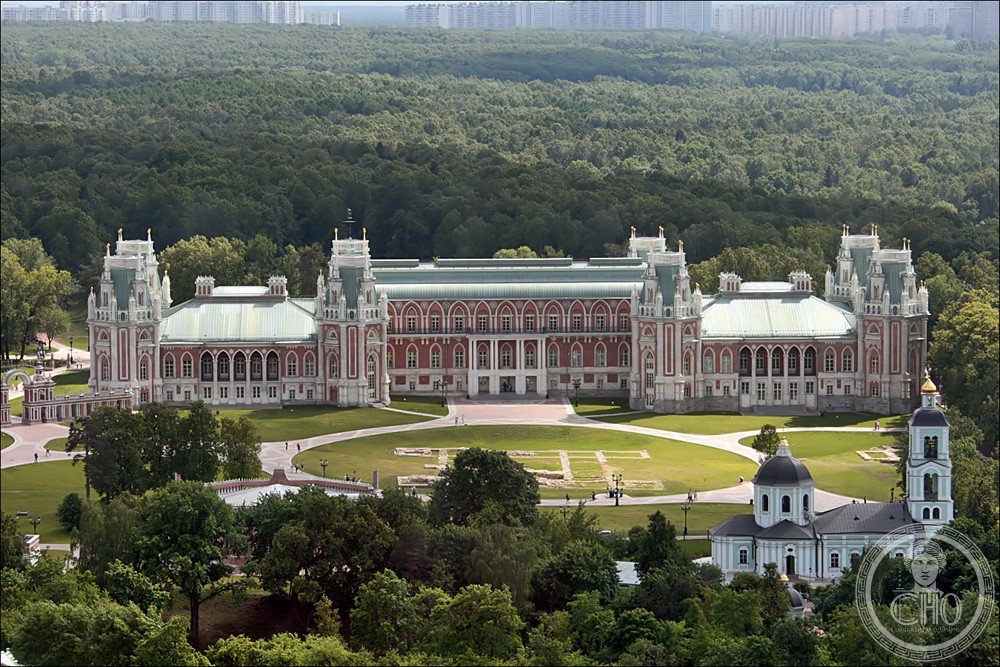
Tsaritsyno Museum-Reserve is a large state museum-reserve in the south of Moscow, centred on an unfinished neo-Gothic palace complex commissioned by Empress Catherine the Great in 1775. The ensemble, designed primarily by Vasily Bazhenov and later modified by Matvei Kazakov, sits within a 405-hectare park and is one of the finest examples of Russian Gothic Revival architecture, today functioning as a museum, concert venue, and public green space.
At a glance
- Type
- State museum-reserve; palace complex and landscape park
- Period
- Construction begun 1775; restored and opened as museum 2007
- Style
- Russian Gothic Revival (Gothic Moorish); landscape English garden
- Location
- Dolskaya ulitsa 1, Moscow 115569, Russia
- Coordinates
- 55.6117° N, 37.6840° E
Overview
Tsaritsyno is one of Moscow’s most distinctive historic ensembles, combining an elaborate landscape park with a group of pseudo-Gothic palace and service buildings that were never completed during Catherine’s lifetime. The site takes its name from the Russian word for “tsarina” and served as a summer imperial residence, though the original palace was twice demolished and rebuilt before being abandoned. Today the museum-reserve encompasses exhibition galleries within the restored palace buildings, a formal garden, ponds, and extensive woodland that make it one of the most visited outdoor leisure destinations in the Russian capital.
History
Catherine the Great purchased the estate, then known as Chornaya Gryaz (“Black Mud”), in 1775 and commissioned Vasily Bazhenov to design a new palace in a romantic Gothic style. Bazhenov’s innovative ensemble of interconnected buildings was nearly complete when Catherine visited in 1785 and ordered it demolished, allegedly because the layout displeased her. Matvei Kazakov was engaged to design a new single palace, but construction stalled after Catherine’s death in 1796 and the complex was left as a picturesque ruin for two centuries. A major restoration project between 2005 and 2007 under the Moscow city government completed the palace interiors for the first time and opened the complex to the public as a museum.
What you see
The centrepiece is the Grand Palace, a tall red-brick structure with white stone detailing that blends Gothic lancet windows with Baroque massing. Surrounding it are the Bread House (a large service building now housing exhibitions), the ornamental Small Palace, three bridges, and a figured gate — all by Bazhenov and all exhibiting the distinctive pseudo-Gothic ornament characteristic of Russian 18th-century Romanticism. The park contains a chain of ponds, a formal garden with fountains, and walking trails through birch and oak woodland. Exhibition galleries within the palace display decorative arts, applied arts, and historical collections related to the imperial estate.
Cultural significance
Tsaritsyno is one of the most important examples of 18th-century landscape architecture and Russian Gothic Revival design anywhere in Russia, and its turbulent construction history makes it a compelling document of imperial patronage and architectural taste. The site’s restoration was controversial among heritage specialists who debated the ethics of completing a building that had stood as a ruin for over two centuries, placing it within broader international debates about authenticity and reconstruction in heritage conservation. It remains a major cultural and leisure destination for Muscovites and a significant tourist site.
Practical information
- Address
- Dolskaya ulitsa 1, Moscow 115569, Russia
- Hours
- Park open daily; palace exhibitions closed Mondays — check official website for current hours
- Admission
- Park free; charges for palace exhibitions — check official website
- Website
- tsaritsyno-museum.ru
Getting there
The museum-reserve is directly accessible from Tsaritsyno Station on Moscow Metro Line 2 (Zamoskvoretskaya Line), a short walk from the main park entrance. Alternatively, Orekhovo Station (also Line 2) provides access to the northern end of the park. Suburban buses also serve the area from the metro stations.
Sources & resources
See the place
Find it on the map
See this place and what’s around it →📷 Become a Cultural Heritage Online photographer
Share your photos of places: they stay published under your name as the author. The more they're seen, the more you get noticed — and soon a contest will reward the most appreciated photos.
Log in or sign up free to add a photo