
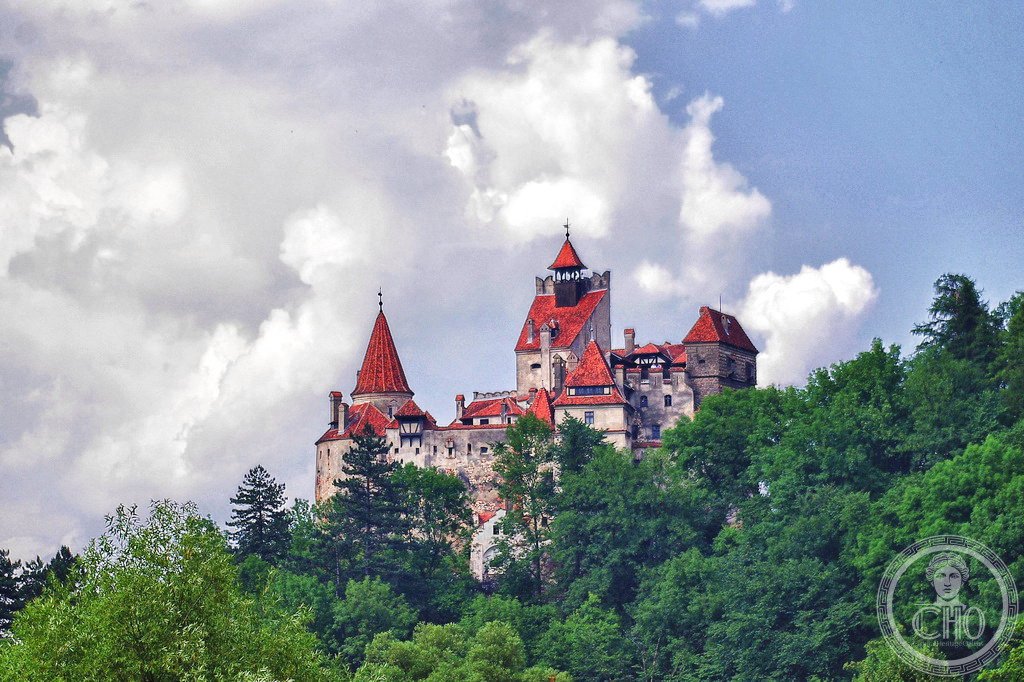
Bran Castle is a 14th-century Gothic fortress perched on a rocky outcrop in the Carpathian Mountains near the town of Bran, in Brașov County, Romania. Constructed by the Teutonic Knights beginning in 1212 and rebuilt in stone by the Saxons of Kronstadt (Brașov) from 1377, the castle commands the Bran Pass on the historic trade and military route between Transylvania and Wallachia. It is internationally known as “Dracula’s Castle,” a marketing association rooted in the resemblance of its dramatic silhouette to the Transylvanian setting of Bram Stoker’s 1897 novel, though Stoker never visited Romania and there is no documented connection between the castle and the historical Vlad III Țepeș.
At a glance
- Type
- Medieval fortress and royal residence
- Period
- First fortified 1212; rebuilt in stone 1377–1388; royal residence 1920s
- Style
- Gothic; later additions in Romanian vernacular style
- Location
- Bran, Brașov County, Romania (45.5149° N, 25.3650° E)
Overview
Bran Castle is Romania’s most visited tourist attraction, receiving over half a million visitors annually. Its fairy-tale profile of white towers, battlements, and dark forest backdrop has made it a defining image of Transylvania in global popular culture. Beyond its Dracula associations, the castle has genuine historical depth as a frontier fortress that changed hands repeatedly between Transylvanian Saxon, Hungarian, Ottoman, and Romanian powers over six centuries.
History
The Teutonic Knights built an initial timber fortress on the site in 1212 as a defensive outpost; after their expulsion from Transylvania in 1225 the structure fell into disuse. The Saxons of Kronstadt (present-day Brașov) received permission from King Louis I of Hungary to build a stone castle here in 1377, completing it by around 1388 to guard the mountain pass and collect tolls on trade goods. The castle passed to the Wallachian princes and later to the Habsburg crown, serving variously as a customs post and garrison. Following the unification of Romania, Queen Marie of Romania received Bran as a gift in 1920 and transformed it into a royal summer residence, adding gardens and vernacular interior details she associated with Romanian folk tradition. After the communist government seized the royal properties in 1948, the castle functioned as a history and weapons museum; it was returned to the Habsburg-Lorraine heirs in 2006 and has operated as a private museum since.
What you see
The castle’s four irregularly placed towers are connected by covered walkways and secret internal staircases carved into the rock. Rooms on three floors display Queen Marie’s furniture, ceramics, and icons alongside medieval arms and armour. A courtyard well cuts 57 metres into the rocky base of the cliff. Below the castle, an open-air village museum of traditional Transylvanian buildings surrounds the site. The views across the forested Carpathian ridges from the upper battlements are considered among the finest in the region.
Cultural significance
While Bran’s connection to Bram Stoker’s Dracula is a modern tourist construction, the castle’s authentic history as a frontier fortress and royal retreat gives it genuine heritage value. It is included on Romania’s list of historic monuments and stands as a rare example of a medieval Transylvanian fortress preserved largely intact. Queen Marie’s interiors represent an important chapter in the early 20th-century effort to create a distinctly Romanian royal aesthetic.
Practical information
- Address
- Str. General Traian Moșoiu 24, Bran 507025, Romania
- Hours
- Open Tuesday–Sunday; Monday closed; hours vary by season — check the official website
- Admission
- Paid entry; check brancastlemuseum.ro for current prices
- Website
- brancastlemuseum.ro
Getting there
From Brașov, take a direct bus from the central bus station (Autogara 2) to Bran village; journey time approximately 45 minutes. By car from Brașov, follow the DN73 road south-west for 30 km. Organised day tours from Brașov and Bucharest (approx. 170 km) are widely available. There is no direct train service to Bran.
Sources & resources
See the place
Find it on the map
See this place and what’s around it →
📷 Become a Cultural Heritage Online photographer
Share your photos of places: they stay published under your name as the author. The more they're seen, the more you get noticed — and soon a contest will reward the most appreciated photos.
Log in or sign up free to add a photo