
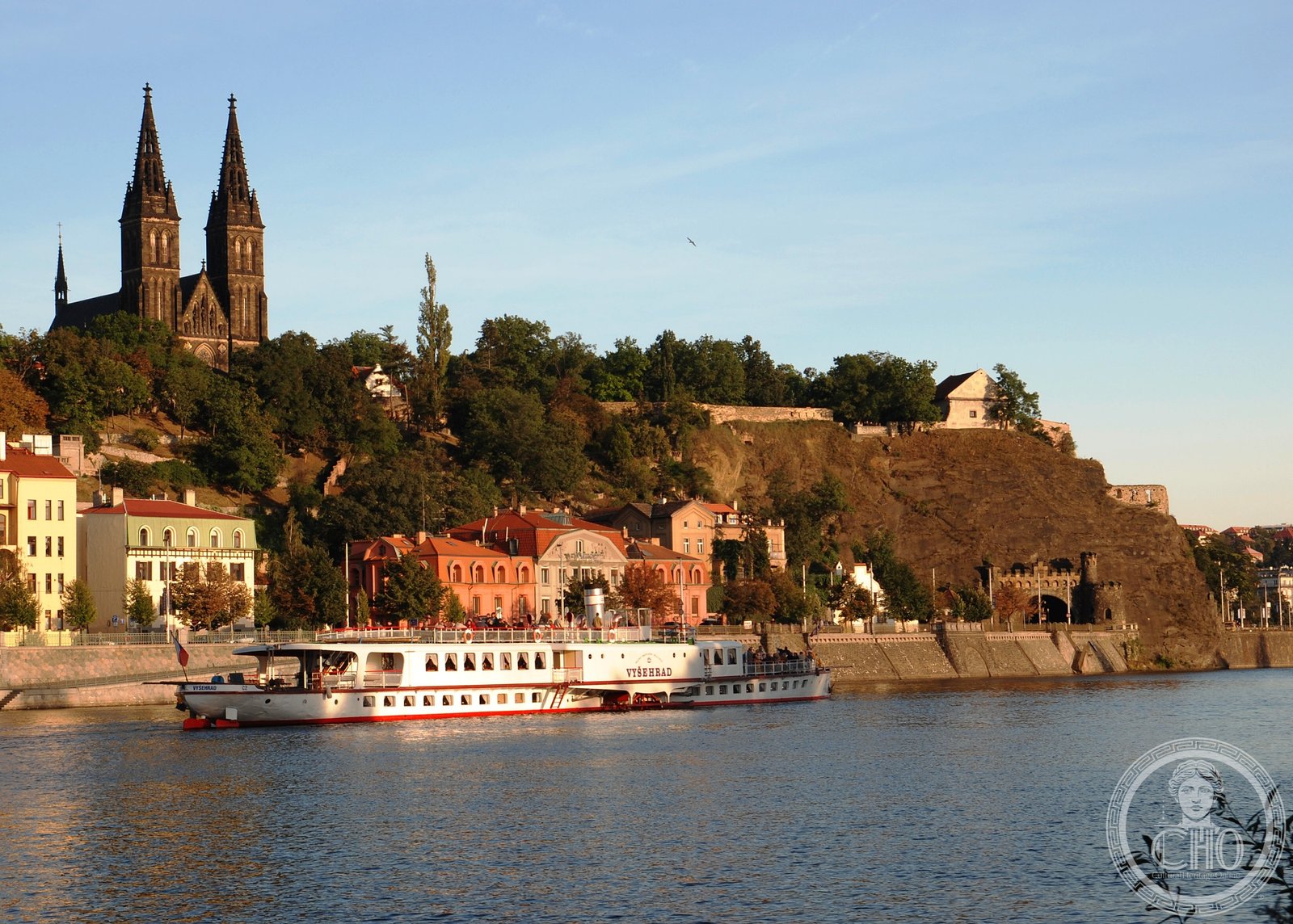
Vyšehrad is a historic fort perched on a rocky promontory on the east bank of the Vltava River in Prague, approximately 3 km southeast of Prague Castle. Founded in the 10th century, it became one of the earliest seats of Bohemian princes and has since evolved into one of the most evocative heritage sites in the Czech Republic, combining medieval fortifications, a national cemetery, and sweeping views over the city.
At a glance
- Type
- Historic fort, cemetery, and cultural monument
- Period
- Founded c. 10th century; substantially rebuilt in the 17th–19th centuries
- Style
- Romanesque, Gothic, and Neo-Gothic elements
- Location
- Vyšehrad, Prague 2, Czech Republic
- Coordinates
- 50.0630° N, 14.4146° E
Overview
Vyšehrad stands as one of the founding myths of the Czech nation, the rock from which Princess Libuše is said to have prophesied the founding of Prague. The complex today encompasses a walled fortress, the twin-spired Basilica of Saints Peter and Paul, and the Vyšehrad Cemetery, where generations of the country’s greatest artists, writers, and composers have been laid to rest. The site offers panoramic views of the Vltava valley and the Prague skyline.
History
Archaeological evidence places the earliest settlement on the Vyšehrad rock in the 10th century, making it roughly contemporaneous with Prague Castle. Under King Vratislaus II it served as a royal residence in the 11th century, rivalling the castle on the opposite bank of the Vltava. Following later abandonment as a seat of power, the site was fortified in the Baroque period during the 17th century, and the existing brick ramparts date largely from that era. In the 19th century, Czech National Revival architects and intellectuals transformed Vyšehrad into a symbol of Czech identity, commissioning the neo-Gothic restoration of the basilica completed in 1903.
What you see
The twin neo-Gothic spires of the Basilica of Saints Peter and Paul dominate the skyline of the fortress and contain Romanesque remnants from the original 11th-century church. Adjacent to the basilica lies the Vyšehrad Cemetery (Slavín), the national pantheon where Antonín Dvořák, Bedřich Smetana, Karel Čapek, and Alphonse Mucha are buried, alongside a monumental communal tomb. The grounds also contain the Rotunda of St. Martin, Prague’s oldest surviving Romanesque rotunda from the 11th century, and a series of monumental sandstone statues depicting figures from Czech legend.
Cultural significance
Vyšehrad occupies a unique place in Czech cultural memory as both a mythological origin point and a lived monument to national identity. Its Slavín cemetery functions as a secular pantheon, drawing visitors who come to honour the composers, writers, and artists buried there. The site was declared a National Cultural Monument of the Czech Republic and is an integral component of the Historic Centre of Prague, a UNESCO World Heritage Site.
Practical information
- Address
- V Pevnosti 159/5b, 128 00 Praha 2 – Vyšehrad, Czech Republic
- Grounds
- Open daily; free entry to the fort grounds and park
- Website
- vysehrad.cz
Getting there
Take Prague Metro line C to Vyšehrad station; the fort entrance is a short walk uphill. Tram lines 7, 18, and 24 stop at Výtoň on the riverbank below the rock, with a steep footpath leading up to the ramparts. The site is accessible by bicycle via the Vltava riverside cycle path.
Sources & resources
See the place
Find it on the map
See this place and what’s around it →📷 Become a Cultural Heritage Online photographer
Share your photos of places: they stay published under your name as the author. The more they're seen, the more you get noticed — and soon a contest will reward the most appreciated photos.
Log in or sign up free to add a photo