
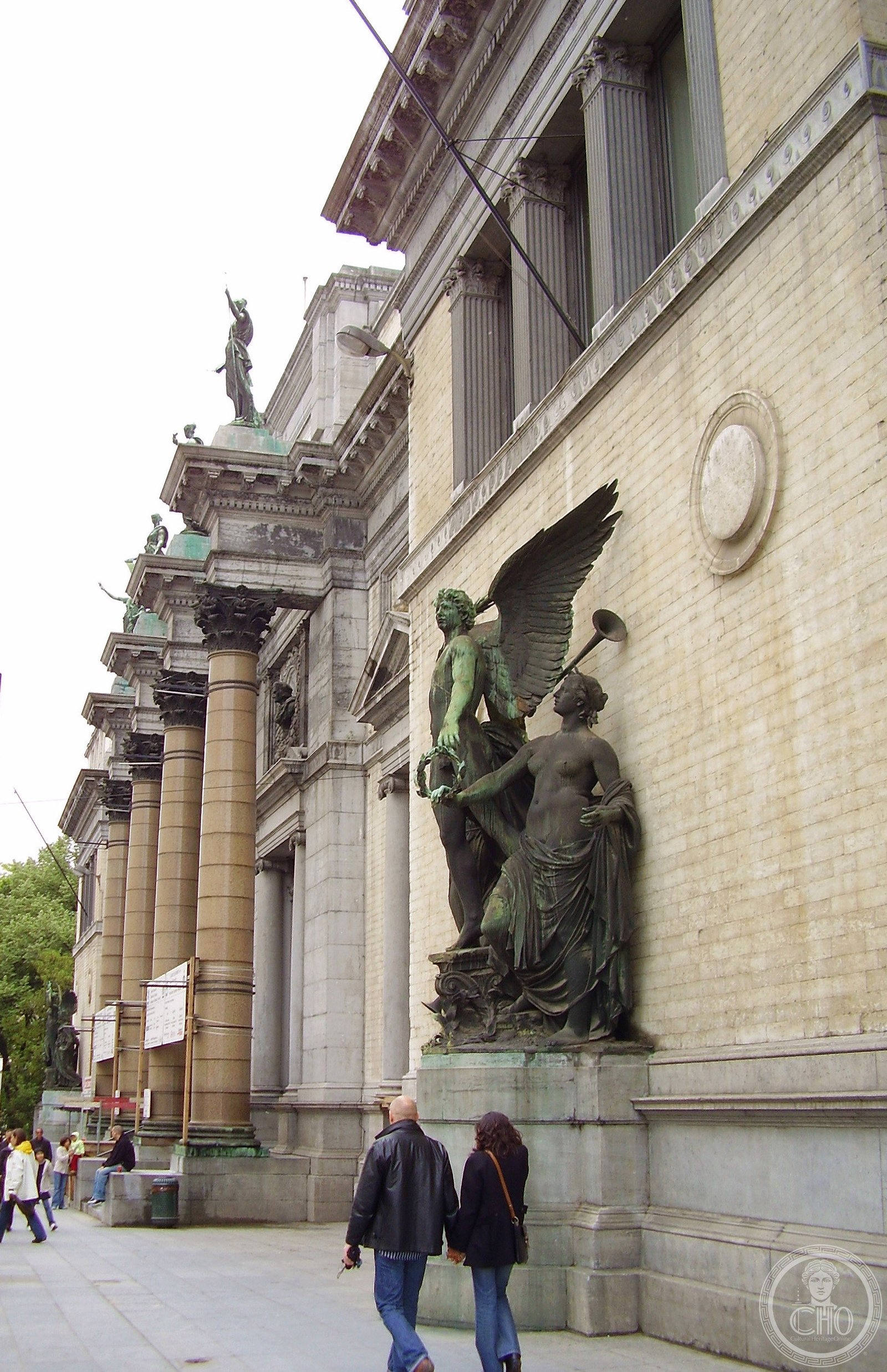
The Art & History Museum in Brussels — the centrepiece of the Royal Museums of Art and History (RMAH) — is one of the largest museums in Belgium and among the most significant encyclopaedic collections in Europe. Housed in a monumental neoclassical building in the Cinquantenaire Park, it displays over half a million objects spanning global civilisations from prehistoric times to the modern era, with outstanding holdings in Egyptian, Greek, Roman, pre-Columbian, Islamic and medieval European art and artefacts.
At a glance
- Type
- National encyclopaedic museum
- Period
- Founded 1835; current building inaugurated 1880 (Cinquantenaire complex)
- Style
- Neoclassical and Beaux-Arts architecture
- Location
- Parc du Cinquantenaire 10, 1000 Brussels, Belgium
- Coordinates
- 50.8397° N, 4.3942° E
Overview
The Royal Museums of Art and History are a group of museums in Brussels, Belgium, forming part of the institutions of the Belgian Federal Science Policy Office (BELSPO). The group consists of five museums: the Art & History Museum, the Horta-Lambeaux Pavilion, the Halle Gate, the Museums of the Far East and the Musical Instruments Museum (MIM). Together they constitute one of the most comprehensive museum networks in continental Europe, covering civilisations across six continents and five millennia.
History
The museum’s origins date to 1835, when the Belgian government established a national collection of antiquities and decorative arts in the spirit of the great European encyclopaedic museums of the nineteenth century. The collection found its permanent home in the Cinquantenaire complex, built to mark the fiftieth anniversary of Belgian independence and inaugurated by King Leopold II in 1880. Over subsequent decades the collections expanded dramatically through acquisitions, donations and Belgian colonial-era material from Central Africa and the Far East. Today the museum operates as a federal scientific institution committed to research, conservation and public access.
What you see
The Art & History Museum’s permanent galleries cover ancient civilisations of Egypt, the Near East, Greece and Rome; pre-Columbian Americas; Islamic art; decorative arts of the medieval and early modern periods; and a celebrated collection of Art Nouveau and Art Deco applied arts — particularly strong in Belgian work. Highlights include an exceptional Egyptian mummy collection, Gallo-Roman funerary monuments, Flemish Renaissance tapestries and a suite of rooms dedicated to the history of clockmaking. The Cinquantenaire building itself, with its triumphal arch and grand colonnaded wings, is a major monument of Belgian national architecture.
Cultural significance
The Royal Museums of Art and History represent Belgium’s principal national repository of world cultures, reflecting both the country’s imperial-era engagement with global civilisations and its remarkable domestic heritage of applied and decorative arts. The Art Nouveau collection is internationally recognised as one of the finest outside France, honouring Belgium’s foundational role in the movement. The museum complex anchors the Cinquantenaire Park, a listed monument that forms one of the defining urban ensembles of Brussels.
Practical information
- Address
- Parc du Cinquantenaire 10, 1000 Brussels, Belgium
- Hours
- Check the official RMAH website (kmkg-mrah.be) for current opening times and admission fees; closed Mondays
Getting there
Take Brussels Metro Line 1 or 5 to Merode or Schuman stations, both within easy walking distance of the Cinquantenaire Park entrance. Several tram and bus lines also serve the park perimeter. By car, the museum is situated on the eastern edge of the European Quarter, with paid parking available nearby. From Brussels-Central station, the journey by metro takes approximately 10 minutes.
Sources & resources
See the place
Find it on the map
See this place and what’s around it →📷 Become a Cultural Heritage Online photographer
Share your photos of places: they stay published under your name as the author. The more they're seen, the more you get noticed — and soon a contest will reward the most appreciated photos.
Log in or sign up free to add a photo