
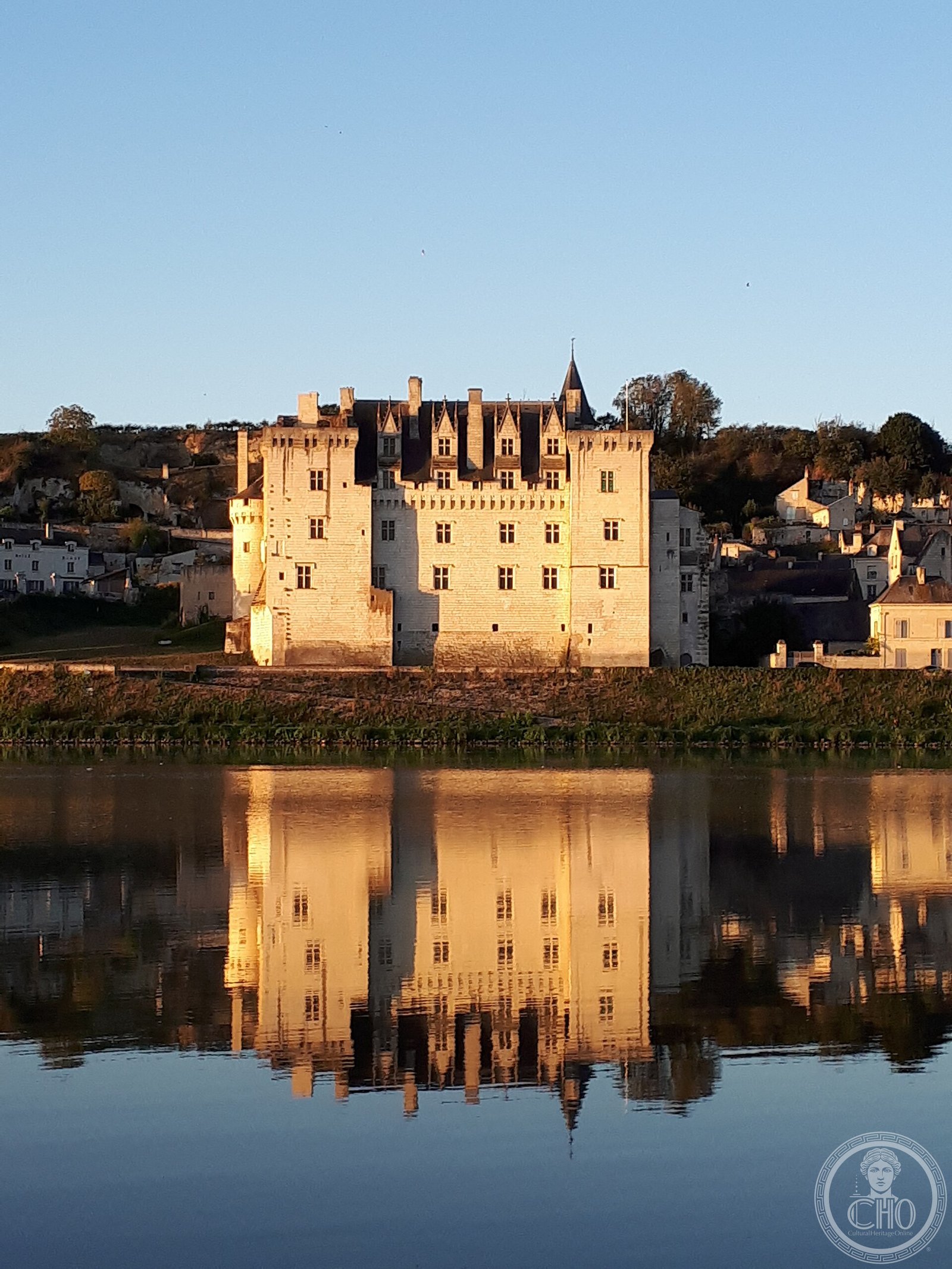
The Château de Montsoreau is a late-Gothic Renaissance château built between 1443 and 1455 on the confluence of the Loire and Vienne rivers at Montsoreau, Maine-et-Loire, in the heart of the Loire Valley UNESCO World Heritage Site. One of the finest examples of early French Renaissance domestic architecture, the château became internationally known through Alexandre Dumas’s 1846 novel La Dame de Monsoreau, and since 2016 has housed the Château de Montsoreau — Museum of Contemporary Art, presenting the private collection of Paris-based art dealer Philippe Méaille centred on the Art & Language conceptual movement.
At a glance
- Type
- Late-Gothic and early Renaissance château; Museum of Contemporary Art
- Period
- Built 1443–1455; major restoration 19th century; museum opened 2016
- Style
- Late Gothic with early Renaissance ornament; Flamboyant Gothic staircase tower
- Location
- Montsoreau, Maine-et-Loire, Loire Valley, France
- Coordinates
- 47.2157° N, 0.0624° E
Overview
The Château de Montsoreau stands directly on the Loire riverbank — unusually, it was built with its principal facade facing the river rather than the town, reflecting the medieval primacy of waterborne transport and trade. The building is a Classified Historic Monument of France and sits within the core of the Loire Valley World Heritage buffer zone. Since its reopening as a museum of contemporary art in 2016, it presents an unexpected but critically acclaimed juxtaposition: a 15th-century royal château as the permanent home of one of the world’s most important collections of Art & Language conceptual art.
History
The château was commissioned by Jean II de Chambes, a counsellor to Charles VII of France, and constructed between 1443 and 1455. Its position controlling the confluence of the Loire and Vienne made it strategically and commercially significant throughout the late medieval period. Owned by the Crown and various noble families through the Ancien Régime, it was sold as national property during the Revolution and subsequently fell into private hands before being acquired by the Anjou department and restored in the 19th century. Dumas’s romantic novel set the historical murder of Françoise de Méridor — the “Lady of Monsoreau” — in the château, cementing its place in French cultural imagination.
What you see
The château’s interiors display the Méaille Collection — approximately 1,500 works by the British-American conceptual group Art & Language, founded in 1968 and one of the most significant movements in 20th-century art history. The juxtaposition of conceptual canvases and text-based works against Gothic vaulted ceilings and Renaissance stone fireplaces creates a deliberately dissonant and intellectually stimulating experience. The Flamboyant Gothic staircase tower is among the finest of its period in the Loire Valley, and the terrace views over the Loire–Vienne confluence are exceptional.
Cultural significance
Montsoreau belongs to the core of the Loire Valley, designated a UNESCO World Heritage Site in 2000 as “the garden of France” — a landscape of royal and aristocratic châteaux without parallel in Europe. The château’s reinvention as a contemporary art museum has been cited internationally as a model for sustainable heritage reuse that brings new audiences to historic buildings while generating the revenue needed for ongoing conservation.
Practical information
- Address
- Rue de l’Abbaye, 49730 Montsoreau, France
- Opening hours
- Check the official website for current seasonal hours; generally open daily in summer, reduced days in winter.
- Website
- chateau-montsoreau.com
Getting there
Montsoreau is approximately 10 km from Saumur. By train, arrive at Saumur station and continue by bus (local service Anjou Bus) or taxi to Montsoreau (about 15 minutes). By car, the château is directly on the D947 road along the Loire riverbank. The Loire à Vélo cycling route (EuroVelo 6) passes directly in front of the château, making it a natural stop for cyclists exploring the Loire Valley. Parking is available in the village.
Sources & resources
See the place
Find it on the map
See this place and what’s around it →📷 Become a Cultural Heritage Online photographer
Share your photos of places: they stay published under your name as the author. The more they're seen, the more you get noticed — and soon a contest will reward the most appreciated photos.
Log in or sign up free to add a photoIs this page about you?
This page is read by travellers and heritage enthusiasts who find it on Google. Tell us how you are connected to this place and we will take it from there.