
Nel distretto di Mannar, nello Sri Lanka settentrionale, il santuario di Nostra Signora di Madhu nacque nel 1670, quando circa venti famiglie cattoliche in fuga dalla persecuzione olandese a Mantai portarono con sé una statua della Vergine Maria fino a Madhu, incontrandosi lì con altri settecento cattolici fuggiti dalla penisola di Jaffna. Nel 1705 il santuario fu rinnovato sotto la guida del vescovo Joseph Vaz, giunto da Goa travestito per sfuggire alla stessa persecuzione. Il santuario è oggi venerato non solo dai cattolici, ma anche da buddisti, indu e protestanti, diventando un simbolo di unità tra le diverse etnie e religioni dello Sri Lanka. Durante la guerra civile srilankese (1983-2009), il santuario, situato nella regione contesa del Vanni, funzionò come rifugio neutrale e disarmato per migliaia di civili di ogni etnia e religione. Il 20 novembre 1999 un bombardamento colpì il santuario causando decine di morti civili, con responsabilità contestate tra le parti in conflitto; tra il 2007 e il 2008, con l’intensificarsi dei combattimenti nella fase finale della guerra, la statua venerata dovette essere spostata più volte per proteggerla. Nel 1921 Papa Benedetto XV concesse alla statua un decreto pontificio di incoronazione, celebrata nel 1924, e nel gennaio 2015 Papa Francesco compi la prima visita papale mai avvenuta al santuario, davanti a oltre 500.000 pellegrini.
About the Shrine of Our Lady of Madhu
The Shrine of Our Lady of Madhu, in the Mannar District of northern Sri Lanka, traces its origins to 1670, when roughly twenty Catholic families fleeing Dutch persecution at Mantai carried a statue of the Virgin Mary to Madhu, where they were joined by around seven hundred additional Catholics who had fled the Jaffna peninsula into the surrounding Vanni forests. In 1705, the shrine was renovated under the guidance of Bishop Joseph Vaz, who had travelled from Goa in disguise to evade the same Dutch persecution that had driven the shrine’s founders into hiding. Over the centuries, the shrine grew into Sri Lanka’s most important Catholic pilgrimage site while acquiring an unusual reputation as a place of interfaith veneration, drawing Buddhist, Hindu and Protestant visitors alongside Catholic pilgrims and coming to symbolise unity across the island’s ethnic and religious divides. During the Sri Lankan Civil War (1983-2009), the shrine, located in the contested Vanni region, functioned as a neutral, weapons-free refuge sheltering thousands of displaced civilians of every ethnicity and faith. On 20 November 1999, shelling struck the shrine, killing dozens of civilians, with responsibility disputed between the warring parties; as fighting intensified during the war’s final phase in 2007 and 2008, the venerated statue itself had to be repeatedly relocated for safety. In 1921, Pope Benedict XV granted a pontifical decree of coronation for the statue, carried out in 1924, and in January 2015 Pope Francis made the first-ever papal visit to the shrine, addressing more than 500,000 pilgrims.
Key facts
- 1670: Catholic refugees fleeing Dutch persecution found the shrine at Madhu
- 1705: shrine renovated under Bishop Joseph Vaz
- Interfaith veneration: visited by Catholics, Buddhists, Hindus and Protestants alike
- 1983-2009: the shrine serves as a neutral civilian refuge during the Sri Lankan Civil War
- 1921/1924: Pope Benedict XV grants a pontifical coronation decree for the statue
- 2015: Pope Francis makes the first papal visit to the shrine, before over 500,000 pilgrims
- 15 August: the annual Feast of the Assumption draws large pilgrim crowds
History
The Shrine of Our Lady of Madhu’s origins in flight from religious persecution gave it, from the outset, a character as a place of refuge — a role that would recur with devastating literalness three centuries later, when the shrine sheltered civilians of all communities through the Sri Lankan Civil War despite suffering direct attack itself in 1999 and repeated threats to the venerated statue during the conflict’s final years. Its enduring status as a site of interfaith veneration, drawing Buddhists and Hindus alongside Catholics, has made it one of the clearest symbols of shared religious ground in a country whose modern history has been marked by prolonged ethnic and religious conflict.
What you see
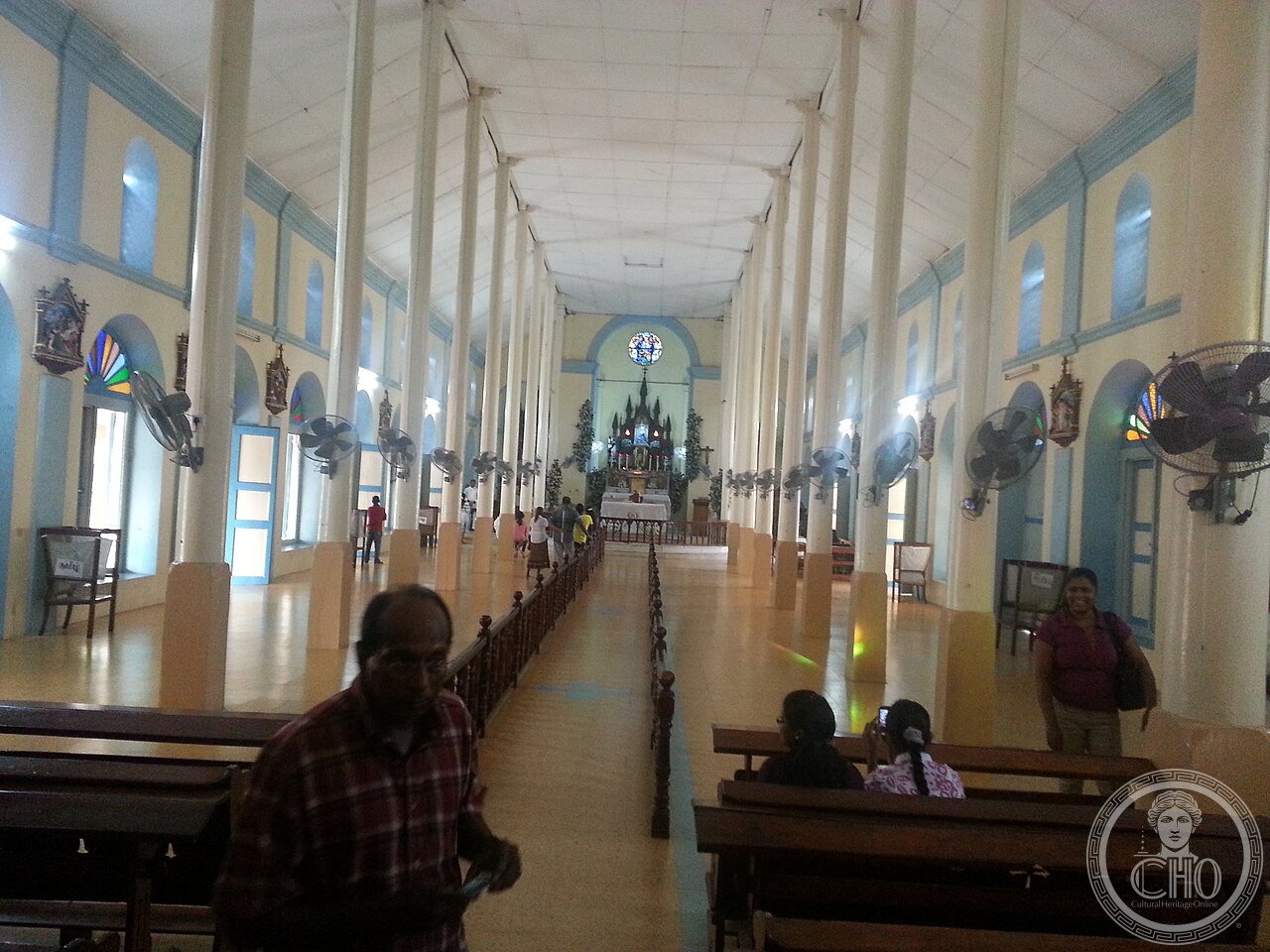
The shrine church stands within a forested compound in the Vanni region, its relatively modest architecture in keeping with its origins as a refugee community’s place of worship rather than a monumental colonial commission. The venerated statue of Our Lady of Madhu occupies the centre of devotional attention, drawing pilgrims to an annual mid-August feast that remains, even after the disruptions of war, one of the largest religious gatherings in Sri Lanka.
Practical information
- Opening hours: generally open daily with seasonal variation; expect very large crowds during the mid-August pilgrimage feast; check current access before visiting
- Address: Madhu, Mannar District, Northern Province, Sri Lanka
Getting there
The Shrine of Our Lady of Madhu lies in the Mannar District of northern Sri Lanka, reachable by road from Mannar town or Vavuniya. GPS: 8.8550° N, 80.2028° E.
Nearby
- Mannar — the nearest coastal town, a drive away
- Vavuniya — regional town on the road to the shrine
- Wilpattu National Park — nature reserve in the surrounding region
Sources
- Wikipedia — “Shrine of Our Lady of Madhu” (en.wikipedia.org)
- Wikipedia — “Madhu church shelling” (en.wikipedia.org)
- UCA News — “Our Lady of Madhu unites Sri Lanka’s diverse communities” (ucanews.com)
Find it on the map
See this place and what’s around it →📷 Become a Cultural Heritage Online photographer
Share your photos of places: they stay published under your name as the author. The more they're seen, the more you get noticed — and soon a contest will reward the most appreciated photos.
Log in or sign up free to add a photo