
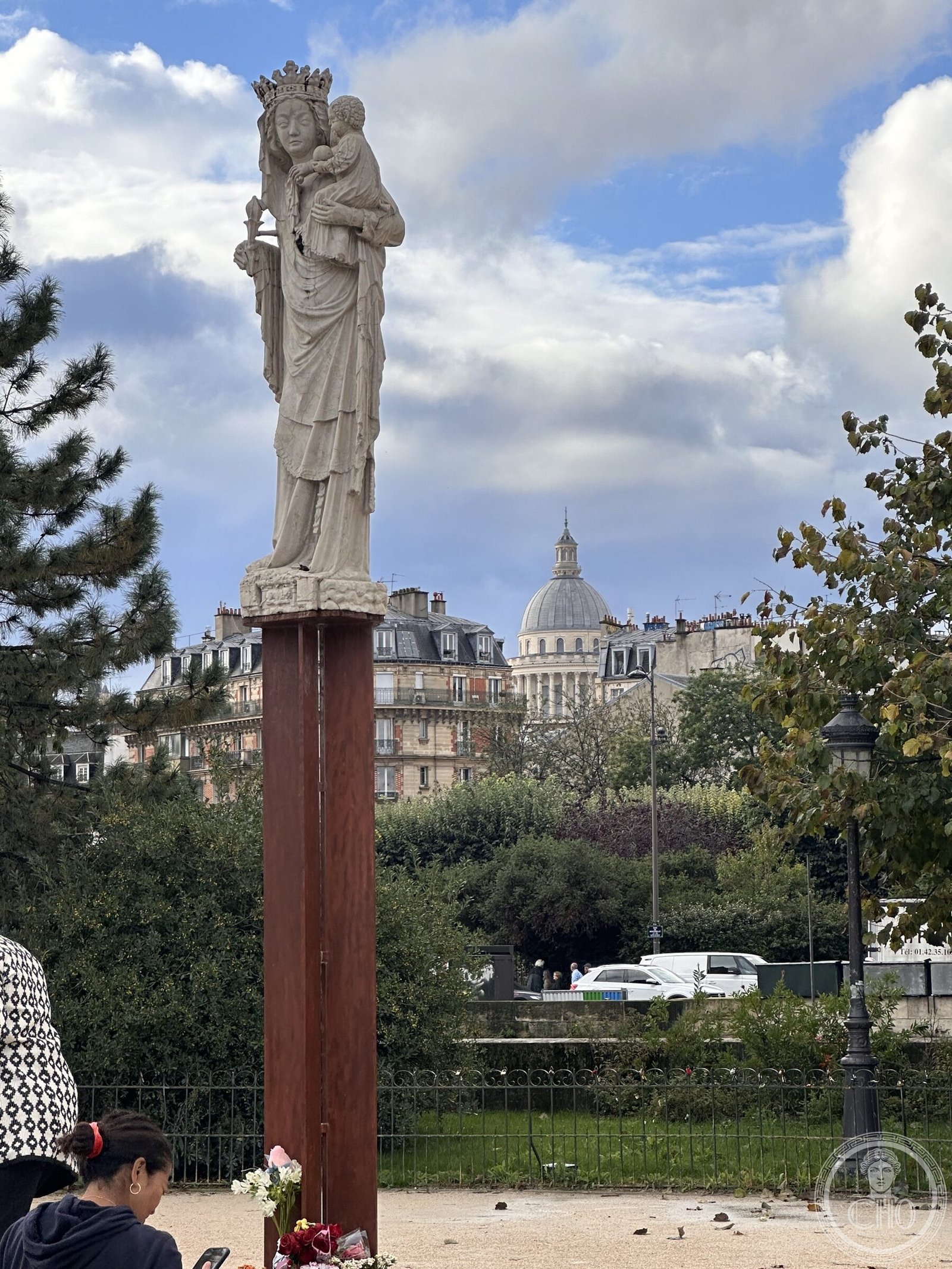
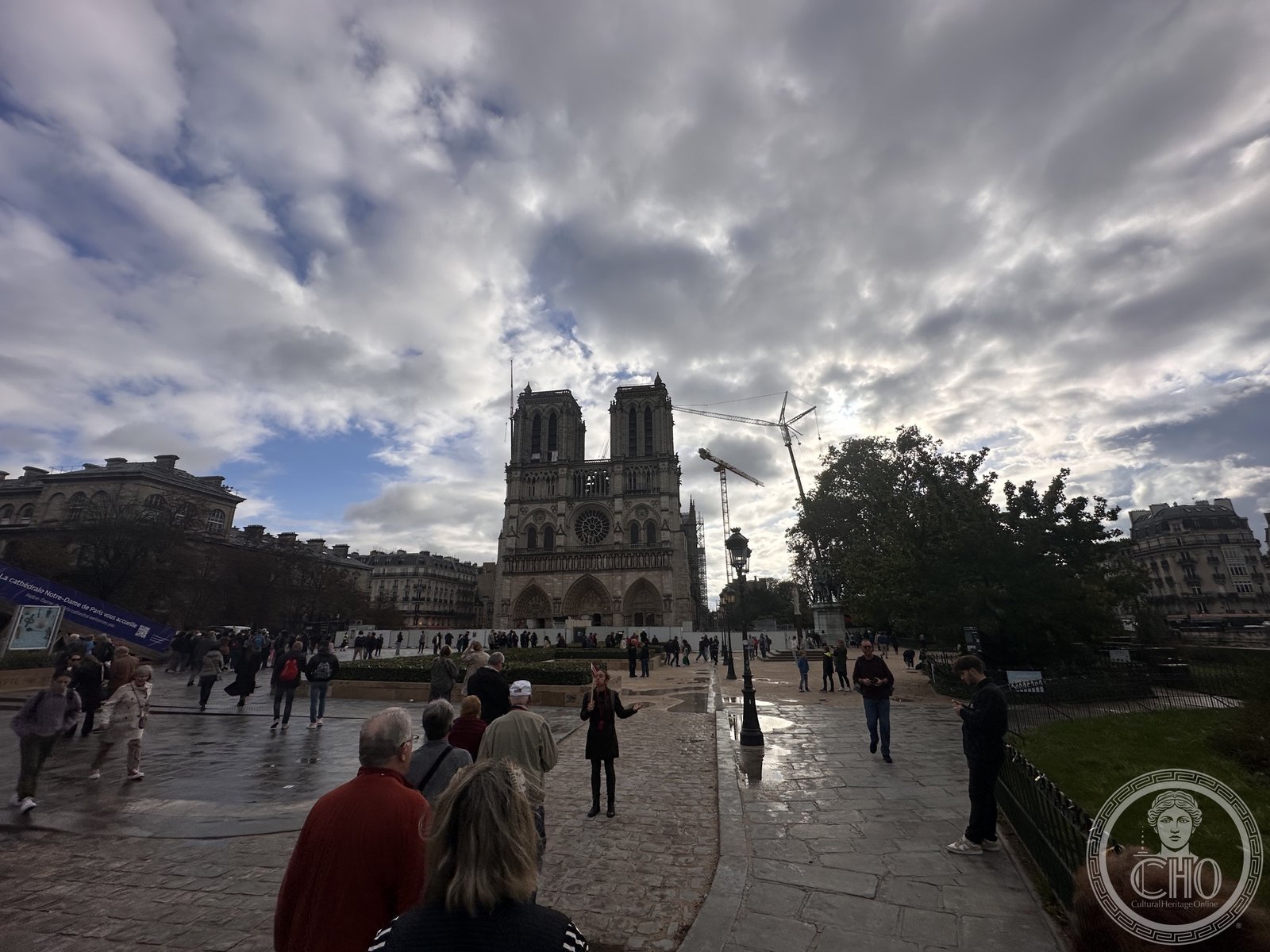
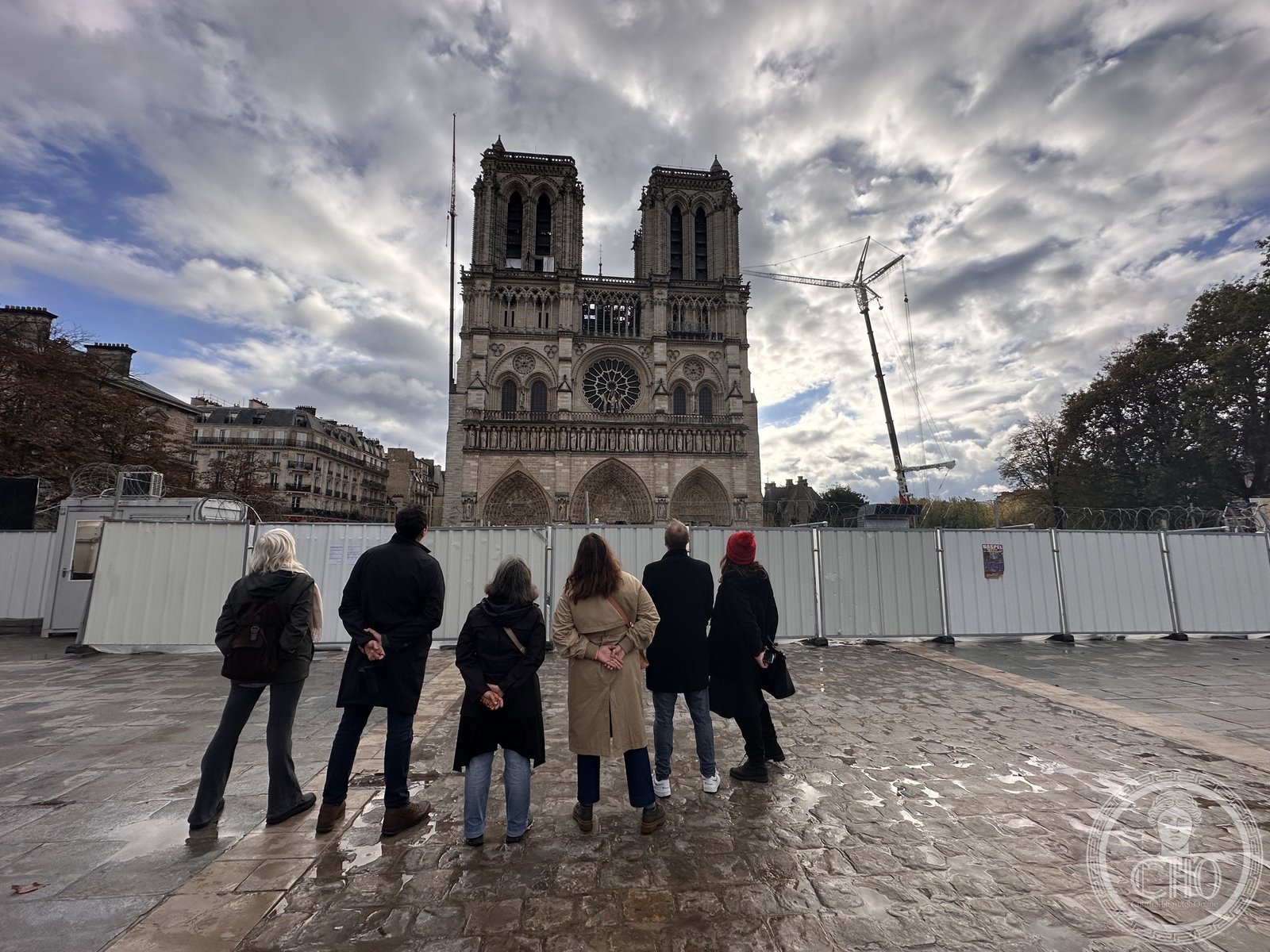
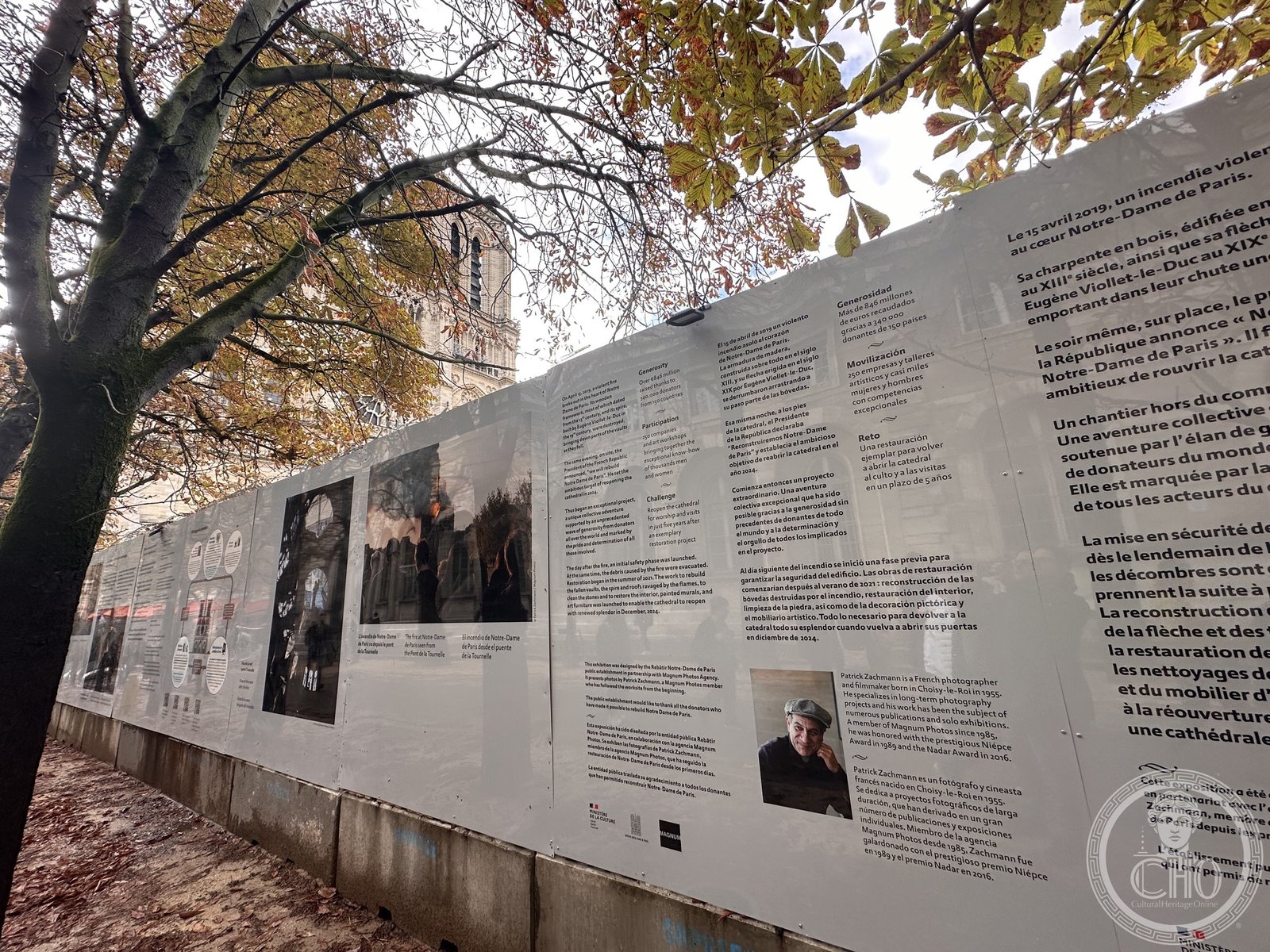
Notre-Dame de Paris is a medieval Catholic cathedral standing on the Île de la Cité in the 4th arrondissement of Paris, France. Built between 1163 and 1345, it is the cathedral church of the Roman Catholic Archdiocese of Paris and one of the finest examples of French Gothic architecture in existence. Severely damaged by fire on 15 April 2019, Notre-Dame underwent an extraordinary five-year restoration and reopened to the public in December 2024.
At a glance
- Type
- Roman Catholic cathedral; archiepiscopal seat
- Period
- Construction 1163–1345; major restorations 1844–1864 (Viollet-le-Duc); fire 2019; reopening 2024
- Style
- French Gothic; early to High Gothic
- Location
- 6 Parvis Notre-Dame – Place Jean-Paul II, Île de la Cité, 4th arrondissement, Paris, France
- Coordinates
- 48.8530° N, 2.3477° E
Overview
Notre-Dame de Paris is universally regarded as one of the greatest achievements of medieval European architecture, and for centuries it has stood as the symbolic heart of France. Its construction, begun under Bishop Maurice de Sully in 1163, took nearly two centuries and introduced architectural innovations — including the flying buttress — that influenced cathedral building across Europe. Before the 2019 fire, it received around 12 to 14 million visitors annually, ranking among the most visited monuments in the world.
History
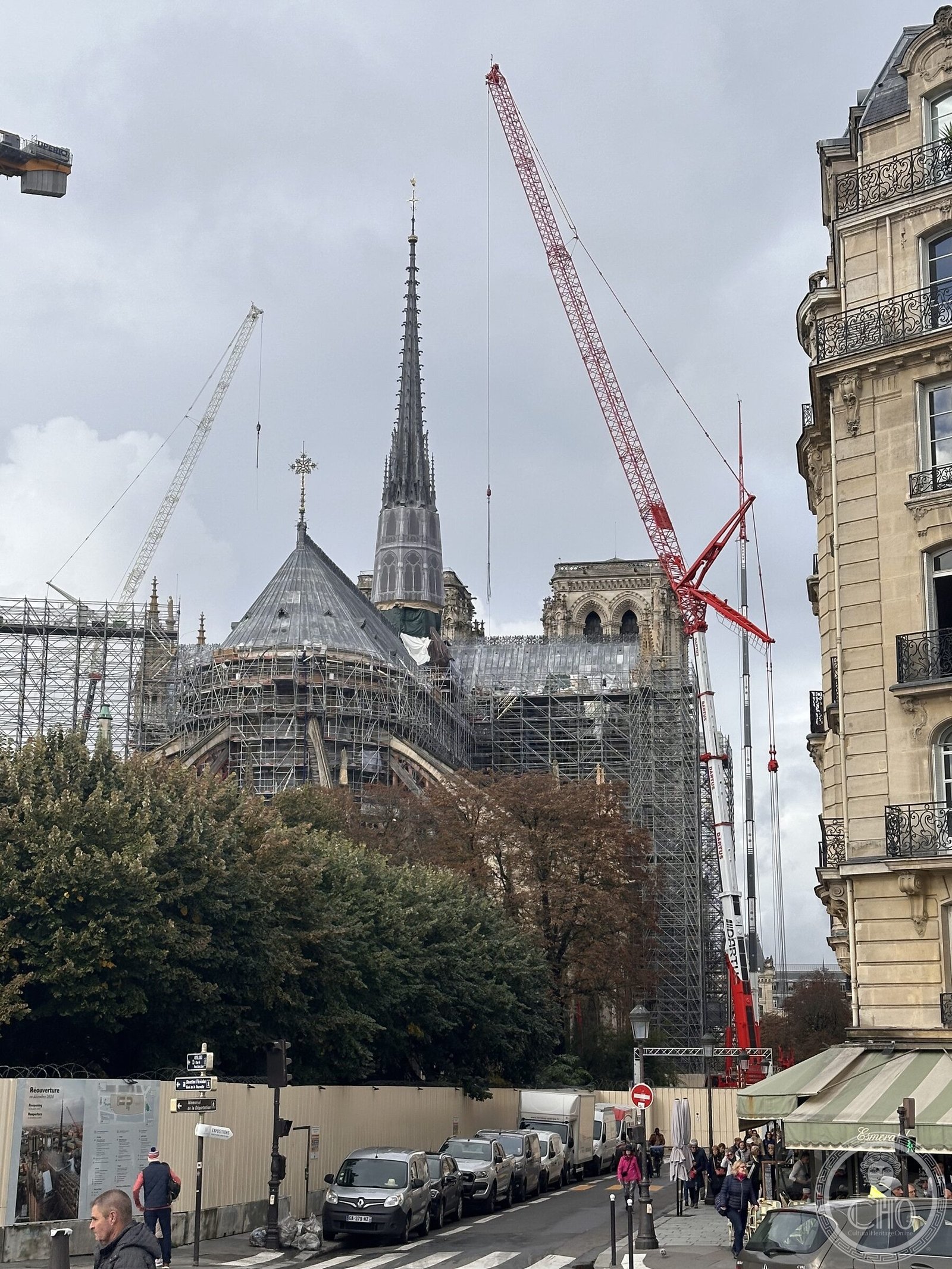
The cathedral was built on a site with Christian sacred significance dating to the fourth century, replacing an earlier Romanesque church. Construction proceeded through the reigns of multiple French kings, with the nave complete by around 1250 and the twin west towers finished by 1345. The French Revolution brought desecration and partial conversion into a Temple of Reason; Napoleon’s coronation took place there in 1804. Eugène Viollet-le-Duc undertook a sweeping restoration from 1844 to 1864, adding the spire (flèche) that collapsed in the 2019 fire. Reconstruction efforts, led by chief architect Philippe Villeneuve and later by Jean-Louis Georgelin, restored the cathedral to its pre-fire appearance and beyond, culminating in the December 2024 reopening.
What you see
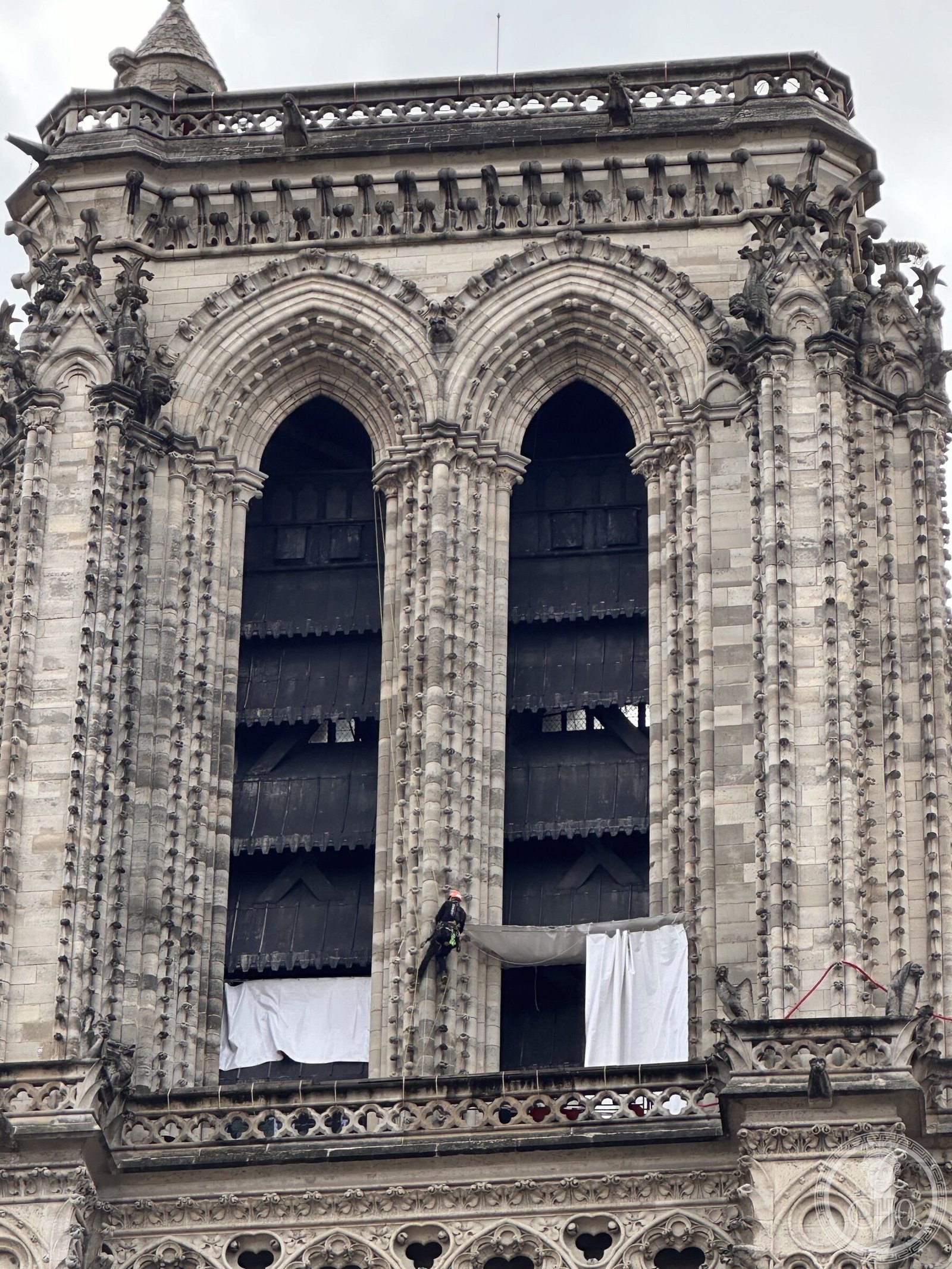
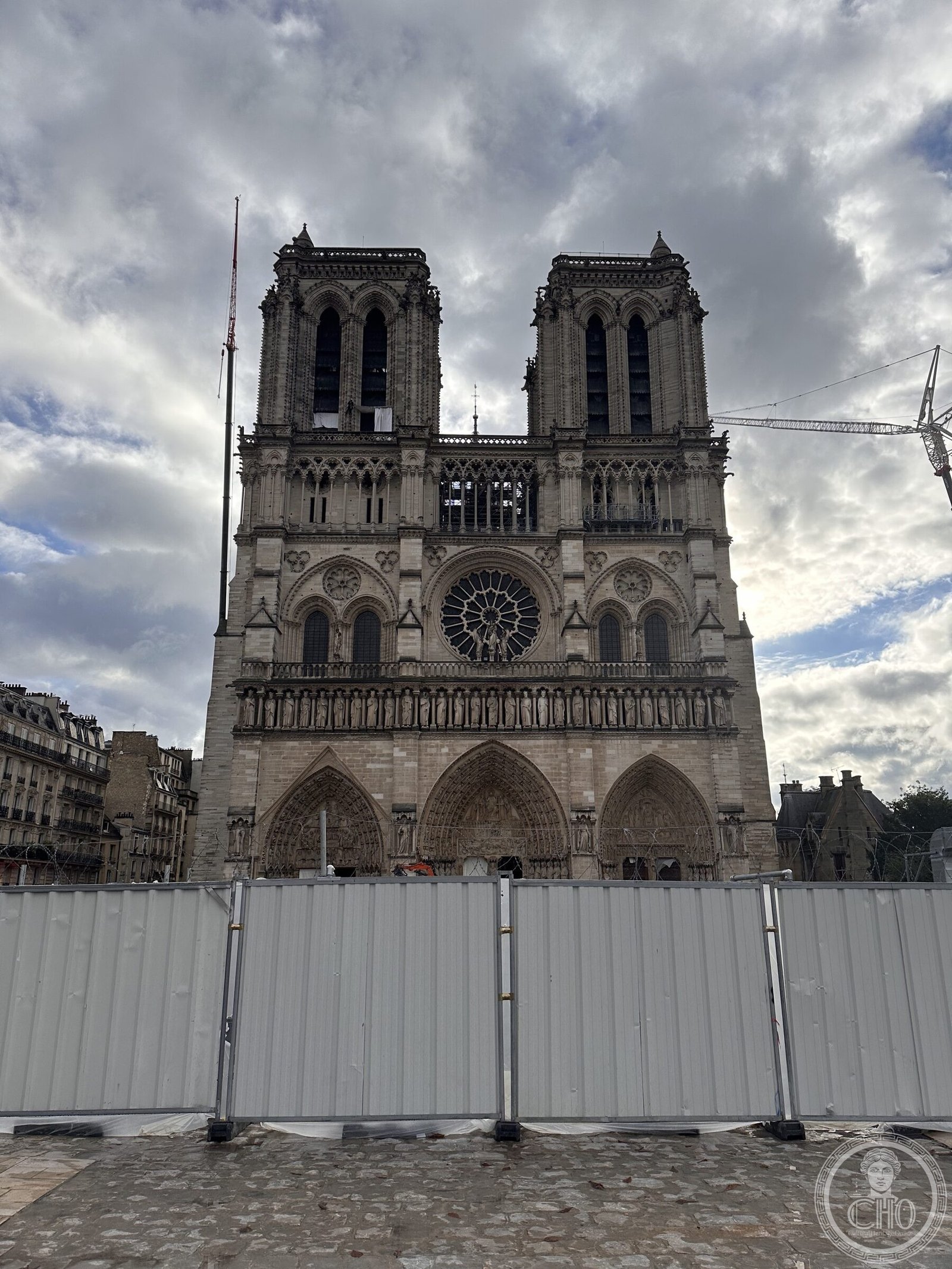
The west façade presents three portals richly carved with biblical scenes — the Portal of the Virgin, the Portal of the Last Judgement, and the Portal of St Anne — surmounted by the Gallery of Kings and a vast rose window. The interior is 130 metres long, with a nave rising to 35 metres flanked by double aisles and ringed by chapels. Three enormous rose windows — north, south, and west — flood the interior with coloured light. The south tower houses the great bourdon bell Emmanuel (13 tonnes), cast in 1686 and one of the finest-toned bells in Europe.
Cultural significance
Notre-Dame is not merely a religious building but a vessel of French and European civilisation: coronations, royal funerals, revolutionary ceremonies, liberation masses, and state funerals have all taken place within its walls. Victor Hugo’s 1831 novel Notre-Dame de Paris galvanised public interest in the cathedral’s preservation and inspired the 19th-century restoration. The 2019 fire and the global solidarity it unleashed — over a billion euros pledged for reconstruction — confirmed its status as a monument of shared human heritage.
Practical information
- Address
- 6 Parvis Notre-Dame – Place Jean-Paul II, 75004 Paris, France
- Admission
- Free entry to cathedral; timed entry tickets may be required — check official website
Getting there
The nearest Metro station is Cité (line 4), a two-minute walk from the cathedral parvis. Saint-Michel–Notre-Dame station on RER B and C is also very close. Bus lines 21, 38, 47, 85, and 96 serve the Île de la Cité. Paris Charles de Gaulle (CDG) airport is connected by RER B directly to Saint-Michel–Notre-Dame (approximately 35–40 minutes).
Sources & resources
Gallery
Photographs by Luigi De Marchi.
See the place
Find it on the map
See this place and what’s around it →
📷 Become a Cultural Heritage Online photographer
Share your photos of places: they stay published under your name as the author. The more they're seen, the more you get noticed — and soon a contest will reward the most appreciated photos.
Log in or sign up free to add a photo