
The Grand Palais des Champs-Élysées is a monumental Beaux-Arts exhibition hall and museum complex built for the 1900 Paris Universal Exposition and dedicated by the French Republic “to the glory of French art.” Designed by a team of four architects — Henri Deglane, Albert Louvet, Albert Thomas, and Charles Girault — it pairs a classical stone facade with a vast iron-and-steel nave topped by a barrel-vaulted glass roof spanning 45 metres, making it one of the largest glass and iron structures in the world. Listed as a historic monument since 2000, the building was closed in 2021 for a major multi-year restoration ahead of the 2024 Paris Olympics.
At a glance
- Type
- Exhibition hall, museum complex, and event venue
- Period
- Constructed 1897–1900 for the Exposition Universelle
- Style
- Beaux-Arts; iron and steel nave with Art Nouveau ornamental details
- Location
- 3 avenue du Général Eisenhower, 75008 Paris, France
- Coordinates
- 48.8661° N, 2.3102° E
Overview
The Grand Palais occupies a prominent position on the right bank of the Seine between the Champs-Élysées gardens and the river, flanked by the Petit Palais to the west and connected to the Left Bank by the Pont Alexandre III. Its main nave — the Grand Nef — covers approximately 13,500 square metres and rises 45 metres at the crown of the glass vault, creating one of the most spectacular interior spaces in Paris. The building is managed by the Réunion des musées nationaux–Grand Palais (Rmn-GP) and hosts major temporary exhibitions, fashion shows, sporting events, and the annual FIAC contemporary art fair.
History
Construction began in 1897, when the Palais de l’Industrie — the main exhibition hall from the 1855 Exposition — was demolished to make way for the new complex. The French government commissioned four architects to work on different sections of the building: Henri Deglane on the Grand Nef, Albert Thomas and Albert Louvet on the Palais d’Antin (now Galeries nationales) on the north side, and Charles Girault on the south-facing portico and facade. The result was a building that concealed radical iron-and-glass engineering behind an imposing Beaux-Arts exterior of carved stone, bronze statues, and mosaic friezes. After serving as a military hospital and air base during World War I, the Grand Palais resumed its exhibition role and was listed as a historic monument in 2000.
What you see
The south facade on avenue Winston Churchill presents a solemn colonnade of Ionic columns in stone, topped by quadriga sculptures by Georges Récipon at the four corners — bronze horses and chariots that have become iconic elements of the Parisian skyline. The Art Nouveau wrought-iron gates flanking the entrance, cast by Victor Contamin, contrast with the classical stonework and reveal the building’s dual architectural personality. Inside the Grand Nef, the glass barrel vault floods the space with natural light; the iron structure incorporates elaborate Art Nouveau decoration in its columns and railings. The Galeries nationales entrance on avenue du Général Eisenhower leads to the temporary exhibition spaces that have hosted landmark shows of Picasso, Renoir, and Tutankhamun.
Cultural significance
The Grand Palais has functioned as one of France’s foremost cultural venues for over a century, hosting landmark exhibitions that have helped define the French state’s relationship to art and heritage. Its nave has also served as a stage for events ranging from the Salon de l’Automobile to fashion weeks by Chanel, underscoring its role as a flexible cultural and commercial space. The ongoing restoration — expected to cost over €466 million — reaffirms the French government’s commitment to maintaining the building as a centrepiece of Parisian cultural infrastructure well into the 21st century.
Practical information
- Address
- 3 avenue du Général Eisenhower, 75008 Paris
- Opening hours
- The building is currently undergoing major restoration. Check the official website for reopening dates and programming.
- Website
- grandpalais.fr
Getting there
The nearest metro stations are Champs-Élysées–Clemenceau (lines 1 and 13), a five-minute walk via avenue Winston Churchill, and Franklin D. Roosevelt (lines 1 and 9), reachable in approximately seven minutes. RER Line C stops at Invalides, about 10 minutes on foot via the Pont Alexandre III. Bus lines 28, 42, 73, 80, 83, and 93 serve the Champs-Élysées area. Vélib’ bicycle stations are available on avenue du Général Eisenhower.
Sources & resources
Gallery
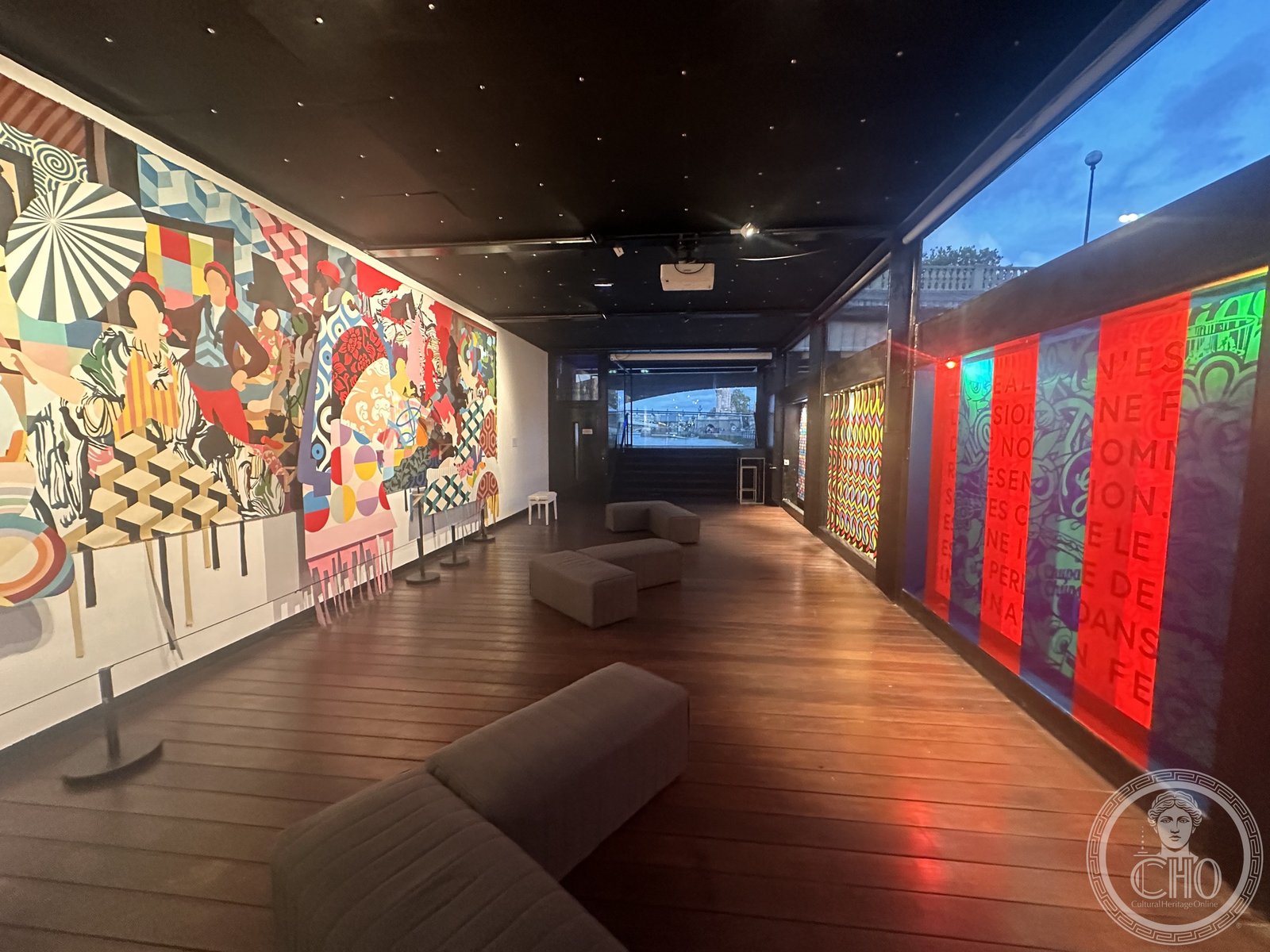
Photographs by Luigi De Marchi.
See the place
Find it on the map
See this place and what’s around it →📷 Become a Cultural Heritage Online photographer
Share your photos of places: they stay published under your name as the author. The more they're seen, the more you get noticed — and soon a contest will reward the most appreciated photos.
Log in or sign up free to add a photo