
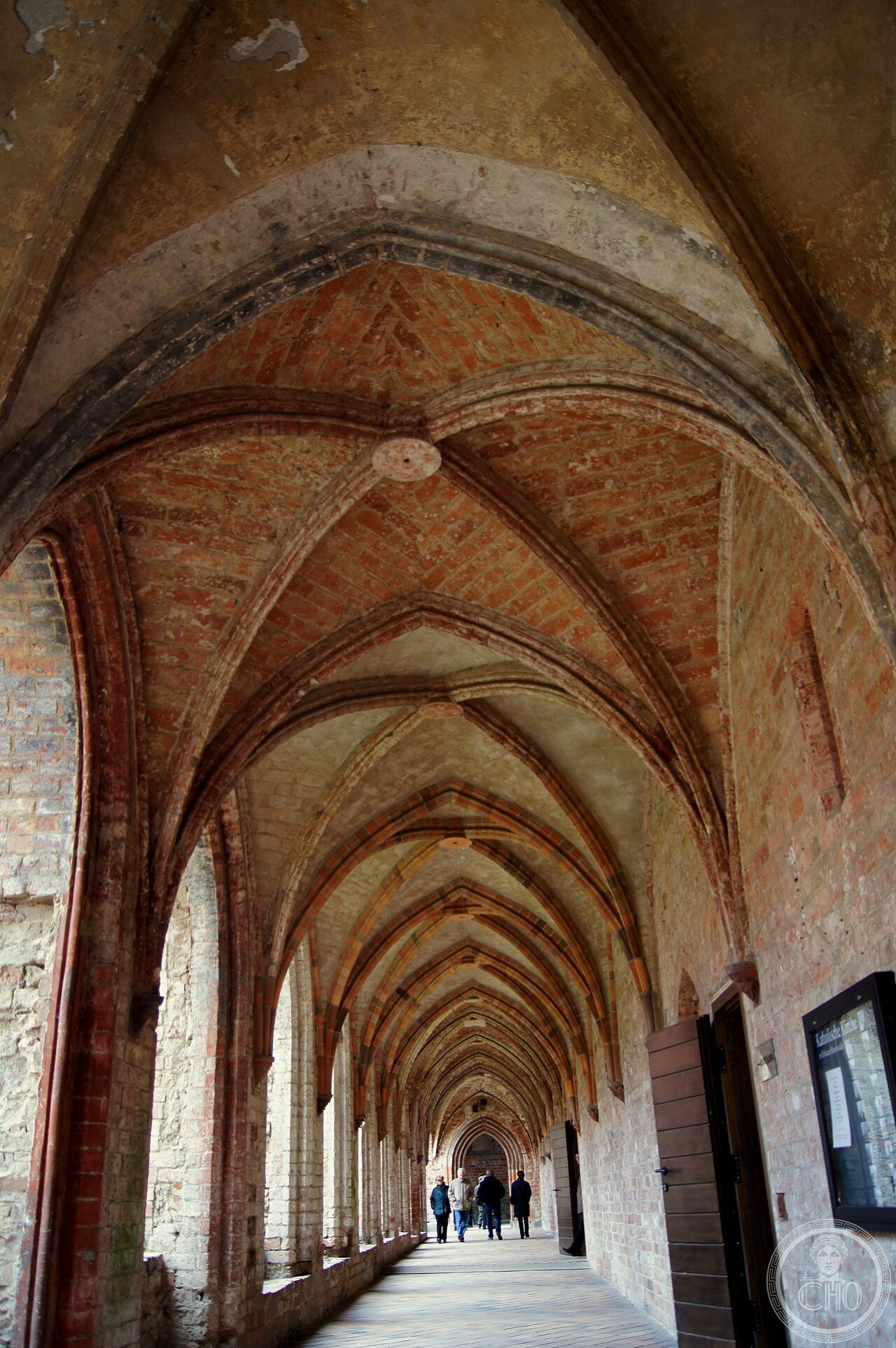
Founded in 1258 by the Ascanian margraves as the monastery of Mariensee, it was soon moved eight kilometres, to the shores of Lake Chorin, for lack of water: here, from 1273, the Cistercians built the most ambitious building project ever carried out in Brandenburg, the first full translation into brick of the large-scale French Gothic system. Dissolved in 1542 with the Reformation, the building was left to decay for almost three centuries, until the architect Karl Friedrich Schinkel led its restoration in the nineteenth century. Today, for more than fifty years, its ruins have hosted a classical music festival that draws thousands of visitors every summer.
About Kloster Chorin
Kloster Chorin was founded in 1258 by the Ascanian margraves of Brandenburg, John I and Otto III, initially as the monastery of Mariensee. Due to the site’s inaccessibility and its lack of a suitable water source, the community relocated roughly eight kilometres to its present position on the Chorin See in 1273, where construction began with the church’s polygonal choir. The Cistercian monastery built from 1272 onward represented the most ambitious building project undertaken in Brandenburg up to that time, implementing the High Gothic architectural system developed in France entirely in brick for the first time in the region — a technical and artistic achievement that makes Chorin one of the most important surviving monuments of early brick Gothic architecture anywhere in Brandenburg. Following the Protestant Reformation and the wider secularisation of monastic property, the monastery was formally dissolved in 1542, after which the buildings were left to gradually decay for nearly three centuries. In the early 19th century, the ruins were restored and partly rebuilt under the direction of the celebrated Prussian architect Karl Friedrich Schinkel, whose intervention helped preserve the site’s remaining medieval fabric for future generations. Today, Kloster Chorin functions as a major cultural venue: the Chorin Summer Music Festival, running for more than fifty years, has become a celebrated fixture of the German classical music calendar, drawing high-profile musicians, conductors, orchestras, and ensembles to perform amid the monastery’s atmospheric brick Gothic ruins, alongside a wider annual programme of New Year’s concerts, Easter festivals, exhibitions, and theatre.
Key facts
- 1258: founded by Ascanian margraves John I and Otto III as Mariensee
- 1273: community relocates to the Chorin See site, construction begins
- From 1272: the first complete brick-built implementation of French High Gothic architecture in Brandenburg
- 1542: monastery dissolved following the Reformation
- 19th century: ruins restored under architect Karl Friedrich Schinkel
- Over 50 years: the Chorin Summer Music Festival’s running history
History
Chorin’s construction as the first complete brick translation of French High Gothic architecture within Brandenburg situates the abbey at a formative technical turning point in northern European Gothic architecture, as builders across the brick-rich, stone-poor lands of northern Germany adapted French Gothic forms into the distinctive regional tradition now known as Backsteingotik, or Brick Gothic. Karl Friedrich Schinkel’s 19th-century restoration of the ruined monastery reflects the broader Romantic-era German fascination with medieval ruins as objects of both aesthetic and national historical significance, an intervention that ensured Chorin’s survival into the modern era rather than continued gradual collapse.
The monastery’s transformation into a major summer concert venue, sustained for over half a century, represents a distinctly successful case of adaptive reuse for a medieval religious ruin, converting a site of post-Reformation abandonment into one of contemporary Brandenburg’s most significant cultural institutions.
What you see
The ruined church’s soaring brick Gothic choir and nave walls remain the site’s most visually striking feature, their scale testifying to the ambition of the original 13th-century building project. Surviving monastic buildings, including elements of the cloister, trace the fuller footprint of the medieval Cistercian complex, set within the wooded landscape beside the Chorin See that gives the monastery its distinctive picturesque setting.
Practical information
- Opening hours: generally open daily with seasonal variation; check current hours before visiting; admission fee applies
- Address: Amt Chorin 11a, 16230 Chorin, Germany
Getting there
Kloster Chorin is located in the village of Chorin, in Brandenburg, roughly 60 kilometres northeast of Berlin, reachable by train or road. GPS: 52.8930° N, 13.8839° E.
Nearby
- Chorin See — the lake beside the monastery
- Schorfheide-Chorin Biosphere Reserve — the surrounding protected natural landscape
- Eberswalde — the nearest larger town
Sources
- Wikipedia — “Chorin Abbey” (en.wikipedia.org)
- Europäische Route der Backsteingotik — “Cistercian monastery, Chorin” (eurob.org)
- visitBerlin.de — “Chorin Monastery” (visitberlin.de)
Find it on the map
See this place and what’s around it →📷 Become a Cultural Heritage Online photographer
Share your photos of places: they stay published under your name as the author. The more they're seen, the more you get noticed — and soon a contest will reward the most appreciated photos.
Log in or sign up free to add a photo