
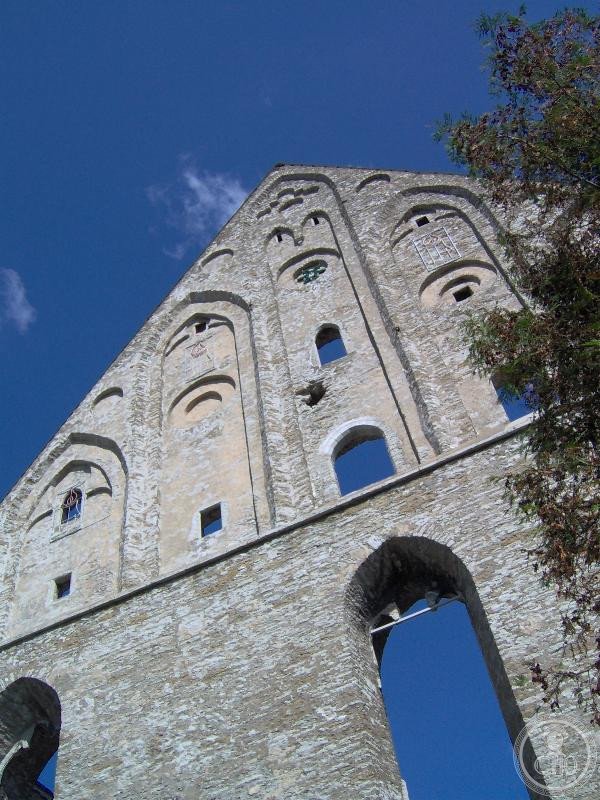
Fondato nel 1407 da due monaci giunti dall’abbazia svedese di Vadstena, il convento brigidino di Pirita divenne il più grande monastero cattolico della Livonia, con una chiesa di 1.360 metri quadrati — il più grande edificio religioso dell’Estonia medievale. Nel 1577, durante la guerra di Livonia, le truppe russe di Ivan il Terribile saccheggiarono e incendiarono il complesso, lasciando le rovine che si visitano ancora oggi.
About Pirita Convent
Pirita Convent was a Bridgettine double monastery — housing both monks and nuns under a single community, following the model established by Saint Bridget of Sweden at Vadstena — located near Tallinn, Estonia, and active from 1407 to 1575. The idea of founding a monastery at the site originated with Tallinn’s merchant community around 1400, and in 1407 two monks travelled from Vadstena Abbey in Sweden to counsel the merchants and set the foundation in motion. The first permit to quarry dolomite for the building’s construction was obtained in 1417, and the complex was built under the supervision of the architect Heinrich Swalbart; its main church was consecrated on 15 August 1436 by Heinrich II, Bishop of Tallinn. At its height, Pirita was the largest monastery in all of Livonia, its church covering some 1,360 square metres, making it the largest single church building anywhere in medieval Estonia. The convent’s decline began after Estonia adopted the Protestant Reformation in 1525, though the community was permitted to continue functioning for several decades afterward. Its end came during the Livonian War, in 1577, when Russian troops under Ivan the Terrible attacked the convent, looted its riches, and burned it to the ground, leaving it permanently abandoned; the surrounding grounds were subsequently used by locals as a cemetery. Systematic archaeological excavation of the site began in 1934, with further work conducted in the early 1960s. In 2001, the ruins were restored and a new convent building was constructed directly alongside them, reestablishing a Bridgettine religious presence at the historic site.
Key facts
- 1407: founded following the arrival of two monks from Vadstena Abbey, Sweden
- 1417-1436: construction under architect Heinrich Swalbart; church consecrated 15 August 1436
- Scale: the largest monastery in Livonia; its church, at 1,360 square metres, the largest medieval church building in Estonia
- 1525: decline begins with the Protestant Reformation in Estonia
- 1577: sacked and burned by Russian forces under Ivan the Terrible during the Livonian War
- 1934 and 1960s: systematic archaeological excavations conducted
- 2001: ruins restored; a new convent building constructed alongside them
History
Pirita’s founding by monks sent directly from Vadstena Abbey in Sweden situates the convent within the same international Bridgettine network that, within decades of Saint Bridget’s own 1346 foundation, had already extended across the Baltic Sea to establish a major daughter house in Estonia — one that would go on to become the single largest church building anywhere in medieval Estonia, testament to how rapidly and substantially the Bridgettine order’s distinctive double-monastery model could take root far from its Swedish origins. The convent’s destruction in 1577 by Ivan the Terrible’s forces during the Livonian War situates its end within one of the most destructive conflicts fought in the eastern Baltic region during the 16th century, a war whose consequences for the region’s religious institutions extended well beyond Pirita alone.
The nearly 450-year gap between the convent’s 1577 destruction and its 2001 restoration and reoccupation by a new Bridgettine community reflects an unusually long span of institutional discontinuity even by the standards of Europe’s many suppressed and later revived monastic houses — the 20th-century archaeological excavations of 1934 and the 1960s played a direct role in recovering the physical knowledge of the site that ultimately made its careful restoration and rededication possible.
What you see
The surviving ruins preserve substantial sections of the convent’s medieval gabled walls and church structure, offering a striking silhouette against the sky despite the loss of roofing and much of the original interior following the 1577 fire. Adjacent to the historic ruins, the new convent building constructed in 2001 houses an active Bridgettine community, allowing visitors to see both the medieval remains and a functioning modern monastic presence side by side at the same historic site.
Practical information
- Opening hours: the ruins are generally open daily with seasonal variation; check current hours before visiting; admission fee applies
- Address: Kloostri tee, Pirita, 11911 Tallinn, Estonia
Getting there
Pirita is reachable by bus or car from central Tallinn (approximately 15 minutes), in the Pirita district on Estonia’s northern coast. GPS: 59.4665° N, 24.8359° E.
Nearby
- Pirita Beach — the nearby sandy beach and marina on the Gulf of Finland
- Tallinn Old Town — approximately 15 minutes away; the UNESCO-listed medieval city centre
- Maarjamäe — a nearby coastal area with museums and memorials
Sources
- Wikipedia — “Pirita convent” (en.wikipedia.org)
- Visit Estonia — “Ruins of Bridgettine Convent” (visitestonia.com)
- Ancient History Sites — “Pirita Convent in Tallinn, Estonia” (ancient-history-sites.com)
Find it on the map
See this place and what’s around it →📷 Become a Cultural Heritage Online photographer
Share your photos of places: they stay published under your name as the author. The more they're seen, the more you get noticed — and soon a contest will reward the most appreciated photos.
Log in or sign up free to add a photo