
The Civic Museum Luigi Bailo is the principal public museum of Treviso, in the Veneto region of northeastern Italy. Named after the local priest, archaeologist, and collector Luigi Bailo (1835–1932), who spent decades amassing the artefacts that formed its founding collection, the museum holds art and antiquities spanning prehistoric finds to twentieth-century paintings, with particular strength in medieval ceramics, Venetian-school painting, and the work of artists connected to the Treviso area.
At a glance
- Type
- Civic art and archaeological museum
- Period
- Founded 1879; collections from prehistoric era to the 20th century
- Style
- Historic institutional building in central Treviso
- Location
- Borgo Cavour, Treviso TV, Veneto, Italy
- Coordinates
- 45.6676° N, 12.2359° E
Overview
The Museo Civico Luigi Bailo is one of the oldest public museums in the Veneto, tracing its origins to the late nineteenth century when the priest Luigi Bailo began systematically preserving the archaeological and artistic heritage of the Marca Trevigiana. The museum functions as the city’s main repository for works that might otherwise have been dispersed or lost, and it continues to serve both a scholarly and a civic role for Treviso’s residents. Its holdings document the cultural continuity of this corner of the Veneto from the pre-Roman Iron Age through the modern period.
History
Luigi Bailo was ordained as a priest in 1858 and spent the following decades excavating sites around Treviso, collecting manuscripts, and preserving objects from deconsecrated churches and private estates. He donated his collections to the city and formally established the civic museum in 1879. Following his death in 1932 the museum was renamed in his honour. The building underwent significant restoration and reorganization in the twentieth century, with major updates in the 1990s and 2000s to modernize conservation standards and improve accessibility.
What you see
The permanent galleries display prehistoric bronze-age finds alongside Roman-era sculpture and inscriptions from the ancient city of Tarvisium. Medieval and Renaissance art includes panel paintings, frescoes, and ceramics characteristic of the Venetian terraferma tradition. A dedicated section covers the work of Arturo Martini, the Treviso-born sculptor widely considered one of the most significant Italian sculptors of the early twentieth century. Temporary exhibitions regularly bring loans from national and international institutions.
Cultural significance
The Civic Museum Luigi Bailo is central to Treviso’s identity as a city with a deep and layered cultural heritage that extends well beyond its famous prosecco and radicchio. The collection’s breadth — from Iron Age metalwork to twentieth-century sculpture — makes it an essential stop for understanding the Marca Trevigiana as a historically rich territory within the broader Venetian world.
Practical information
- Address
- Borgo Cavour 24, 31100 Treviso TV, Italy
- Hours
- Check official website for current opening times; typically closed on Mondays
Getting there
The museum is located in central Treviso, approximately ten minutes on foot from Treviso Centrale railway station. Regional trains connect Treviso to Venice (30 minutes), Padova (45 minutes), and Vicenza (50 minutes). The city centre is compact and easily walkable. Paid parking is available near the historic walls for visitors arriving by car.
Sources & resources
Find it on the map
See this place and what’s around it →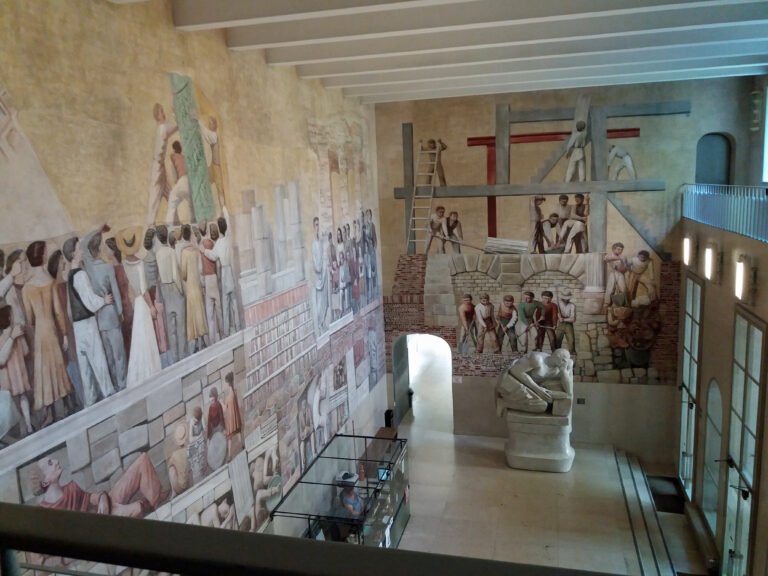
📷 Become a Cultural Heritage Online photographer
Share your photos of places: they stay published under your name as the author. The more they're seen, the more you get noticed — and soon a contest will reward the most appreciated photos.
Log in or sign up free to add a photoIs this page about you?
This page is read by travellers and heritage enthusiasts who find it on Google. Tell us how you are connected to this place and we will take it from there.