
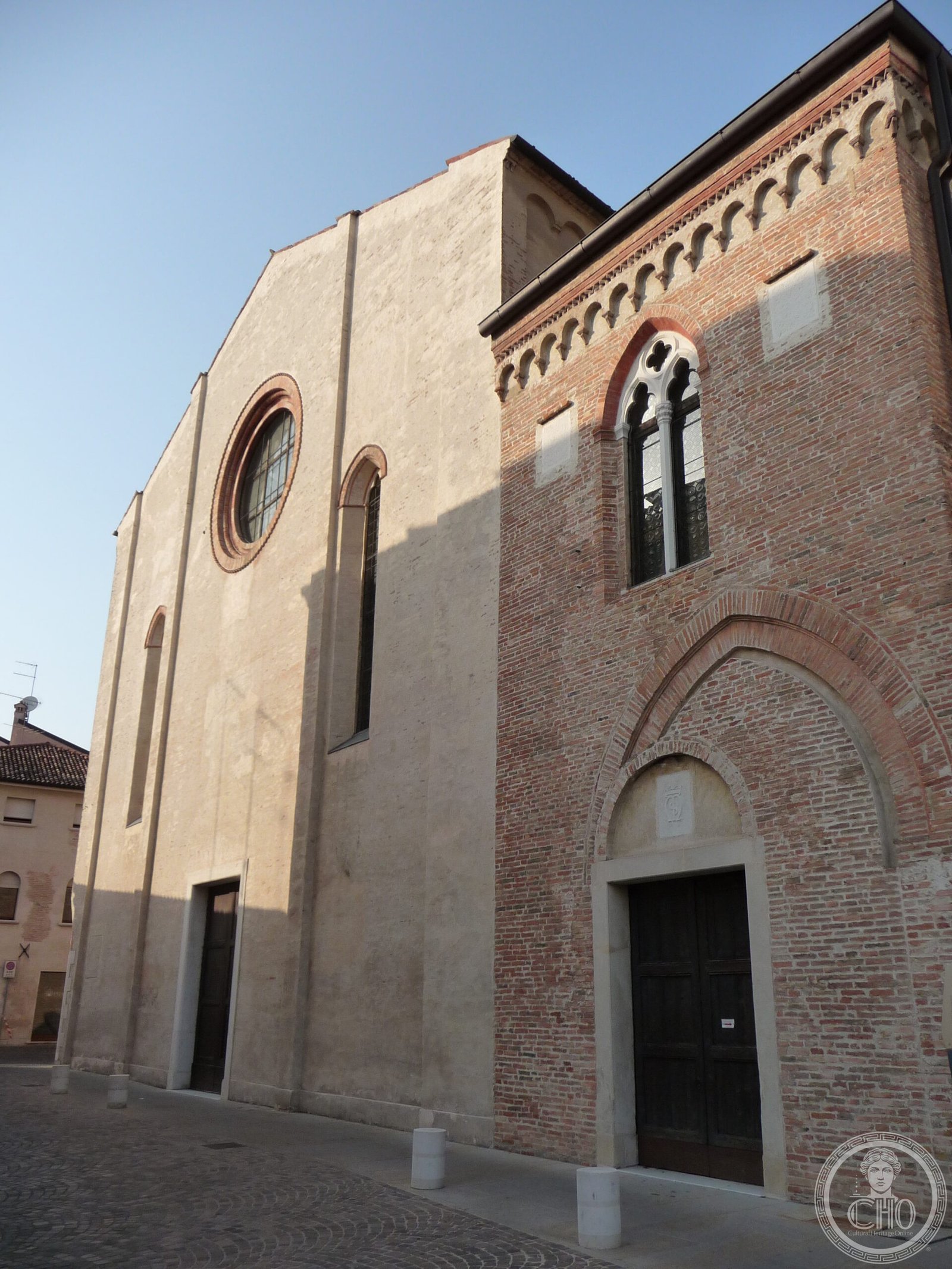
The Santa Caterina seat of the Civic Museums of Treviso occupies a deconsecrated fourteenth-century Servite church and its attached conventual buildings in the historic centre of Treviso, Veneto. The complex is home to a notable fresco cycle by Tomaso da Modena and houses collections of medieval and Renaissance art, including detached frescoes, painted panels, and decorative arts drawn from the city’s religious and civic heritage.
At a glance
- Type
- Museum in a deconsecrated medieval church and convent
- Period
- Church founded 14th century; conventual complex expanded 14th–15th century; museum use from the 20th century
- Style
- Gothic and late-medieval Venetian
- Location
- Via Santa Caterina, Treviso TV, Veneto, Italy
- Coordinates
- 45.6667° N, 12.2507° E
Overview
Santa Caterina dei Servi di Maria was built by the Servite order in Treviso during the fourteenth century and served as a major centre of religious life in the city until the Napoleonic suppressions of the early nineteenth century stripped it of its monastic community. After decades of varied institutional use, the complex was restored and adapted as a museum venue. Today it is one of the principal exhibition spaces of the Musei Civici di Treviso and a key destination for visitors interested in Gothic and early-Renaissance art of the Veneto.
History
The Servite order established its Treviso convent in the mid-fourteenth century, and the church of Santa Caterina was built and decorated over the following decades. Tomaso da Modena, the leading painter in Treviso at that time, produced a fresco cycle of the Life of Ursula for the Caturani family chapel within the church — a work that survived the building’s later vicissitudes and remains its most celebrated treasure. Napoleonic decrees suppressing religious orders in 1806 ended the conventual life, and the complex passed through municipal and military ownership before conservation efforts in the twentieth century stabilised the structure and opened it to the public.
What you see
The church interior preserves the restored fresco cycle by Tomaso da Modena depicting scenes from the Life of Saint Ursula, widely regarded as a masterpiece of fourteenth-century northern Italian painting. Detached frescoes from other Trevisan buildings are displayed alongside medieval altarpieces, painted crosses, and sculptural works. The conventual rooms house rotating exhibitions drawn from the civic collections, covering applied arts, archaeological finds, and works on paper. The Gothic architecture of the nave and the cloister spaces are themselves significant features of the visit.
Cultural significance
The Tomaso da Modena frescoes at Santa Caterina are among the finest surviving examples of mid-Trecento painting in northeastern Italy and place Treviso firmly on the itinerary of any serious student of pre-Renaissance art. The complex is a reminder that the Marca Trevigiana was, in the fourteenth century, a hub of artistic patronage independent from — though in dialogue with — the dominant culture of Venice.
Practical information
- Address
- Via Santa Caterina, 31100 Treviso TV, Italy
- Hours
- Check the official Musei Civici di Treviso website for current opening times; typically closed on Mondays
- Admission
- Check official website for ticket prices; combined tickets with the Museo Luigi Bailo often available
Getting there
The Santa Caterina complex is located in the historic walled centre of Treviso, approximately fifteen minutes on foot from Treviso Centrale railway station. The station is served by frequent regional trains from Venice (30 minutes), Padova, and Conegliano. Within the city, the centre is compact and best explored on foot; bicycle hire is also widely available in Treviso.
Sources & resources
See the place
Find it on the map
See this place and what’s around it →📷 Become a Cultural Heritage Online photographer
Share your photos of places: they stay published under your name as the author. The more they're seen, the more you get noticed — and soon a contest will reward the most appreciated photos.
Log in or sign up free to add a photoIs this page about you?
This page is read by travellers and heritage enthusiasts who find it on Google. Tell us how you are connected to this place and we will take it from there.