
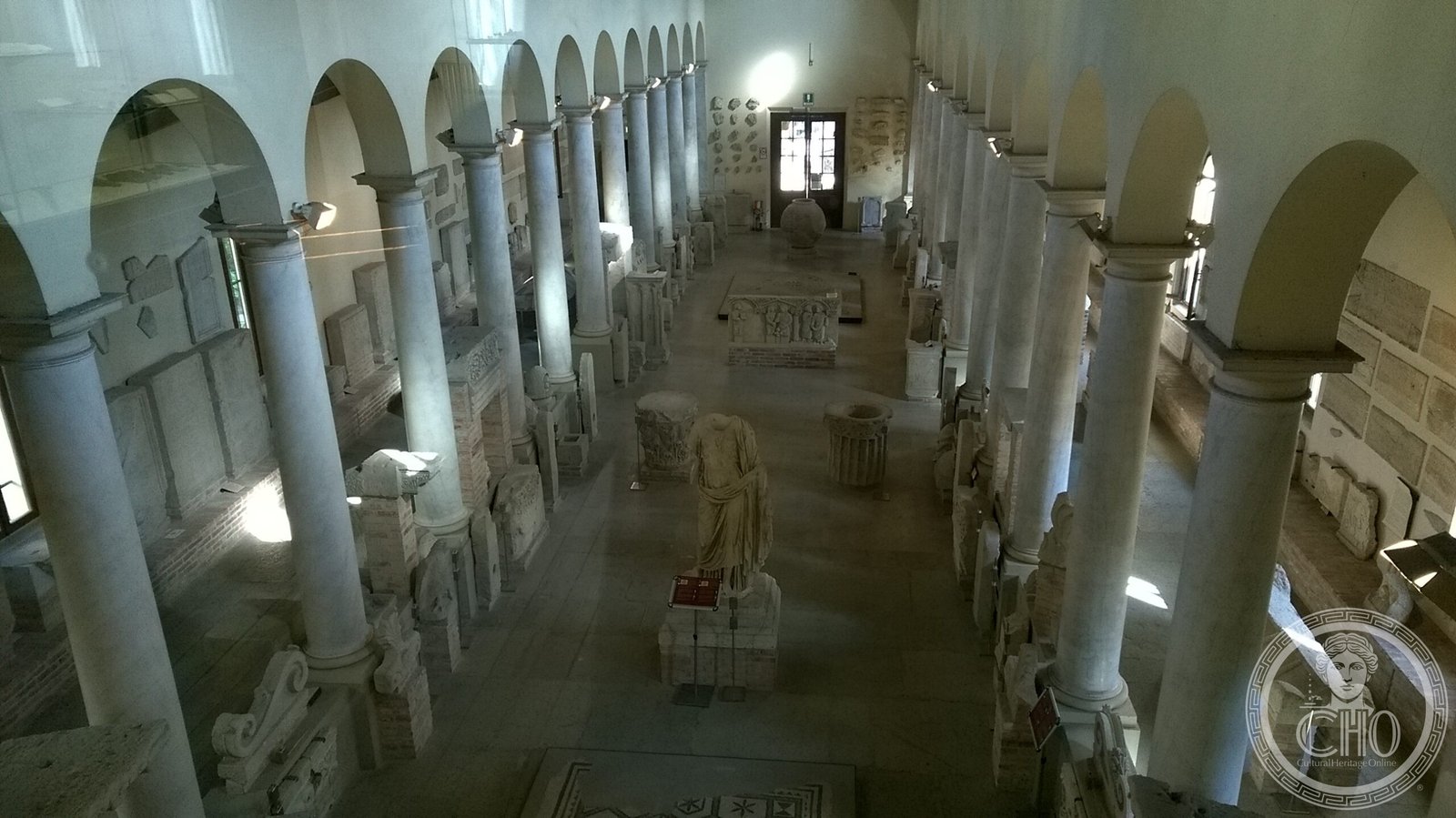
The Concordia National Archaeological Museum (Museo Nazionale Concordiese) in Concordia Sagittaria, in the Metropolitan City of Venice, preserves the archaeological heritage of ancient Iulia Concordia, a Roman colony founded in 42 BCE at the confluence of the Lemene river routes. Its collections document three centuries of Roman urban life in the Venetia et Histria region and include exceptional early Christian and late-antique finds from the ancient basilica complex excavated on site.
At a glance
- Type
- National archaeological museum
- Period
- Collections span from the Roman Republican period (1st century BCE) through Late Antiquity (5th–6th century CE)
- Style
- Roman colonial urban archaeology; early Christian funerary and architectural finds
- Location
- Concordia Sagittaria, Metropolitan City of Venice, Veneto
- Coordinates
- 45.7754° N, 12.8333° E
Overview
The museum occupies the site of the ancient Roman city of Iulia Concordia, which served as a legionary supply base and civilian colony on the strategic road network connecting Aquileia to the west. Systematic excavations beginning in the 19th century uncovered an extraordinary concentration of Roman funerary inscriptions, sculpture, and everyday objects, many of which are now displayed in the museum’s permanent galleries. The adjacent area preserves the ruins of a late-antique episcopal complex, one of the earliest Christian building groups in the Veneto.
History
Iulia Concordia was founded as a Roman colony in 42 BCE, serving initially as a military base and later as a prosperous civilian centre along the road between Aquileia and Altinum. The city reached its peak in the 1st–2nd centuries CE and continued as an important administrative and ecclesiastical centre into Late Antiquity, when its bishop was sufficiently prominent to participate in the councils of the early Church. The modern comune of Concordia Sagittaria preserves the ancient Latin name with the addition of the Roman epithet recalling the town’s role as an armoury centre.
What you see
The museum’s galleries display hundreds of Latin funerary inscriptions that constitute one of the richest epigraphic archives of Roman military and civil life in north-east Italy, including dedications by legionary soldiers of numerous units. Sculptural finds include portrait heads, architectural fragments, and votive reliefs. A dedicated section presents the early Christian finds: floor mosaics, column capitals, and baptismal remains from the 4th–5th-century basilica complex excavated within walking distance of the museum. Outdoors, visible archaeological remains include sections of Roman road and foundation walls.
Cultural significance
The Concordia Sagittaria epigraphic collection is one of the largest and most informative assemblages of Roman military inscriptions in Italy, providing irreplaceable data on the composition, movements, and social lives of Roman legions stationed in the north-east. The early Christian remains rank among the best-preserved evidence of the conversion of a Roman provincial town in the 4th century. Together they make the museum an essential reference for the archaeology of Roman and late-antique Veneto.
Practical information
- Address
- Via Seminario, 30023 Concordia Sagittaria VE, Italy
- Admission
- Fee applies; concessions available — check official website
Getting there
Concordia Sagittaria is approximately 70 km north-east of Venice and 20 km south of Pordenone. The most practical access is by car via the SR463 from Portogruaro (6 km). Portogruaro has a railway station on the Venice–Trieste line; from there local buses or taxis connect to Concordia Sagittaria. Cycling routes along the Lemene river valley also link the site to the broader Veneto cycle network.
Sources & resources
See the place
Find it on the map
See this place and what’s around it →📷 Become a Cultural Heritage Online photographer
Share your photos of places: they stay published under your name as the author. The more they're seen, the more you get noticed — and soon a contest will reward the most appreciated photos.
Log in or sign up free to add a photo