

Under Abbot Maurdramnus, between 772 and 780, the monks of Corbie developed Carolingian minuscule: a clear, legible script, perfected even before Charlemagne’s rise, which would become the model of the whole Carolingian renaissance and, centuries later, the direct basis of the lower-case characters of our modern alphabets. More than two hundred manuscripts from the great library of Corbie have survived to this day.
About Corbie Abbey
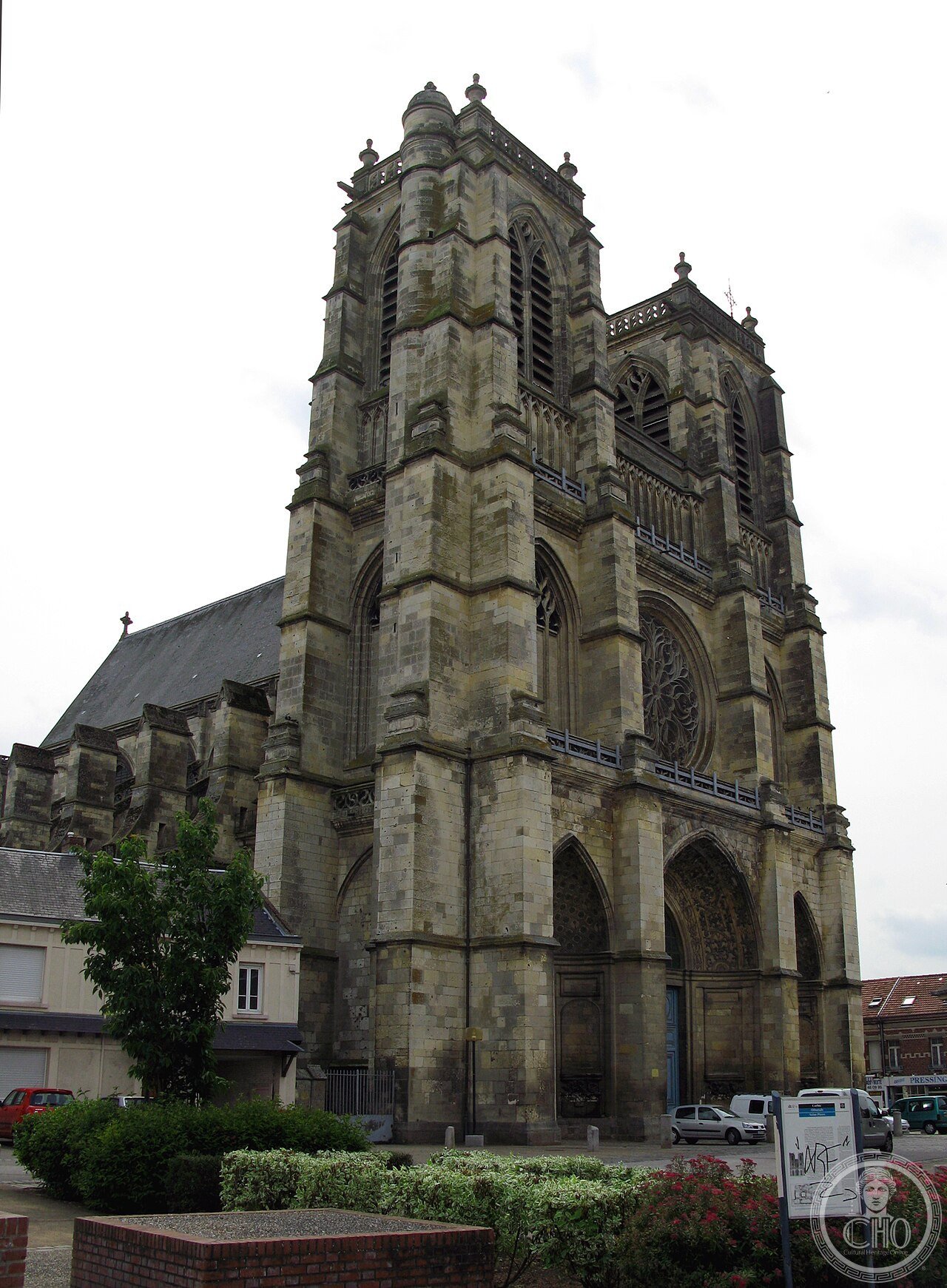
Corbie Abbey was founded in 661 under Merovingian royal patronage, by Balthild, widow of King Clovis II, and her son Clotaire III. The first monks came from Luxeuil Abbey, itself founded by Saint Columbanus in 590, and the distinctive Irish respect for classical learning cultivated there was carried directly forward into Corbie’s own institutional culture. Corbie became renowned above all for its library, assembled with manuscripts drawn from as far afield as Italy, and for its scriptorium, recognised today as one of the most important centres for the transmission of classical Antiquity’s texts into the medieval world. The abbey’s single most consequential contribution to world history is the development, in its scriptorium, of Carolingian minuscule — a distinctively clear and legible handwriting style. Recent scholarship has challenged the traditional assumption that this script originated under direct Carolingian imperial patronage: the first manuscript containing an early form of the script was actually produced at Corbie before Charlemagne’s own reign had even begun, with the first truly Carolingian-style writing emerging during the abbacy of Maurdramnus (772-780). Over two hundred manuscripts from Corbie’s great library survive today in collections worldwide. The present abbey church facade, constructed in the late 15th and early 16th centuries from Vaux-de-Somme stone, is celebrated for the tympanum of its flamboyant Gothic facade, featuring a large bas-relief depicting Christ’s entry into Jerusalem on Palm Sunday; the western facade was originally topped by twin towers, with the transept crossing crowned by a lantern tower reportedly 90 metres high. Today the church still stands with two massive surviving towers rising 55 metres, its vaults reaching 25 metres in height — one of the last great physical witnesses to the once-powerful Benedictine abbey whose intellectual influence radiated across medieval Europe.
Key facts
- Foundation: 661, by Balthild (widow of Clovis II) and her son Clotaire III; first monks from Luxeuil Abbey
- Carolingian minuscule: developed at Corbie’s scriptorium, perfected under Abbot Maurdramnus (772-780), predating Charlemagne’s own reign
- Library: over 200 surviving manuscripts, a major centre for transmitting classical Antiquity to the Middle Ages
- Present church facade: late 15th-early 16th century, flamboyant Gothic, tympanum depicting Christ’s entry into Jerusalem
- Towers: twin surviving towers, 55 metres tall; original lantern tower reportedly 90 metres
- Legacy: Carolingian minuscule is the direct ancestor of modern lowercase letterforms
History
Corbie’s specific role in developing Carolingian minuscule gives the abbey an outsized claim to world-historical significance extending far beyond its own regional or even national importance: the script’s combination of clarity, legibility, and relative speed of writing made it the preferred hand for the broader Carolingian Renaissance’s programme of manuscript copying and textual standardisation, and its subsequent revival by Renaissance humanists — who mistakenly believed it to be authentically ancient Roman script — makes it the direct structural ancestor of the lowercase letterforms used in virtually all Latin-alphabet typefaces and handwriting today, including the very text describing this abbey. The revision of scholarly dating placing the script’s true origin at Corbie itself, predating Charlemagne’s reign rather than originating under his direct imperial sponsorship as long assumed, reflects ongoing paleographic research refining our understanding of exactly how and where this globally consequential writing style actually developed.
Corbie’s library and scriptorium’s broader role transmitting classical texts into the medieval period situates the abbey within the small handful of genuinely pivotal European monastic institutions whose manuscript-copying activity determined which ancient works survived into later centuries at all — the specific texts preserved and copied at Corbie during this critical transmission period had a direct, measurable impact on which portions of classical Latin literature remained accessible to later medieval and Renaissance scholars.
What you see
The flamboyant Gothic facade, with its tympanum depicting Christ’s entry into Jerusalem, is the church’s essential surviving architectural showpiece, dating to the late 15th and early 16th centuries. The twin surviving towers, at 55 metres, still convey something of the original structure’s grander scale, when the transept crossing’s lantern tower reportedly reached 90 metres. The abbey’s documented connection to the development of Carolingian minuscule gives Corbie a genuinely unique claim to significance within the history of writing and typography itself.
Practical information
- Opening hours: generally open daily, check current hours before visiting; free admission
- Address: Rue de la Planchette, 80800 Corbie, France
Getting there
Corbie is reachable by car from Amiens (approximately 20 minutes) in the Somme department, Hauts-de-France. GPS: 49.9089° N, 2.5102° E.
Nearby
- Amiens — approximately 20 minutes away; home to Amiens Cathedral, the largest Gothic cathedral in France
- Somme battlefields — the WWI Somme battlefield memorials, within the same region
- Val de Somme — the surrounding river valley landscape
Sources
- Wikipedia — “Corbie Abbey” and “Carolingian minuscule” (en.wikipedia.org)
- Europeana — “How Corbie Abbey’s medieval manuscripts connect to today’s fonts” (europeana.eu)
- Val de Somme Tourisme — “L’abbatiale Saint-Pierre” (valdesomme-tourisme.com)
Find it on the map
See this place and what’s around it →📷 Become a Cultural Heritage Online photographer
Share your photos of places: they stay published under your name as the author. The more they're seen, the more you get noticed — and soon a contest will reward the most appreciated photos.
Log in or sign up free to add a photo