
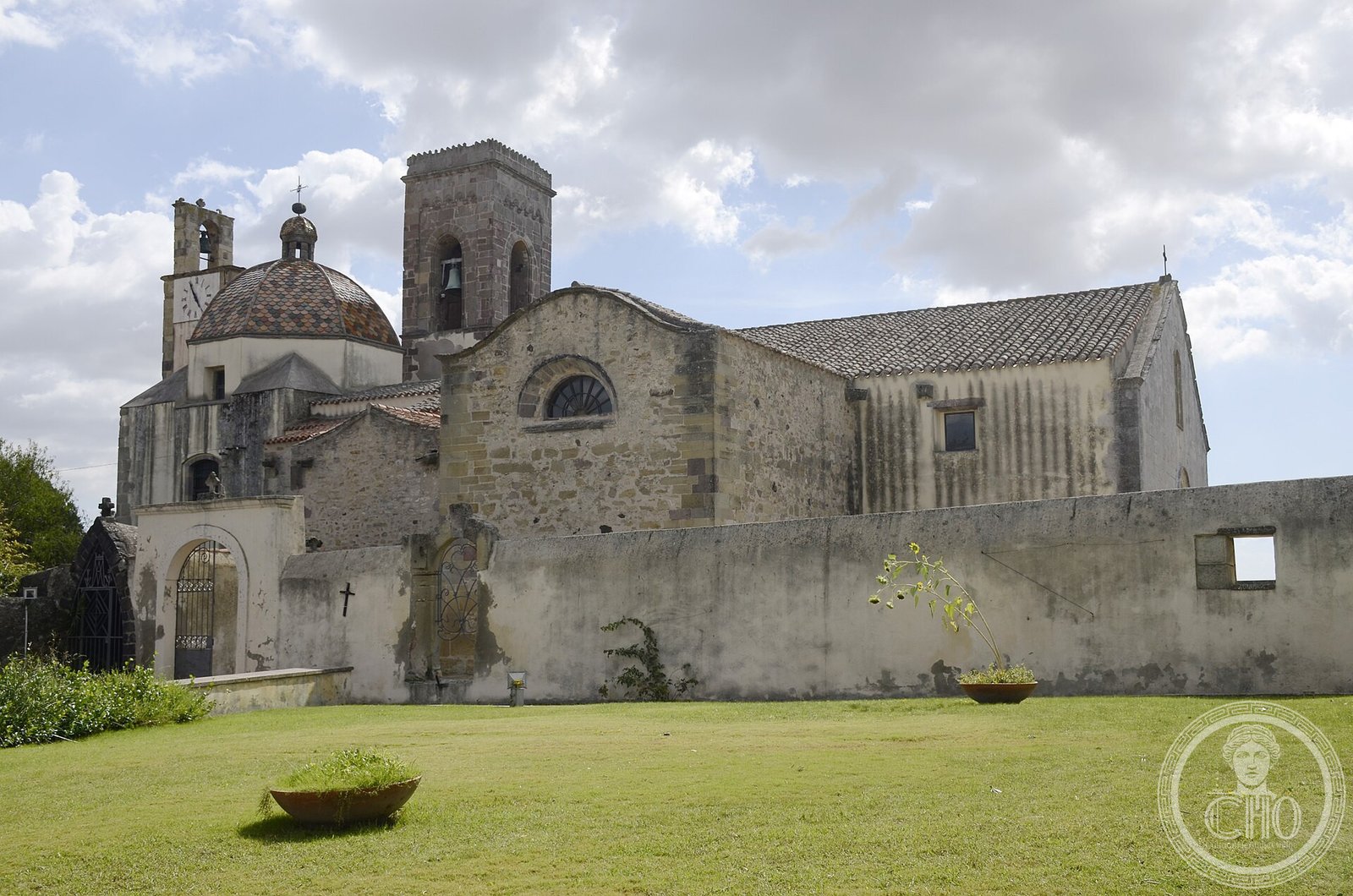
The Parish of the Immaculate Conception is the principal Catholic parish church of Barumini, a village in central-southern Sardinia celebrated for the nearby Su Nuraxi nuraghe, a UNESCO World Heritage Site. The parish serves the spiritual life of this small Marmilla community, whose territory overlaps with one of the most archaeologically significant landscapes in the prehistoric Mediterranean. Like many Sardinian village churches, the building reflects the island’s tradition of community-centred religious architecture, with a façade and interior shaped by local craft and devotion over several centuries.
At a glance
- Type
- Roman Catholic parish church
- Dedication
- Immaculate Conception of the Virgin Mary
- Location
- Barumini, Province of Sud Sardegna, Sardinia, Italy
- Diocese
- Diocese of Ales-Terralba (suffragan of the Archdiocese of Cagliari)
- Coordinates
- 39.7025° N, 9.0004° E
Overview
Barumini is a small agricultural village in the Marmilla subregion of central Sardinia, best known internationally for Su Nuraxi — the Bronze Age nuraghe complex inscribed as a UNESCO World Heritage Site in 1997. The Parish of the Immaculate Conception has served as the community’s primary place of worship for generations, anchoring the religious calendar of festivals and processions that characterise Sardinian village life. Its location in the heart of the village reflects the traditional Sardinian pattern in which the parish church forms the social and spatial nucleus of the community.
History
The veneration of the Immaculate Conception spread through Sardinia following the dogmatic definition of 1854 by Pope Pius IX, though many churches dedicated to this mystery had existed on the island since the Counter-Reformation. Barumini’s parish likely developed through successive enlargements of an earlier structure, with the present building reflecting the architectural approaches of the 19th and 20th centuries. The church stands within a village whose recorded history extends back through the Spanish colonial period to the medieval Giudicato of Arborea and, beneath the surface, to Nuragic prehistory.
What you see
The church presents a simple stone façade typical of Sardinian rural religious architecture, with a campanile rising above the village roofline. The interior follows a single-nave or three-nave plan common in the region, with devotional side altars and locally crafted furnishings. During the feast of the Immaculate Conception and other religious holidays, the church is the focus of traditional Sardinian processions, music, and community gatherings that preserve living intangible heritage alongside the built fabric. Visitors to Barumini for Su Nuraxi or Casa Zapata often encounter the church in the village centre.
Cultural significance
Rural parish churches in Sardinia function as custodians of both material and intangible heritage: they house historic artworks, vestments, and votive offerings accumulated over centuries, and they anchor the cycle of feast days and confraternity traditions that define communal identity. The Parish of the Immaculate Conception in Barumini is no exception, embodying continuities of faith and local culture that coexist with the world-famous archaeological landscape surrounding the village. Its preservation contributes to the holistic character of Barumini as a living heritage settlement.
Practical information
- Address
- Barumini, 09021, Province of Sud Sardegna, Sardinia
- Opening hours
- Open for religious services; visitors are welcome outside service times — check locally for current schedule
- Nearby
- Su Nuraxi (UNESCO) and Casa Zapata heritage centre are within walking distance
Getting there
Barumini is approximately 55 kilometres north of Cagliari. By car, take the SS131 towards Sanluri then follow the SP4 road north-east; journey time from Cagliari is about one hour. ARST buses connect Cagliari to Barumini with limited frequency, so a rental car is recommended. The church is centrally located and easily found on foot once in the village.
Sources & resources
- Barumini — Wikipedia
- Immaculate Conception — Wikipedia
- Cultural Heritage Online — culturalheritageonline.com
See the place
Find it on the map
See this place and what’s around it →📷 Become a Cultural Heritage Online photographer
Share your photos of places: they stay published under your name as the author. The more they're seen, the more you get noticed — and soon a contest will reward the most appreciated photos.
Log in or sign up free to add a photoIs this page about you?
This page is read by travellers and heritage enthusiasts who find it on Google. Tell us how you are connected to this place and we will take it from there.