
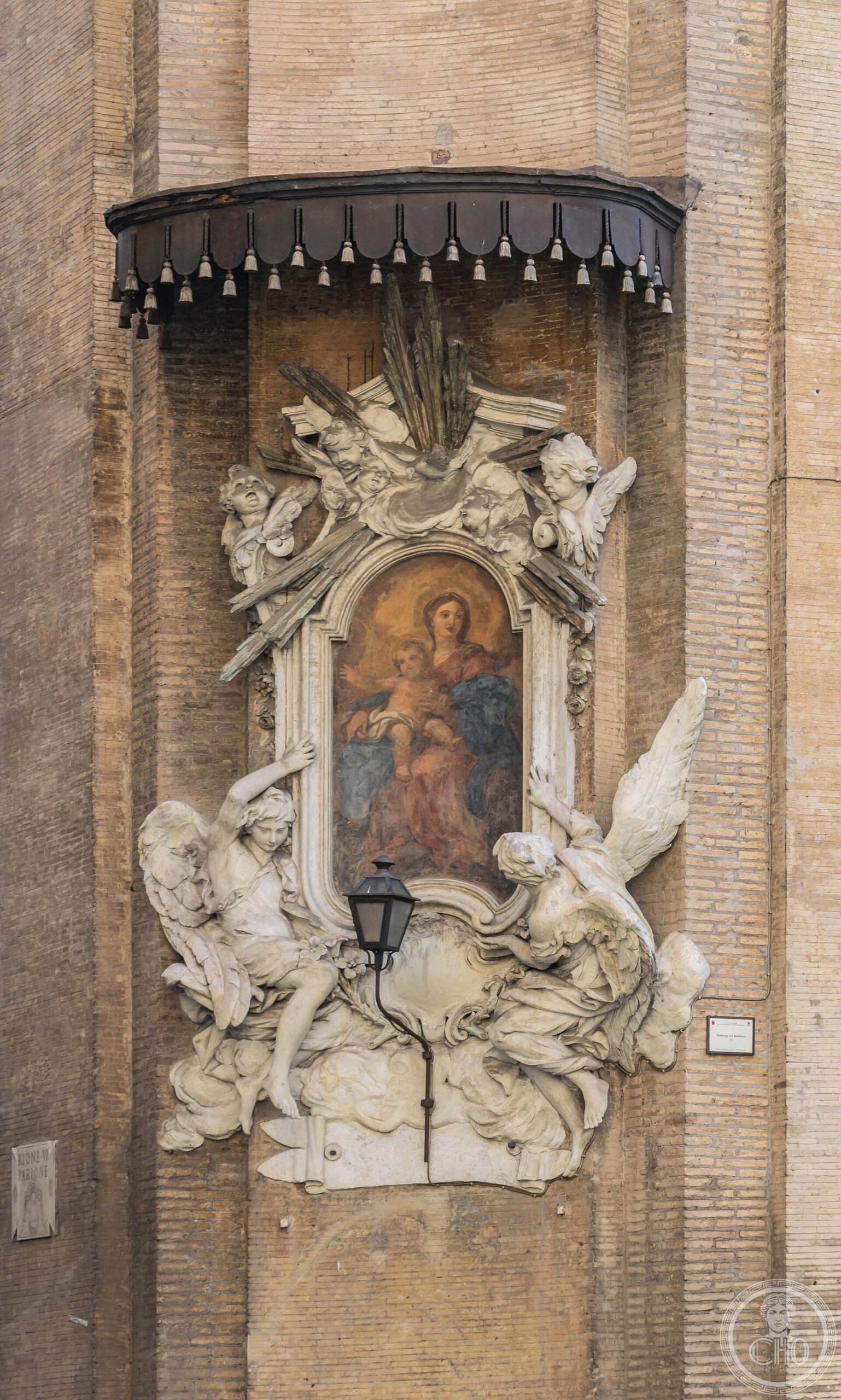
Navona Palace Luxury Inn occupies a historic Roman palazzo immediately adjacent to Piazza Navona, one of the most celebrated public spaces in Rome and in Europe, built on the site of the first-century AD Stadium of Domitian whose elongated oval plan the piazza still follows. The building stands at the heart of the historic rione of Parione, within the dense medieval and baroque fabric of the city centre on the left bank of the Tiber, surrounded by some of the most important monuments of Roman baroque architecture — including Gian Lorenzo Bernini’s Fountain of the Four Rivers and Francesco Borromini’s church of Sant’Agnese in Agone, both facing onto the piazza itself.
At a glance
- Type
- Historic Roman palazzo, now luxury inn
- Period
- 17th–18th century (palazzo structure); Roman antiquity (site)
- Style
- Roman baroque
- Location
- Piazza Navona area, Rione Parione, Rome, Italy
- Coordinates
- 41.8993° N, 12.4686° E
Overview
Piazza Navona was developed as Rome’s principal public market and festival space from the late fifteenth century onward, when Pope Sixtus IV cleared the ruins of Domitian’s stadium and established regular markets there. The piazza was given its definitive baroque character in the mid-seventeenth century under Pope Innocent X Pamphilj, whose family palace — Palazzo Pamphilj, today the Brazilian Embassy — closes the western side of the square, and who commissioned both Borromini’s Sant’Agnese and Bernini’s central fountain. The streets surrounding the piazza preserve an exceptionally dense concentration of baroque and Renaissance palaces, many of which have been converted to hotels and cultural uses while retaining their historic fabric.
History
The block immediately east of Piazza Navona, where the Navona Palace stands, was part of the medieval urban fabric that grew over the ruins of Domitian’s stadium — some of the stadium’s substructure remains visible in cellars and ground floors of buildings in the area. The palazzo itself would have been built or substantially renovated during the seventeenth or eighteenth century, when the area around the piazza was a centre of aristocratic and professional life in Rome, with law courts, notarial offices, and wealthy households clustered near the city’s commercial heart. The conversion of Roman palazzi to quality hospitality has been a feature of the neighbourhood since the twentieth century, as the historic centre became one of Europe’s primary heritage tourism destinations.
What you see
The building presents the characteristic features of a Roman baroque palazzo: a stone or brick facade of several storeys, articulated by cornices, piano nobile windows with sculpted surrounds, and a carriage entrance portal leading to an internal courtyard. From upper-floor windows or terraces, guests may have direct views across Piazza Navona to Borromini’s distinctive concave facade of Sant’Agnese and the obelisk and sculptural groups of Bernini’s Fountain of the Four Rivers. The surrounding streets — Via del Governo Vecchio, Via della Pace, Vicolo della Pace — retain much of their late-medieval and baroque character, lined with artisan workshops, wine bars, and antique dealers.
Cultural significance
Piazza Navona and its immediate surroundings constitute one of the most important ensembles of European baroque urbanism, a laboratory in which Bernini and Borromini — the defining rivals of seventeenth-century Roman architecture — produced their most celebrated works within metres of each other. The area is inscribed within the Historic Centre of Rome, a UNESCO World Heritage Site since 1980. Properties that have managed to preserve their historic structure while adapting to contemporary hospitality contribute to the living heritage of this exceptional urban fabric.
Practical information
- Address
- Piazza Navona area, Rione Parione, Rome 00186, Italy
- Admission
- Accommodation guests; check official website for rates
Getting there
The nearest metro station is Spagna (Line A) or Barberini (Line A), each approximately 20 minutes on foot across the historic centre. Bus lines 40, 46, 62, 64 stop at Corso Vittorio Emanuele II, a 5-minute walk from Piazza Navona. From Roma Termini, take the 40 Express or 64 bus. Roma Fiumicino Airport is 32 km west, accessible by Leonardo Express train to Termini (journey 32 minutes). The area is best explored on foot; car access in the ZTL (restricted traffic zone) requires a permit.
Sources & resources
See the place
Find it on the map
See this place and what’s around it →📷 Become a Cultural Heritage Online photographer
Share your photos of places: they stay published under your name as the author. The more they're seen, the more you get noticed — and soon a contest will reward the most appreciated photos.
Log in or sign up free to add a photoIs this page about you?
This page is read by travellers and heritage enthusiasts who find it on Google. Tell us how you are connected to this place and we will take it from there.