
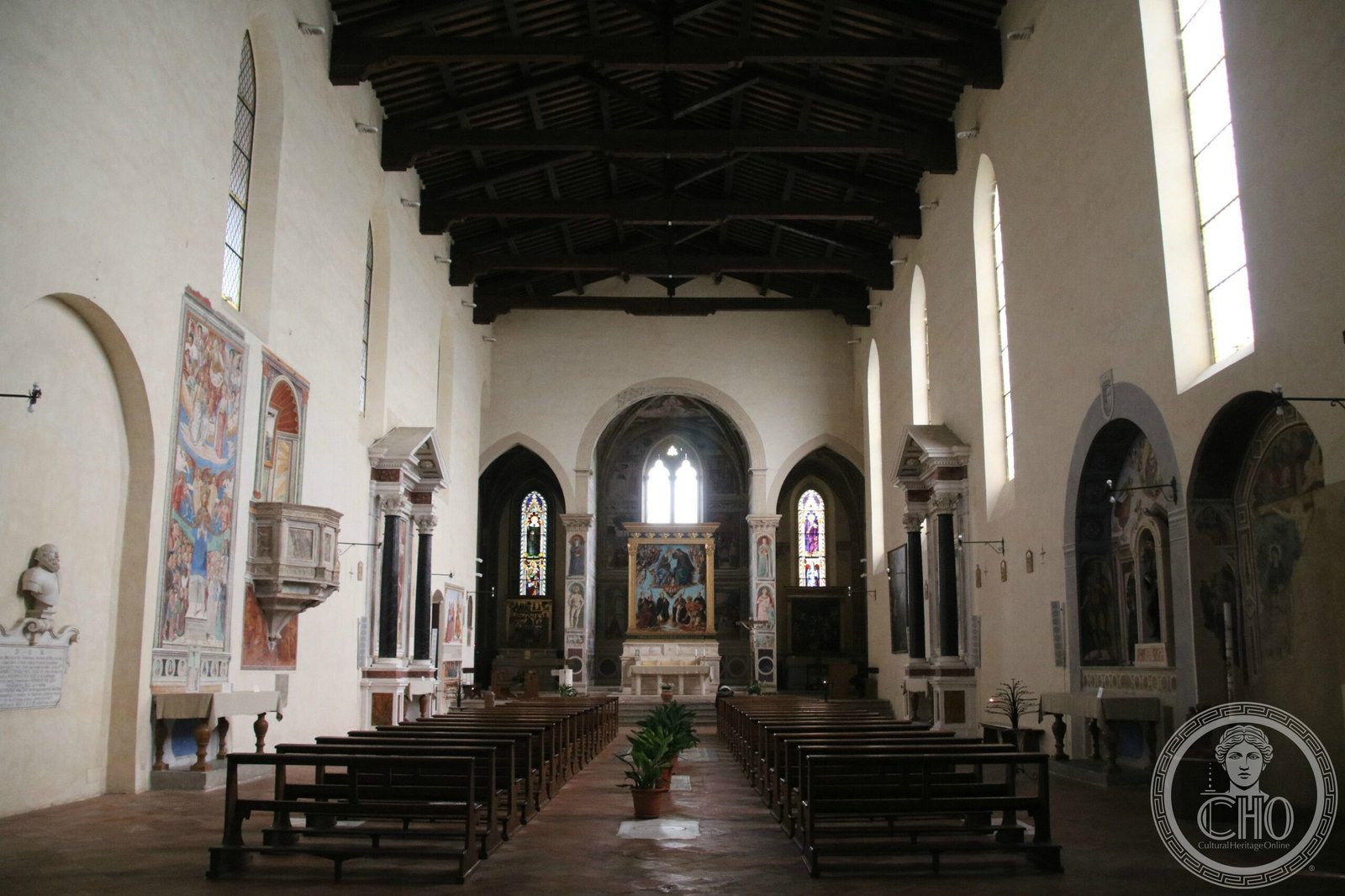
Sant’Agostino is a Roman Catholic church in Siena, Tuscany, standing on the Prato di Sant’Agostino in the Terzo di Città. Founded in the thirteenth century by the Augustinian Hermits, the building was substantially remodelled in the eighteenth century by Luigi Vanvitelli and retains notable Renaissance and Baroque paintings by Perugino, Ambrogio Lorenzetti, and Giovanni Antonio Bazzi known as il Sodoma.
At a glance
- Type
- Catholic church (mendicant order)
- Period
- Founded 13th century; remodelled 18th century
- Style
- Gothic origins; Baroque interior remodelling by Luigi Vanvitelli
- Location
- Prato di Sant’Agostino, Siena, Tuscany, Italy
- Coordinates
- 43.4707° N, 10.9539° E
Overview
Sant’Agostino occupies a prominent position on the Prato di Sant’Agostino, one of Siena’s quieter medieval squares. The church belongs to the Augustinian Hermits, who established their Sienese community here in the thirteenth century. Its interior preserves an outstanding collection of paintings spanning three centuries of Italian art.
History
The Augustinian Hermits received land in Siena in the latter half of the thirteenth century and began constructing a Gothic church and adjoining convent. The building underwent significant transformation in the eighteenth century when architect Luigi Vanvitelli was commissioned to remodel the interior in a restrained Baroque style. The convent complex later served various civic and educational functions following the suppression of religious orders under Napoleon.
What you see
The plain brick façade gives little hint of the artistic riches within. The single-nave interior features a Baroque coffered ceiling and an apse cycle attributed to the Sienese master Ambrogio Lorenzetti. Among the altarpieces, Perugino’s Crucifixion (c. 1506) in the Bichi Chapel stands out, as does Sodoma’s Adoration of the Magi. The lateral chapels accumulate works from the fourteenth through to the seventeenth century, offering a compressed survey of Sienese painting.
Cultural significance
The church is a minor but genuine node in the art-historical itinerary of Siena, complementing the more visited Duomo and Pinacoteca Nazionale. Its Perugino altarpiece in particular links Siena to the broader Umbrian Renaissance tradition centred on the master who taught Raphael.
Practical information
- Address
- Prato di Sant’Agostino, 53100 Siena SI, Italy
- Opening hours
- Check the official website or local tourism office for current opening times
- Admission
- Check official website for current ticket information
Getting there
Siena’s historic centre is a UNESCO-listed pedestrian zone. From Piazza del Campo, walk south along Via di Città and Via del Porrione, then turn into the Prato di Sant’Agostino — about 10 minutes on foot. City buses serve Siena from Florence (Sita Nord, approx. 75 minutes) and other Tuscan towns. The nearest train station, Siena FS, is a 15-minute walk or short bus ride from the centre.
Sources & resources
Find it on the map
See this place and what’s around it →Historical events at this place (1)
📷 Become a Cultural Heritage Online photographer
Share your photos of places: they stay published under your name as the author. The more they're seen, the more you get noticed — and soon a contest will reward the most appreciated photos.
Log in or sign up free to add a photo