
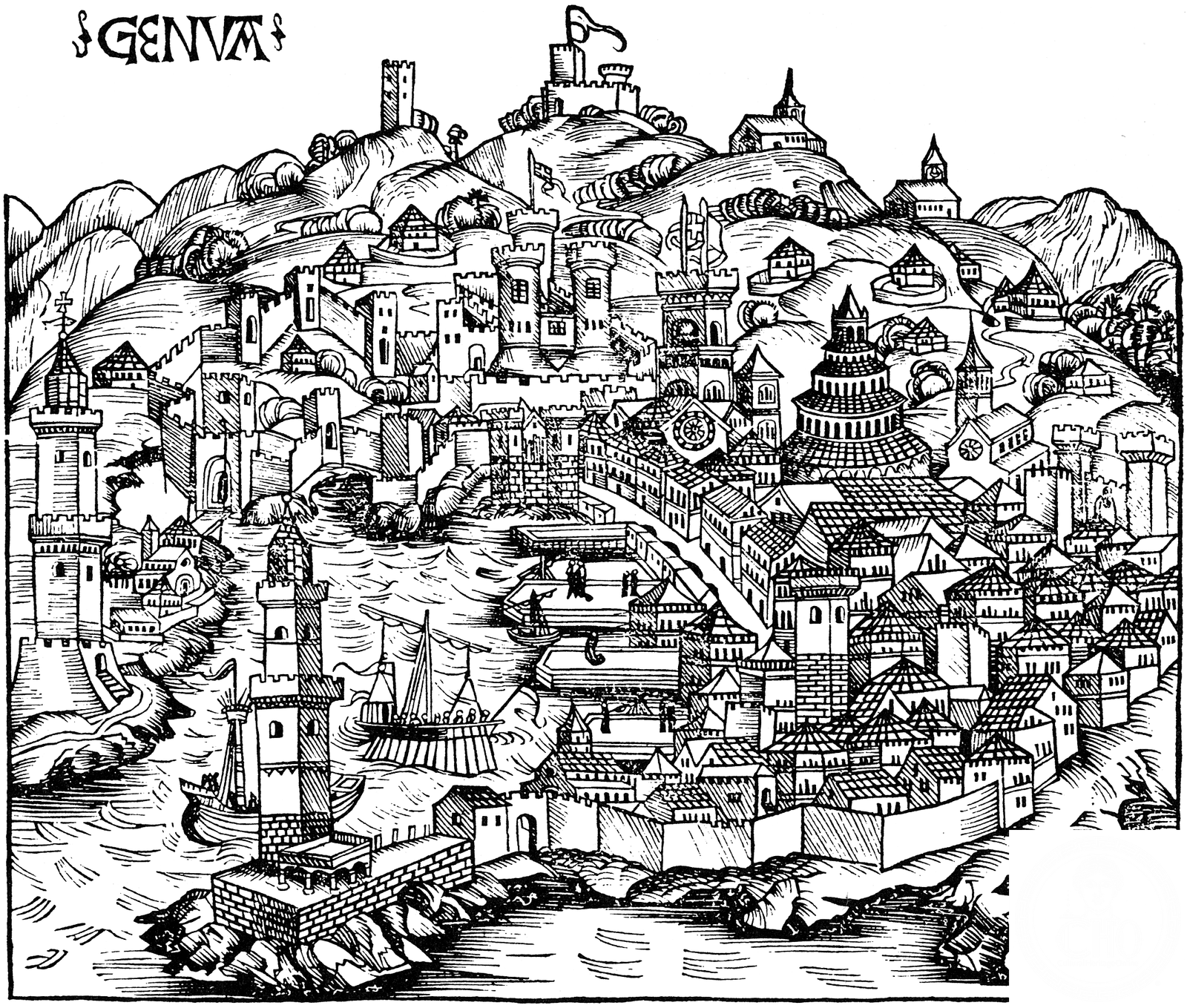
The Lantern of Genoa (La Lanterna) is a medieval lighthouse standing 76 metres tall on the promontory of San Benigno at the entrance to Genoa’s port, making it one of the tallest and oldest lighthouses in the world. Built in its current form in 1543 after repeated destructions and rebuilds over six centuries, the Lanterna has guided sailors into Genoa’s harbour since at least the twelfth century and remains a working navigation light as well as the enduring symbol of the city.
At a glance
- Type
- Lighthouse (medieval tower)
- Period
- First documented 1128; current structure 1543
- Style
- Medieval/Renaissance military-maritime architecture
- Location
- Promontory of San Benigno, port of Genoa, Liguria, Italy
- Height
- 76 metres (117 m above sea level)
- Coordinates
- 44.4043° N, 8.9046° E
Overview
The Lanterna is Genoa’s most recognisable landmark, visible from the sea long before the city itself comes into view. It stands on what was once the headland of San Benigno — largely quarried away in the twentieth century to expand the port — with the tower now rising directly from the edge of the dock infrastructure. The lighthouse has been in continuous operation for nearly nine centuries, surviving wars, earthquakes and sieges to remain both a functional navigational aid and the civic emblem of the Ligurian capital.
History
Documentary records place a lighthouse on this site as early as 1128, during Genoa’s rise as a major Mediterranean maritime power. The medieval tower was repeatedly damaged and destroyed: in 1318 Genoese forces themselves demolished an earlier structure to deny it to an enemy faction, and later rebuilds were followed by further destructions during the conflicts of the fourteenth and fifteenth centuries. The definitive reconstruction took place in 1543 under the direction of military engineers, producing the two-tiered octagonal tower that stands today. The famous Genoese explorer Christopher Columbus is said to have known the Lanterna in his youth, as his uncle was a lighthouse keeper here — though this biographical detail remains a matter of local tradition rather than documented fact.
What you see
The Lanterna consists of two superimposed octagonal prisms of dressed stone, each diminishing in diameter, capped by a glazed lantern room that houses the modern rotating light. The lower section rises from a rusticated bastion, a remnant of the sixteenth-century fortifications that once surrounded the headland. The exterior walls retain the warm ochre-grey tone of Ligurian pietra di Luserna stone. A small museum at the base of the tower traces the lighthouse’s history and the port’s development, with exhibits on maritime navigation and the city’s seafaring identity.
Cultural significance
The Lanterna appears in Genoa’s coat of arms and on countless civic symbols, functioning as the embodiment of the city’s maritime identity. It belongs to an elite group of medieval lighthouses still in active service, alongside the Tower of Hercules in A Coruña, and is listed among the tallest traditional lighthouses in the world. For Genoese people and the Ligurian diaspora worldwide, the Lanterna is as potent a symbol of home as the Eiffel Tower is for Parisians.
Practical information
- Address
- Calata Gadda (area portuale), 16126 Genova GE, Italy
- Museum hours
- Weekends and public holidays; check official website for seasonal schedule
- Admission
- Small fee for museum and tower access; exterior viewable free of charge
- Website
- Check Comune di Genova tourism portal for updated information
Getting there
The Lanterna is located in the western port area, approximately 1.5 km from Genova Piazza Principe railway station. Visitors can reach it on foot along the port waterfront via the Via Milano and the elevated park path (Parco della Lanterna), or by AMT city bus from the city centre. The lighthouse is not accessible by private car due to port security restrictions; use Piazza Principe as your base. The Parco della Lanterna provides a green promenade with direct views of the tower from ground level.
Sources & resources
See the place
Find it on the map
See this place and what’s around it →📷 Become a Cultural Heritage Online photographer
Share your photos of places: they stay published under your name as the author. The more they're seen, the more you get noticed — and soon a contest will reward the most appreciated photos.
Log in or sign up free to add a photoIs this page about you?
This page is read by travellers and heritage enthusiasts who find it on Google. Tell us how you are connected to this place and we will take it from there.