
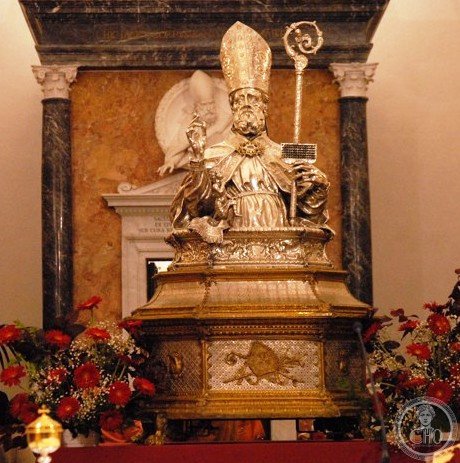
The Basilica and Sanctuary of San Biagio is an eighteenth-century Catholic sanctuary perched on Monte San Biagio above the town of Maratea on the Tyrrhenian coast of Basilicata. The site is famous throughout southern Italy for the colossal white marble statue of Christ the Redeemer — 21 metres tall — erected in 1965 on the summit of Monte San Biagio, which has become the most recognisable landmark of Maratea and a major pilgrimage and tourist destination. The sanctuary itself, however, preserves earlier ecclesiastical fabric and venerable relics of Saint Blaise, the town’s patron.
At a glance
- Type
- Catholic basilica and pilgrimage sanctuary
- Period
- Medieval origins; current structure largely 18th century
- Style
- Southern Italian Baroque with later interventions
- Location
- Monte San Biagio, Maratea, Basilicata, Italy
Overview
Maratea is known as “the city of saints” for its remarkable number of churches relative to its population, and the Sanctuary of San Biagio crowning Monte San Biagio is the spiritual heart of this tradition. The basilica houses relics of Saint Blaise (San Biagio), a fourth-century bishop of Sebaste martyred under Diocletian, who has been venerated as patron of Maratea since the medieval period. The towering Cristo Redentore statue erected beside the sanctuary in 1965 by sculptor Bruno Innocenti transformed the summit into a pilgrimage site visible from far out to sea.
History
The cult of San Biagio in Maratea is documented from the medieval period, when relics of the saint were brought to the town and a sanctuary was established on the mountain overlooking the sea. The present basilica structure dates primarily from the eighteenth century, when the earlier fabric was substantially rebuilt. The site gained renewed prominence in the twentieth century with the installation of the Cristo Redentore statue, commissioned by the Marsico family and inaugurated in 1965, which drew the sanctuary into the wider Italian tradition of large-scale sacred monuments on elevated sites.
What you see
The approach to the sanctuary passes through a dramatic landscape of wooded hillside before arriving at the summit complex. The basilica interior preserves devotional images, reliquaries, and votive offerings accumulated over centuries of pilgrimage. The Cristo Redentore statue — comparable in scale to the Cristo Rei of Lisbon though preceded in fame by the Rio de Janeiro original — stands with arms outstretched on the rocky summit overlooking the Tyrrhenian Sea. The panorama from Monte San Biagio encompasses the coastline of the Gulf of Policastro and, on clear days, the silhouettes of the Calabrian mountains.
Cultural significance
The sanctuary anchors the religious identity of Maratea and sustains an active pilgrimage tradition drawing visitors from across Basilicata and Campania. The combination of medieval relic veneration and the mid-twentieth-century monumental sculpture makes the site an unusual layering of different moments in Italian sacred culture, from Counter-Reformation devotion to the religious aesthetics of the post-war period.
Practical information
- Address
- Monte San Biagio, Maratea, Basilicata, 85046, Italy
- Coordinates
- 39.9879° N, 15.7242° E
- Opening hours
- Sanctuary open daily; check official website for basilica visiting times
- Admission
- Free access to the summit and statue area; check for basilica interior
Getting there
Maratea is served by the Maratea railway station on the Salerno–Reggio Calabria line. From the town, the sanctuary is reached by road up Monte San Biagio — a winding route accessible by car or, in summer, by shuttle bus. The summit area has a car park. Maratea is approximately 160 km south of Salerno.
Sources & resources
See the place
Find it on the map
See this place and what’s around it →📷 Become a Cultural Heritage Online photographer
Share your photos of places: they stay published under your name as the author. The more they're seen, the more you get noticed — and soon a contest will reward the most appreciated photos.
Log in or sign up free to add a photoIs this page about you?
This page is read by travellers and heritage enthusiasts who find it on Google. Tell us how you are connected to this place and we will take it from there.