
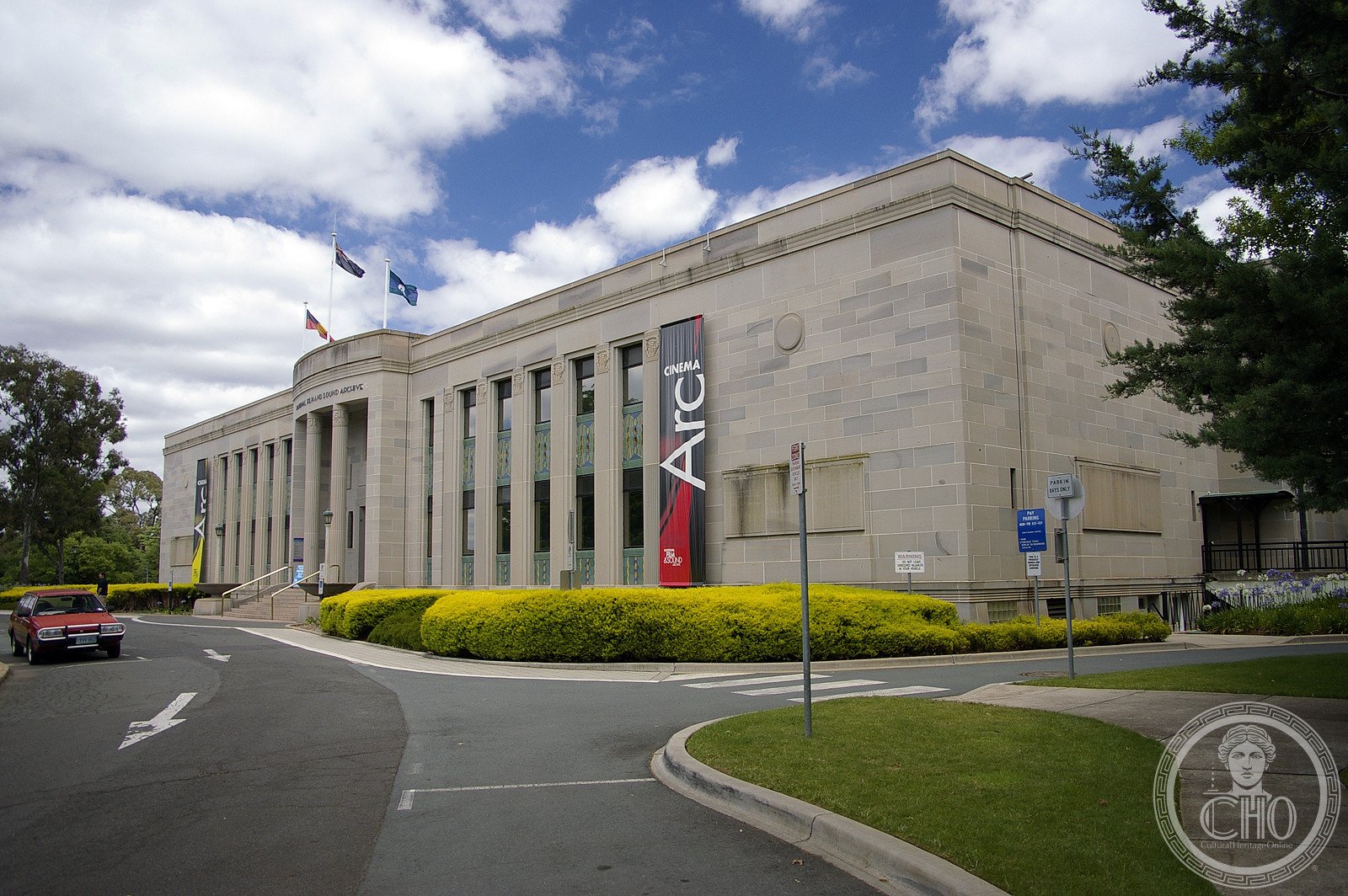
A pioneering natural history museum and medical research institute that preserved Australia’s native fauna and advanced scientific understanding of human nutrition before its collections passed to the National Museum of Australia.
At a glance
Founded in 1931 as a continuation of earlier zoological work, the Australian Institute of Anatomy occupied a Commonwealth Heritage–listed building in Acton. The institute combined specimen curation with active research, serving as both museum and laboratory until its closure in 1985.
History
The Institute was established in October 1931 following the relocation of the National Museum of Australian Zoology from Melbourne to Canberra. Its origins trace to the Australian Institute of Anatomical Research, founded in 1919 by Colin Mackenzie, who sought to document Australia’s native animals before they vanished. Mackenzie’s conservation vision extended beyond the Institute; he also established Healesville Sanctuary.
Over five decades, the AIA operated as both research centre and custodian of important cultural material, including collections from the Australian Institute of Aboriginal and Torres Strait Islander Studies. When the National Museum of Australia was established in 1980, it inherited the AIA’s accumulated collections. The NFSA relocated to the building in October 1984, and the Institute was formally abolished in December 1985.
What you see
The heritage-listed building in Acton remains a distinctive example of mid-twentieth-century institutional architecture. It now houses the National Film and Sound Archive.
Cultural significance
The Institute represents an important chapter in Australia’s scientific and cultural infrastructure. Its dual mission—preserving knowledge of extinct and endangered species while advancing human nutrition research—reflected the interdisciplinary nature of mid-century natural history museums. The building’s addition to the Commonwealth Heritage List in 2004 acknowledges its architectural and institutional importance to Australia’s cultural record.
Key facts
- Founded: October 1931
- Closed: December 1985
- Location: Acton, Canberra, Australian Capital Territory, Australia
- Coordinates: −35.283, 149.121
- Commonwealth Heritage List: 22 June 2004
- Current occupant: National Film and Sound Archive (since October 1984)
Practical information & getting there
The building is located in Acton, a suburb north of central Canberra. The site is now occupied by the National Film and Sound Archive; visitors interested in the Institute’s collections should contact the National Museum of Australia or the NFSA directly.
Sources & resources
Find it on the map
See this place and what’s around it →📷 Become a Cultural Heritage Online photographer
Share your photos of places: they stay published under your name as the author. The more they're seen, the more you get noticed — and soon a contest will reward the most appreciated photos.
Log in or sign up free to add a photoIs this page about you?
This page is read by travellers and heritage enthusiasts who find it on Google. Tell us how you are connected to this place and we will take it from there.