
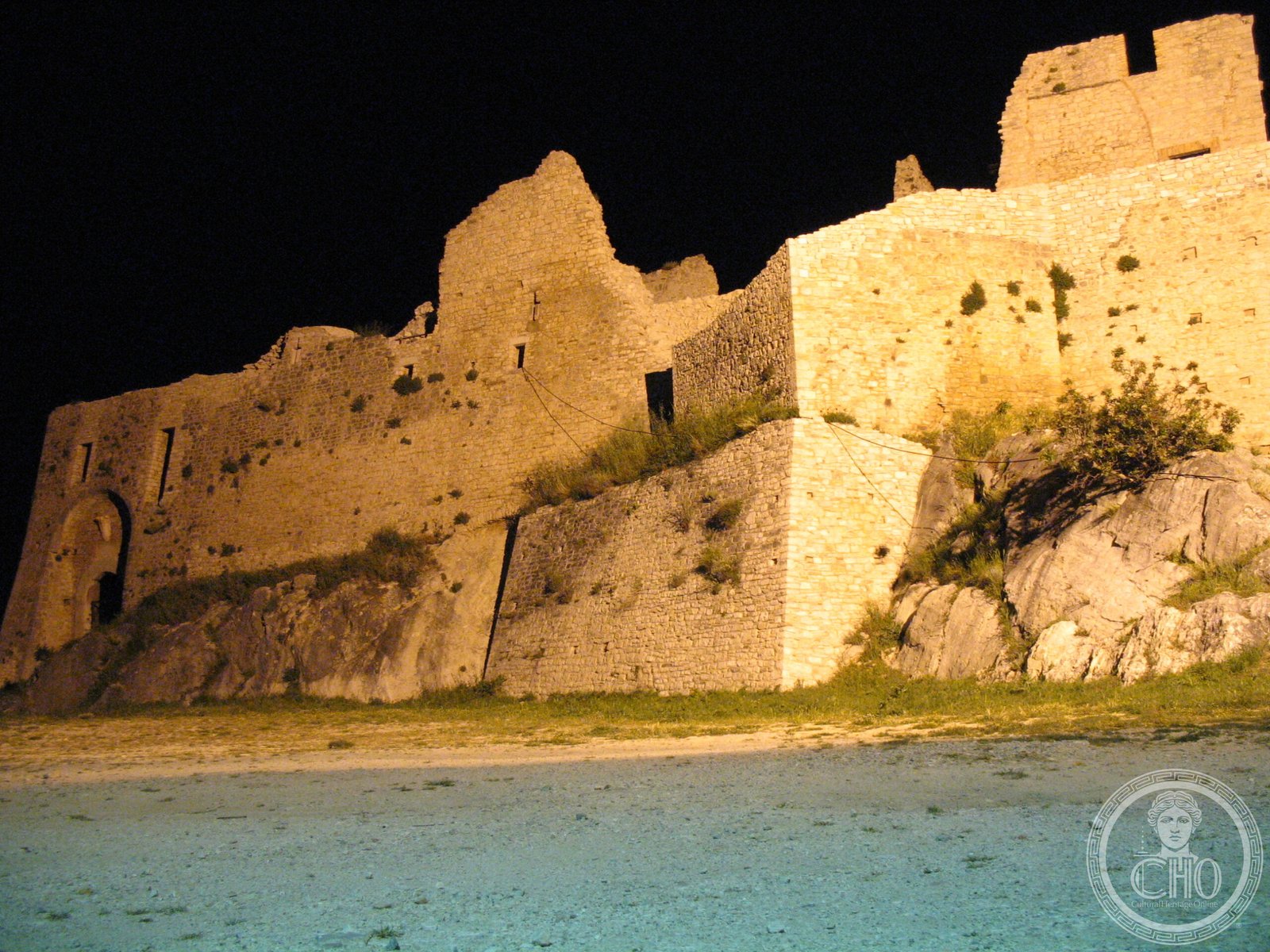
Castropignano Castle is a ruined medieval fortress dominating the hill town of Castropignano in the Province of Campobasso, Molise, some ten kilometres northwest of the regional capital. The castle’s origins are rooted in the early medieval period of Lombard and later Norman control over the Apennine interior, and the structure was substantially rebuilt and expanded under successive feudal lords including the powerful Monforte family. Its silhouette against the wooded Molise hills remains the defining image of one of the region’s most evocative hilltop villages.
At a glance
- Type
- Medieval hilltop castle (fortified residence)
- Period
- 10th–14th century; Norman and Angevin phases
- Style
- Southern Apennine military architecture
- Location
- Castropignano, Province of Campobasso, Molise, Italy
- Coordinates
- 41.6224° N, 14.5609° E
Overview
Castropignano is a small comune about 10 kilometres northwest of Campobasso in the Molise Apennines. The castle crowns the rocky spur on which the historic village is built, following a pattern of hilltop fortification common throughout medieval southern Italy. The site was inhabited from an early period, and the castle’s strategic position on routes connecting the Biferno valley with the broader Samnite uplands made it a significant point of control for the feudal lords of the region.
History
The castle’s earliest documented history relates to the Norman reorganisation of southern Italy in the eleventh and twelfth centuries, when the Apennine interior was divided into a complex system of lordships. Under Angevin rule from 1266 onwards, the fortification was reinforced as part of a wider programme of castle building and consolidation across the Kingdom of Naples. The Monforte family, who held Castropignano among their Molise properties, are associated with significant building works at the site. The castle was gradually abandoned during the early modern period as defensive needs shifted and feudal structures dissolved.
What you see
The surviving fabric includes sections of the perimeter wall, the base of the main tower (torre maestra), and the foundations of ancillary buildings within the fortified enclosure. The masonry uses local limestone and calcareous sandstone characteristic of Molise construction. From the castle ruins, visitors enjoy sweeping views over the Biferno valley and the wooded ridge landscape that has defined this part of Molise for centuries. The village below preserves a medieval street layout with stone-built houses clustered around the castle spur.
Cultural significance
Castropignano Castle is a key element in the chain of medieval fortifications that marks the feudal geography of Molise and forms part of Italy’s broader network of castle heritage protected under the Code of Cultural and Landscape Heritage. The site is significant for understanding the Norman and Angevin organisation of the Apennine interior and the feudal families — including the Monforte — who shaped southern Italian political history.
Practical information
- Address
- Castropignano, 86010, Province of Campobasso, Molise, Italy
- Access
- Exterior viewable from the village; check the local comune for any guided access to the castle interior
- Hours
- Check official website or Comune di Castropignano for current visiting information
Getting there
Castropignano is approximately 10 kilometres northwest of Campobasso, accessible by car via the SS87 and local provincial roads. Campobasso railway station is the nearest rail hub, served by lines from Naples, Rome, and Pescara. From Naples, the drive via the A1 and SS87 takes about two hours. Pescara airport (Abruzzo) is approximately 100 kilometres to the east and provides the most convenient air access.
Sources & resources
See the place
Find it on the map
See this place and what’s around it →📷 Become a Cultural Heritage Online photographer
Share your photos of places: they stay published under your name as the author. The more they're seen, the more you get noticed — and soon a contest will reward the most appreciated photos.
Log in or sign up free to add a photoIs this page about you?
This page is read by travellers and heritage enthusiasts who find it on Google. Tell us how you are connected to this place and we will take it from there.