
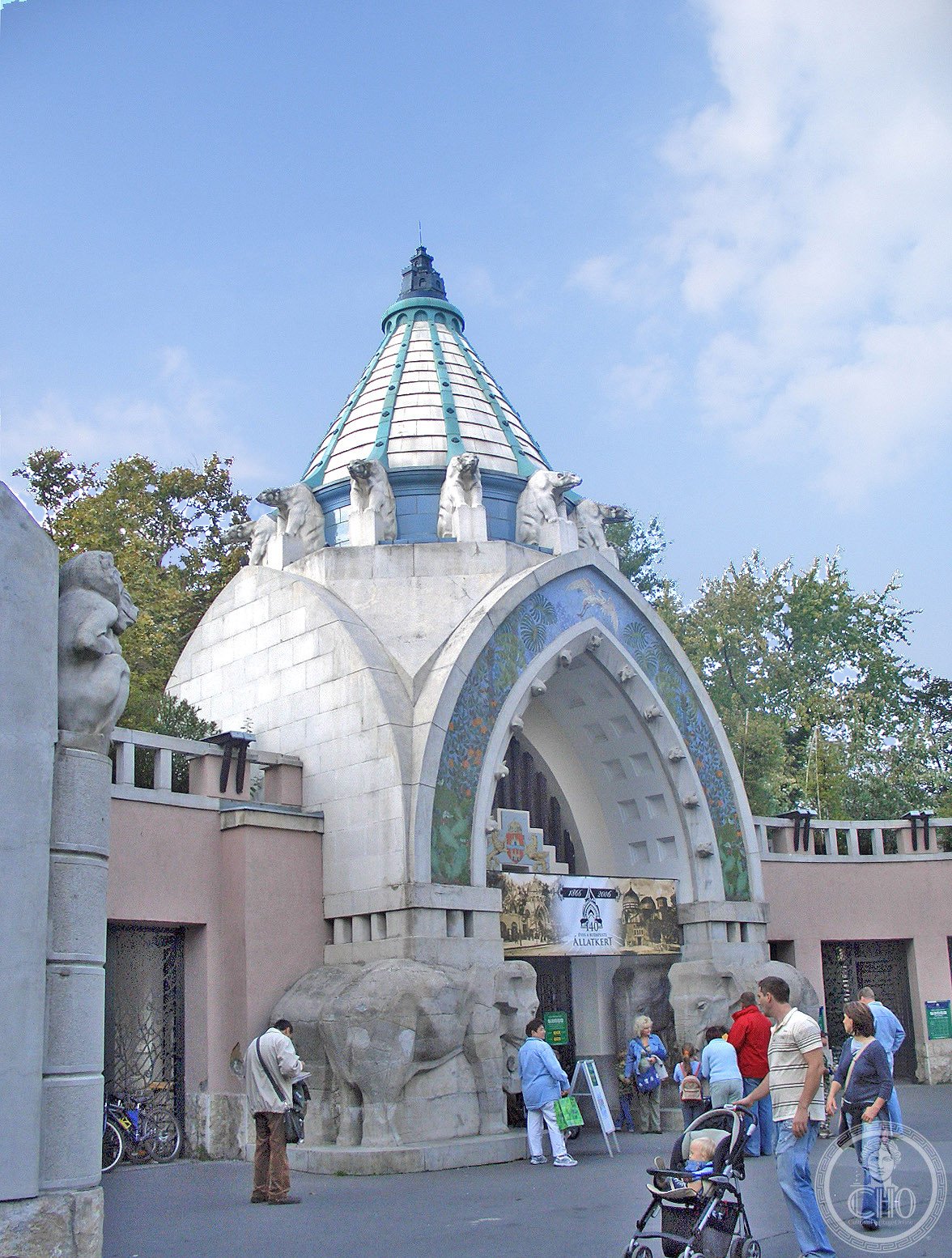
Hungary’s oldest zoo and one of the world’s first, housing over 1,000 animal species within the green heart of Budapest’s City Park.
At a glance
The Budapest Zoo & Botanical Garden (Fővárosi Állat- és Növénykert) is remarkable for its city-centre location—unusual for a major zoo. It attracts between one and 1.1 million visitors annually and combines animal collections with botanical displays and significant Art Nouveau architecture.
History
The zoo opened on 9 August 1866, establishing itself as Hungary’s first zoo and among the earliest zoological gardens in Europe. Its location within Budapest’s City Park placed it at the cultural heart of the capital from its inception, shaping the institution’s role as both scientific and civic resource.
What you see
The grounds feature a collection of Art Nouveau buildings designed by architects Kornél Neuschloss and Károly Kós, whose ornamental structures reflect early 20th-century aesthetic principles. The zoo’s layout integrates these heritage buildings with animal enclosures and garden spaces across its City Park setting.
Cultural significance
As Hungary’s founding zoo, the institution established standards for animal collection and care in the region. The combination of Art Nouveau heritage buildings and naturalistic botanical gardens represents a distinctive approach to zoological design, where architecture and horticulture enhance the visitor experience alongside conservation aims.
Key facts
- Country: Hungary
- City: Budapest
- Founded: 9 August 1866
- Animal species: 1,072
- Annual visitors: 1–1.1 million
- Coordinates: 47.518, 19.0775
- Notable residents: Komodo dragons; wombats (since December 2011)
- Status: Nature reserve
Practical information & getting there
The zoo is accessible by Line 1 of the Budapest Metro, making it easily reachable from anywhere in the city. Budapest Card holders receive a 25% discount on single-entry tickets. The central location within City Park offers access to surrounding cultural attractions.
Sources & resources
Find it on the map
See this place and what’s around it →📷 Become a Cultural Heritage Online photographer
Share your photos of places: they stay published under your name as the author. The more they're seen, the more you get noticed — and soon a contest will reward the most appreciated photos.
Log in or sign up free to add a photoIs this page about you?
This page is read by travellers and heritage enthusiasts who find it on Google. Tell us how you are connected to this place and we will take it from there.