
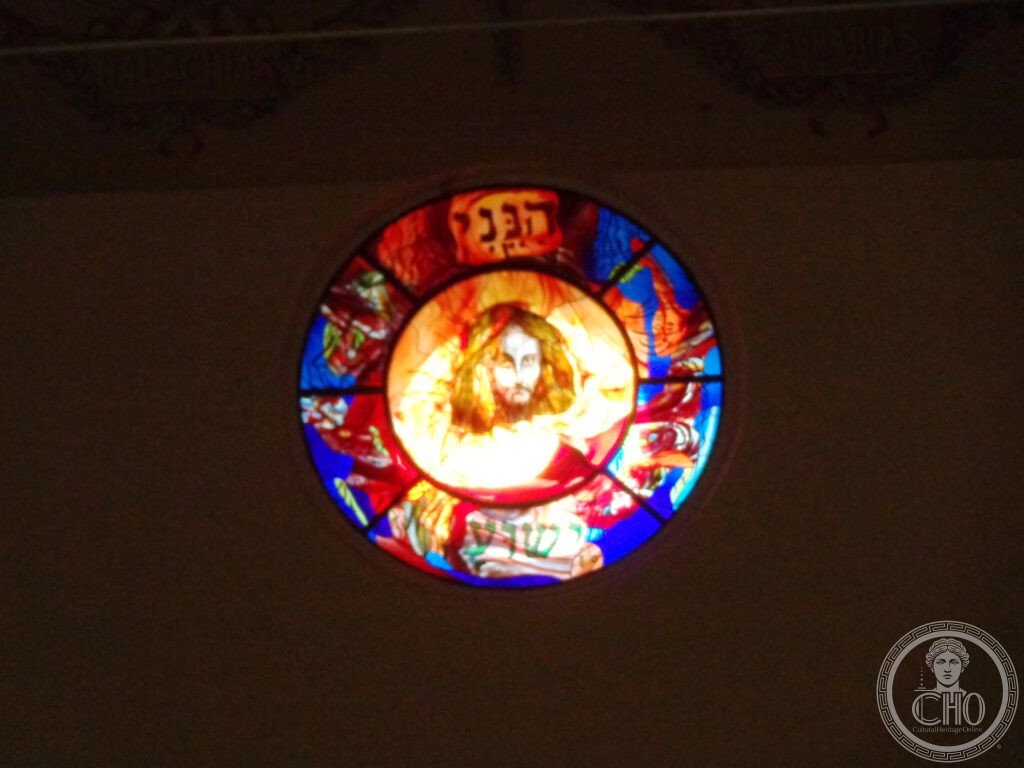
Sul colle di Patti, un monastero benedettino voluto dal conte Ruggero custodisce ancora il sarcofago della regina Adelasia, sopravvissuto a due terremoti e a una ricostruzione barocca.
At a glance
Patti Cathedral, dedicated to Saint Bartholomew the Apostle, stands on the hill above the Tyrrhenian coast of northeastern Sicily. It began as the church of a Benedictine monastery founded in 1094 by Count Roger of Altavilla (Roger I), and it still holds the tomb of Queen Adelasia del Vasto, Roger’s third wife and mother of Roger II, who died in Patti in 1118. Raised to a bishopric in 1131, the church has been rebuilt more than once after earthquake damage, most heavily following 1693, so what visitors see today is largely a Latin-cross building of the 17th-18th centuries wrapped around older elements, including a Gothic Norman portal and reused ancient columns. It remains the seat of the Diocese of Patti.
Key facts
- Founded: 1094, as the church of the Benedictine monastery of SS. Salvatore, under Count Roger of Altavilla.
- Bishopric since: 1131, when the Archbishop of Messina elevated the monastery to a diocese.
- Plan: Latin cross, single nave, transept with deep lateral chapels, quadrangular apse.
- Facade: three registers in lava stone and white marble, with a Gothic central portal on zoomorphic capitals and a Baroque south portal of 1742 bearing a Bourbon coat of arms.
- Royal tomb: 16th-century marble sarcophagus of Queen Adelasia del Vasto in the Chapel of Santa Febronia.
- Notable works: a marble Virgin with Child (1500) by Antonio Vanella, a Madonna and Child attributed to Antonello de Saliba (1531), and an Adoration of the Shepherds by the Flemish painter Guglielmo Borremans (1725).
History
The cathedral’s origin lies in the Benedictine monastery of the Most Holy Savior, founded on 6 March 1094 by Count Roger of Altavilla, the Norman conqueror of Sicily. The attached church was built to receive the remains of Roger’s wife Adelasia del Vasto, who died in Patti in 1118 and was, briefly, regent of the county of Sicily and later of the Crusader principality of Antioch through a second marriage. In 1131 the Archbishop of Messina, Ugone, elevated the monasteries of Patti and Lipari to a joint bishopric, conferring episcopal dignity on the abbot Giovanni; the diocese gained full autonomy from the Holy See under Pope Boniface IX in 1399.
Little survives of the Norman-era building beyond fragments and the memory of its layout: the church was substantially rebuilt after damage in 1639 and again, more drastically, after the catastrophic Val di Noto earthquake of 1693, which is the source of the Latin-cross plan and the deep lateral chapels seen today. Further blows followed: the 1908 Messina earthquake damaged the structure again, as did the 1978 earthquake that prompted a further round of structural reinforcement. Despite this repeated rebuilding, the cathedral kept its Gothic western portal and, until 1980s restoration works uncovered it, an overlooked 13th-century five-arch structure known locally as the “Galleria,” built against the facade before the present church took shape.
What you see
The facade reads in three horizontal registers, built from dark lava stone blocks set against inserts of white marble tracery, a chromatic contrast typical of northeastern Sicily. At its center, the Gothic portal is framed by triple colonnettes carved with zoomorphic capitals supporting a deeply recessed pointed arch; above it, blind twin-light openings and a triangular pediment complete the composition. On the south flank, a fully Baroque portal added in 1742 offers a deliberate contrast: Corinthian capitals over Ionic bases, a heavy molded architrave, and a tympanum carrying the coat of arms of the Bourbon monarchy.
Inside, the Chapel of Santa Febronia holds the real reason to visit: the Renaissance sarcophagus of Queen Adelasia, carved in 1557, showing the queen in recumbent effigy above her original 12th-century burial. Nearby, Antonino Gagini’s marble tabernacle of 1538 and a set of Egyptian granite columns salvaged from the ruins of ancient Tyndaris, a few kilometers along the coast, testify to how many building phases and borrowed materials this cathedral has absorbed across nine centuries.
Practical information
- Access: free entry as a working parish and diocesan cathedral; the interior is generally open to visitors outside of Mass times.
- Time needed: 30-45 minutes for the facade, the Chapel of Santa Febronia, and the main altarpieces.
- Combine with: the archaeological area of Tindari, in the same municipality, for a half-day itinerary.
Getting there
Patti sits on the Tyrrhenian coast of Sicily between Messina and Palermo, just off the A20 motorway (Patti exit) and on the Palermo-Messina railway line, with the cathedral a short uphill walk from the historic center. The nearest airport is Catania-Fontanarossa, roughly two hours by car; Messina, with ferry connections to the Italian mainland, is about an hour away. Drivers coming from either direction on the A20 should take the Patti exit and follow signs for the Centro Storico. The cathedral stands at approximately 38.1381, 14.9641.
Nearby
- Villa Romana di Patti Marina — a 4th-century Roman villa with peristyle mosaics and a bath complex, discovered in 1973 during motorway construction, a few minutes from central Patti.
- Santuario di Tindari — the sanctuary of the Black Madonna, built over the acropolis of ancient Tyndaris, in the Tindari hamlet within the municipality of Patti.
- Archaeological area of Tyndaris — Greek and Roman ruins, including a theatre and basilica, adjoining the Tindari sanctuary.
Sources
- Diocesi di Patti, Basilica Cattedrale San Bartolomeo, diocesipatti.it
- Wikipedia (Italian), Basilica cattedrale di San Bartolomeo
- Wikipedia (English), Patti Cathedral
- Regione Siciliana, Parco Archeologico di Tindari, Villa Romana di Patti Marina
Find it on the map
See this place and what’s around it →📷 Become a Cultural Heritage Online photographer
Share your photos of places: they stay published under your name as the author. The more they're seen, the more you get noticed — and soon a contest will reward the most appreciated photos.
Log in or sign up free to add a photoIs this page about you?
This page is read by travellers and heritage enthusiasts who find it on Google. Tell us how you are connected to this place and we will take it from there.