
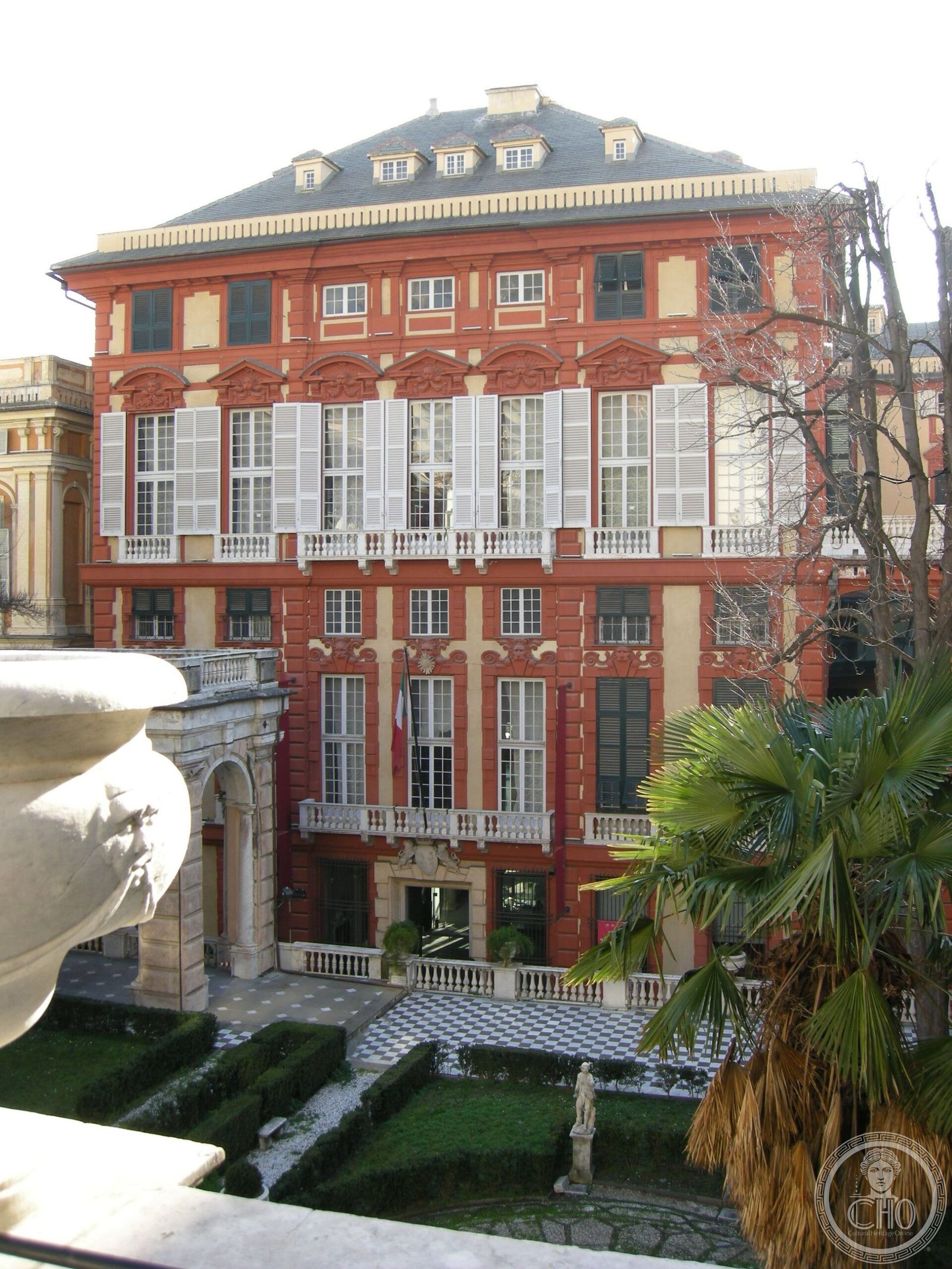
Palazzo Rosso is a late-17th-century patrician residence on Via Garibaldi in Genoa, built for the Brignole Sale family between 1671 and 1677 and named for the distinctive red ochre of its facade. One of the outstanding Baroque palaces of the Ligurian capital, it houses a major civic art gallery with works by Anthony van Dyck, Guido Reni, Albrecht Dürer, Paolo Veronese, and Bernardo Strozzi. Together with the adjacent Palazzo Bianco and Palazzo Tursi it forms the core of the Musei di Strada Nuova and is part of the UNESCO World Heritage Site “Palazzi dei Rolli di Genova.”
At a glance
- Type
- Patrician palace and civic art museum
- Period
- 1671–1677 (construction); donated to the municipality 1874; museum opened 1874
- Style
- Genoese Baroque
- Location
- Via Garibaldi 18, 16124 Genova GE · 44.4111° N, 8.9321° E
Overview
Palazzo Rosso stands near the eastern end of Via Garibaldi, its warm red facade immediately distinguishing it from the pale stone of its neighbours. The Brignole Sale family, who commissioned it and inhabited it for two centuries, were among the most culturally ambitious of Genoa’s aristocracy, assembling a picture collection that ranked with the best private galleries in 17th-century Italy. Maria Brignole Sale De Ferrari bequeathed the palace and its contents to the city of Genoa in 1874, creating one of the earliest public museums in Liguria. The frescoed reception rooms on the piano nobile remain among the grandest surviving Baroque interiors in the city.
History
Construction began in 1671 under the patronage of Gio Francesco II Brignole Sale and was substantially complete by 1677. The palace was subsequently enhanced with elaborate ceiling frescoes by Gregorio De Ferrari, Domenico Piola, and others — the leading Genoese Baroque painters of the generation. Van Dyck had earlier spent two extended periods in Genoa (1621–1627) and painted celebrated portraits of the Brignole Sale family, several of which remain in the collection. The palace survived the bombardment of Genoa by a French fleet in 1684 and continued to be embellished through the 18th century. Following its donation to the municipality it underwent restoration and was opened to the public as a museum.
What you see
The street facade rises four storeys above Via Garibaldi, its red-painted render punctuated by white stone window surrounds and a central balcony. The state rooms of the piano nobile retain their original Baroque layout: sequence of antechambers, sala d’onore, and private apartments, each with ceiling frescoes depicting mythological and allegorical subjects. The picture gallery presents works chronologically and by school — Flemish and Dutch paintings (Van Dyck, Jan Roos), Genoese Baroque (Strozzi, Piola, De Ferrari), and Italian old masters (Veronese, Reni, Palma il Vecchio). A rooftop terrace added in the 20th century offers views over the medieval caruggi and the port.
Cultural significance
Palazzo Rosso is part of the “Palazzi dei Rolli di Genova” UNESCO World Heritage Site inscribed in 2006, which recognised the Strada Nuova ensemble as an outstanding example of early modern patrician urban planning. The museum’s Van Dyck holdings — including the double portrait of Paolina Adorno Brignole Sale with her son — are among the finest groups of his Genoese period work in any single collection. The palace is also a reference point for the study of Genoese Baroque ceiling painting, a regional tradition that influenced decorators across Catholic Europe.
Practical information
Palazzo Rosso is open Tuesday to Friday and weekends; closed on Mondays. It is ticketed jointly with Palazzo Bianco and Palazzo Tursi as the Musei di Strada Nuova — a combined ticket provides the best value. Check the Musei di Genova website for current hours, admission prices, and temporary exhibition schedules. Audio guides are available at the entrance.
Getting there
Via Garibaldi is a 10-minute walk from Genova Piazza Principe railway station. Metro line 1 stops at Darsena, a further 5-minute walk. Buses 18, 19, 20, and others run along Via Cairoli nearby. The street is pedestrianised; parking is available in garages on the periphery of the historic centre.
Sources & resources
See the place
Find it on the map
See this place and what’s around it →📷 Become a Cultural Heritage Online photographer
Share your photos of places: they stay published under your name as the author. The more they're seen, the more you get noticed — and soon a contest will reward the most appreciated photos.
Log in or sign up free to add a photoIs this page about you?
This page is read by travellers and heritage enthusiasts who find it on Google. Tell us how you are connected to this place and we will take it from there.