
A bowed single-stringed instrument and the epic poetry sung to accompany it, the gusle has shaped storytelling across the Balkans for centuries. The player holds the instrument vertically between the knees, drawing out harmonic tones as verses of heroic folklore unfold.
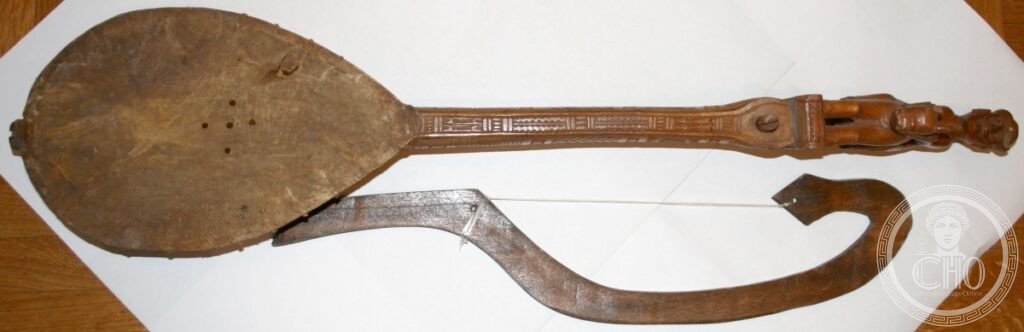
In UNESCO’s words
Singing to the accompaniment of the Gusle – a simple string instrument – is an ancient art of performing primarily heroic epics practised for centuries as a form of historical memory and an expression of cultural identity. Performances involve a complex form of interaction between the audience and performer and are based on the skills and creativity of soloist artists (guslars): the guslars’ ability to dramatize poetic content, body language and charisma are key for successful performances. The repertoire includes songs predominantly about mythical and historical heroes, events from the legendary past, ancient or recent history and, less commonly, ballads and humorous songs. Stage performances take place locally, at festivals, and as part of commemoration practices. Covering a wide range of topics, the songs reflect the value system of the community and their interactive character fosters community feeling. Most modern guslars acquire the basic singing and playing skills from more experienced players in their family, local community or a guslar association, but the skills are also transmitted in public music schools. Local organizations are assembled around the Union of Guslars of Serbia, whose efforts have resulted in the establishment of the Festival of Young Guslars and the Assembly of the Young Guslars of Serbia.
Official description, UNESCO Intangible Cultural Heritage List — Singing to the accompaniment of the Gusle
At a glance
Gusle epic singing pairs a simple bowed string instrument with the human voice to perform heroic epics and other narrative songs. A soloist artist, called a guslar, uses singing and instrumental accompaniment to tell stories from mythical and historical traditions. The performance depends on the guslar's ability to dramatize the poetry, use body language, and bring charisma to the presentation, creating interaction between performer and audience.
Origins & history
This ancient art has been practised for centuries as a form of historical memory and cultural identity. The repertoire draws from the legendary past, ancient and recent history, along with ballads and humorous songs. Through generations, guslars have passed down both the skill and the stories themselves, making the tradition a living link to the community's past.
The practice
Modern guslars learn their craft from experienced players in their family, local community, or guslar association, though public music schools also teach these skills. Performances take place locally, at festivals, and during commemoration practices. The repertoire covers songs about mythical and historical heroes, historical events, and other topics that reflect the community's values. The interactive nature of performance—the complex exchange between soloist and audience—is central to how the tradition works.
Cultural significance
Gusle singing preserves collective memory and expresses cultural identity for the community. The songs reflect the value system of the people and foster community feeling through their interactive character. Local organizations work to sustain the tradition, coordinated through the Union of Guslars of Serbia, which has established the Festival of Young Guslars and the Assembly of the Young Guslars of Serbia to ensure transmission to new generations.
Key facts
- Country: Serbia
- Inscribed: 2018
- UNESCO list: Representative List of the Intangible Cultural Heritage of Humanity
- UNESCO reference: 01377
- UNESCO vocabulary: Bowed string instruments; Epic poetry; Vocal music
- Map: not shown — UNESCO’s official description of this element names no locality, and a living tradition is practised across a community, not at one address.
Where to experience it
Gusle singing thrives within the communities that practise this ancient tradition across Serbia. Visitors can encounter live performances at local festivals, cultural gatherings, and commemorative events, where guslars—both established and young—showcase their dramatic skill and charisma. The Festival of Young Guslars and the Assembly of the Young Guslars of Serbia offer dedicated opportunities to experience this heritage, while public music schools and guslar associations transmit the singing and playing techniques to new generations, ensuring the tradition's continuation.
Sources & resources
- UNESCO — official element page: Singing to the accompaniment of the Gusle
- UNESCO — open data record: Intangible Heritage List, reference 01377
- UNESCO — official video: UNESCO film on this element — embedded on this page
- UNESCO — official photograph: Photograph of this element — Ivana Antić Masniković — Ethnographic Museum in Belgrade, 2014
- Reference — Wikipedia (secondary): Gusle — consulted as a secondary reference, not as confirmation
- Cultural Heritage Online: Our archive and city guides

Sources
- S1 — Lord, Albert B. The Singer of Tales. Harvard University Press, 2000. ISBN 978-0-674-00283-8.
- S2 — Ćirković, Sima M. The Serbs. Wiley-Blackwell, 2004. ISBN 978-0-631-20471-8.
Spotted an error? Write to editorial@culturalheritageonline.com and we correct it the same day.