
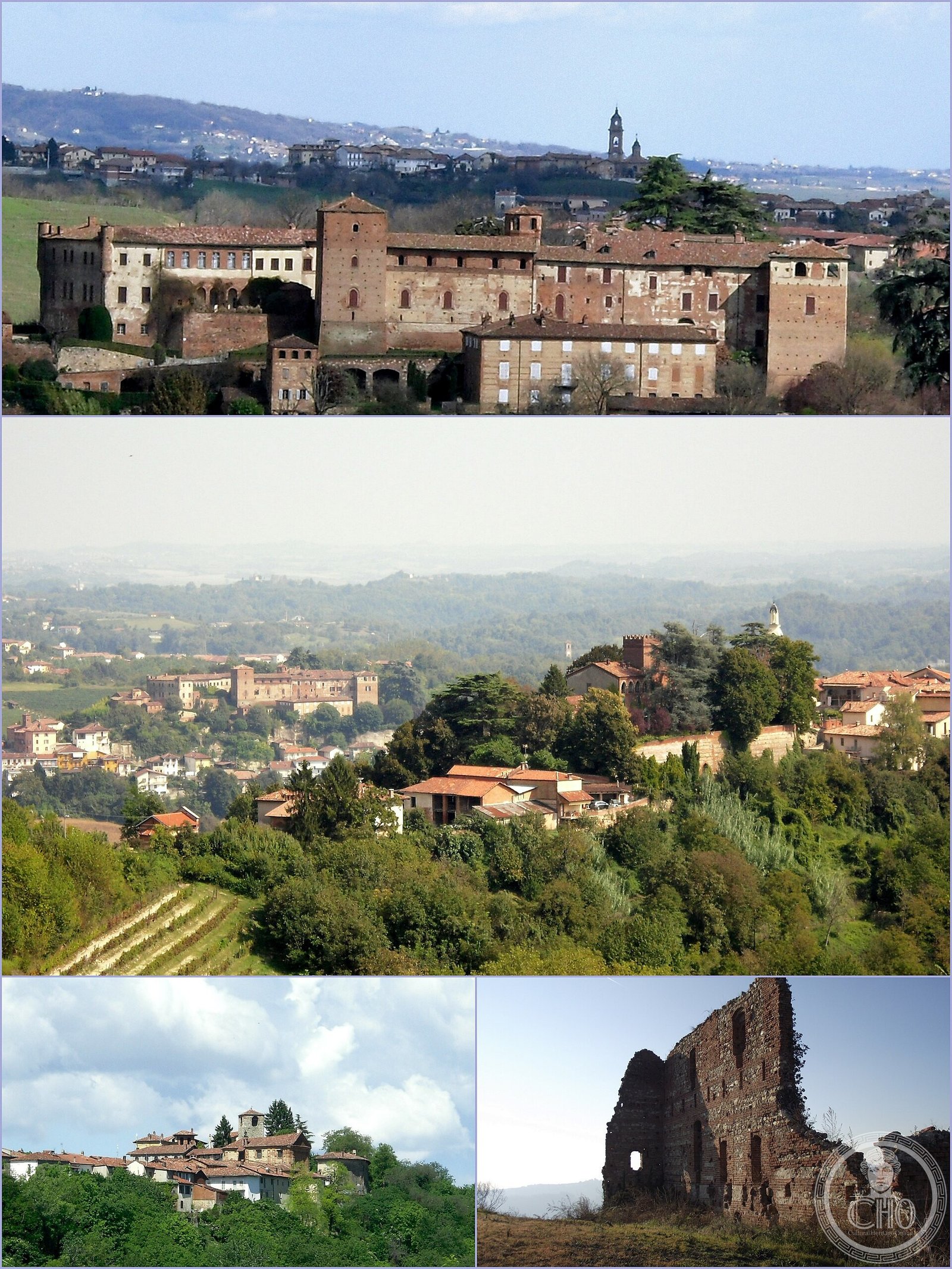
Passerano Marmorito is a small rural comune in the Province of Asti, in the Piedmont region of northern Italy, situated approximately 25 kilometres east of Turin and 20 kilometres northwest of Asti. The village, set in the gently rolling hills of the Monferrato zone, preserves a compact medieval and early modern built heritage within an agricultural landscape historically associated with viticulture and the Piedmontese noble tradition.
At a glance
- Type
- Historic village and comune
- Period
- Medieval origins; documented from the 12th century
- Style
- Piedmontese hill village vernacular; Monferrato agricultural landscape
- Location
- Province of Asti, Piedmont, Italy
- Coordinates
- 45.0558° N, 8.0183° E
Overview
Passerano Marmorito lies in the Monferrato hills, a UNESCO-recognised wine landscape shared between the provinces of Asti and Alessandria in Piedmont. The municipality is one of the smallest in the province, with a population of a few hundred inhabitants, and it retains the character of a traditional Piedmontese agricultural village centred on a castle and surrounded by vineyards and cereal fields. The double name — Passerano from the medieval settlement, Marmorito from a neighbouring locality absorbed in administrative reorganisation — reflects the typical layering of Piedmontese communal history.
History
The territory of Passerano was part of the Marquisate of Monferrato, one of the most significant feudal domains of medieval northern Italy, which passed through the hands of the Paleologus and later the Gonzaga families before becoming part of the Duchy of Savoy in 1708. The castle of Passerano, which anchors the village, was a feudal stronghold of local noble families and reflects the defensive architecture typical of the Piedmontese plain-hill transition zone. Marmorito, the second component of the municipality’s name, was a separate settlement absorbed into the commune during the administrative reorganisations of the 19th century under the unified Kingdom of Italy. Viticulture has been central to the local economy since at least the medieval period, and the surrounding hills produce Barbera d’Asti and other recognised Piedmontese wines.
What you see
The village is dominated by the castle complex, whose tower and residential wings overlook the surrounding agricultural landscape. Stone farmhouses, a parish church, and narrow streets lined with traditional Piedmontese architecture make up the historic centre. The surrounding countryside offers the characteristic Monferrato panorama of vine-covered hills, occasional poplars along watercourses, and the distant profile of the Alpine arc on clear days.
Cultural significance
Passerano Marmorito is part of the “Piedmont Wine Landscapes: Langhe-Roero and Monferrato” UNESCO World Heritage Site (inscribed 2014), which recognises the Monferrato hills as an outstanding cultural landscape shaped by centuries of viticulture and human settlement. The village and its castle contribute to the integrity of this landscape, representing the feudal and agricultural heritage that underpins the wine-growing tradition.
Practical information
- Address
- Comune di Passerano Marmorito, 14020 Passerano Marmorito AT, Italy
- Castle
- Privately owned; check local tourism offices for visit availability
- Nearby
- The village is well positioned for exploring the wider Monferrato wine heritage zone
Getting there
Passerano Marmorito is most conveniently reached by car from Turin (approximately 30 minutes via the A21 motorway toward Asti, then local roads) or from Asti (approximately 20 minutes). The nearest railway station is at Asti on the main Turin–Alessandria–Genoa line; from Asti, local transport connections to the village are limited, and a car or taxi is recommended. The village is easily combined with visits to Asti, Chieri, or the wider Monferrato heritage circuit.
Sources & resources
See the place
Find it on the map
See this place and what’s around it →📷 Become a Cultural Heritage Online photographer
Share your photos of places: they stay published under your name as the author. The more they're seen, the more you get noticed — and soon a contest will reward the most appreciated photos.
Log in or sign up free to add a photo