
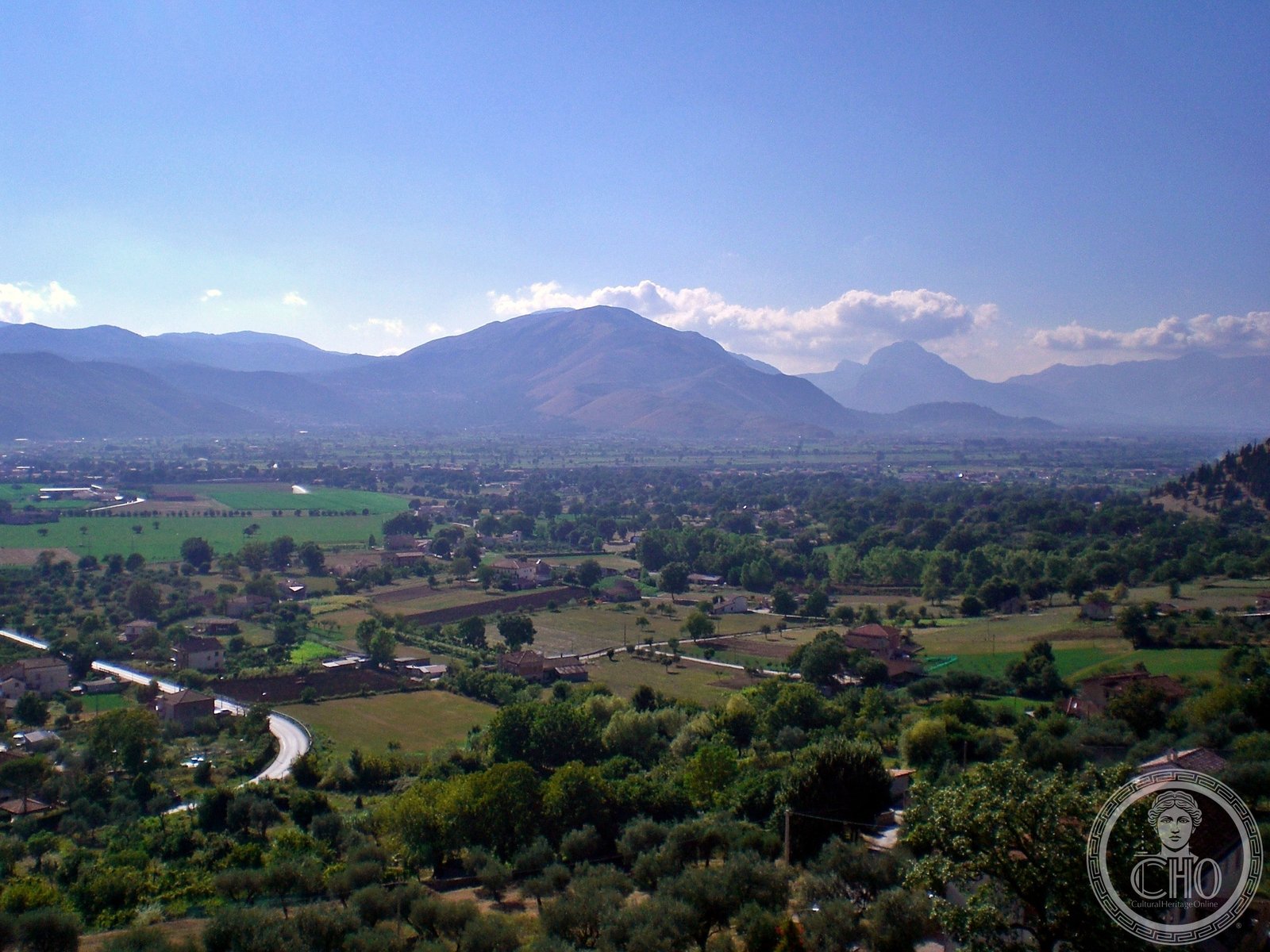
The Vallo di Diano is a broad inland valley on the south-eastern flank of Campania, in the province of Salerno, stretching across the heart of the Cilento and Vallo di Diano National Park — a UNESCO World Heritage landscape. Fed by the Tanagro river and enclosed by the Apennine ranges of the Alburni to the east and the Cilento plateau to the west, this fertile plain preserves a remarkable density of prehistoric, classical, and medieval heritage set against an agricultural landscape little changed in its fundamentals for millennia.
At a glance
- Type
- Valley and cultural landscape (UNESCO World Heritage buffer zone)
- Period
- Inhabited since prehistoric times; major heritage sites from the Lucanian, Roman, and medieval periods
- Style
- Natural and agricultural landscape with layered archaeological heritage
- Location
- Province of Salerno, Campania, Italy
- Coordinates
- 40.4000° N, 15.5667° E
Overview
The Vallo di Diano is an Italian valley of the south-eastern side of Campania, in the province of Salerno, forming one of the most historically and naturally significant inland corridors of the Italian south. The valley is anchored by the Tanagro river and flanked by mountain ranges that have channelled human movement and settlement through the region since antiquity. Today the area forms the core of the Cilento, Vallo di Diano and Alburni National Park, inscribed on the UNESCO World Heritage List in 1998 for its exceptional cultural landscape and biodiversity.
History
The valley was inhabited by the Lucanian people in the pre-Roman period and later incorporated into the Roman road and settlement network, with the Via Popilia passing through the area linking Capua to Rhegium. Medieval hilltop towns — Teggiano, Sala Consilina, Padula — grew along the valley edges, each accumulating its own heritage of churches, castles, and civil architecture. The Certosa di Padula, one of the largest Carthusian monasteries in Europe, stands in the southern portion of the valley and is itself listed as a UNESCO World Heritage monument, jointly with the Paestum archaeological park nearby.
What you see
The valley floor presents an agricultural landscape of fields and orchards framed by wooded mountain slopes, with hilltop towns visible on the ridges. The Certosa di Padula dominates the southern end with its vast Baroque complex, cloisters, and gardens. The Pertosa-Auletta Caves, located at the valley’s northern margin, offer underground karst exploration along the Tanagro river. Medieval towns such as Teggiano preserve intact historic centres with Romanesque and Gothic churches, local museums, and exceptional panoramic views across the valley.
Cultural significance
The Vallo di Diano forms part of a UNESCO World Heritage inscription that recognises the valley as an outstanding example of a Mediterranean cultural landscape where natural diversity and human history reinforce each other over time. The area preserves evidence of continuous occupation across thousands of years and contains some of the most important Carthusian and Lucanian heritage in Italy, making it a key destination for cultural tourism in the Italian south.
Practical information
- Main towns
- Sala Consilina, Teggiano, Padula, Pertosa, Auletta
- National Park
- Cilento, Vallo di Diano and Alburni National Park (Parco Nazionale del Cilento)
- Key sites
- Certosa di Padula (UNESCO); Pertosa-Auletta Caves; hilltop medieval towns
- Visitor information
- Check the national park authority website for maps, trails, and opening times
Getting there
The Vallo di Diano is served by the A2 Autostrada del Mediterraneo, with exits at Sala Consilina, Padula–Buonabitacolo, and Petina/Pertosa. By rail, the Battipaglia–Potenza line traverses the valley with stations at Polla-Pertosa and Sala Consilina; services connect from Salerno and Naples. Salerno is the nearest major city (approximately 80 km to the north-west) and the most convenient gateway from Naples.
Sources & resources
See the place
Find it on the map
See this place and what’s around it →📷 Become a Cultural Heritage Online photographer
Share your photos of places: they stay published under your name as the author. The more they're seen, the more you get noticed — and soon a contest will reward the most appreciated photos.
Log in or sign up free to add a photo