
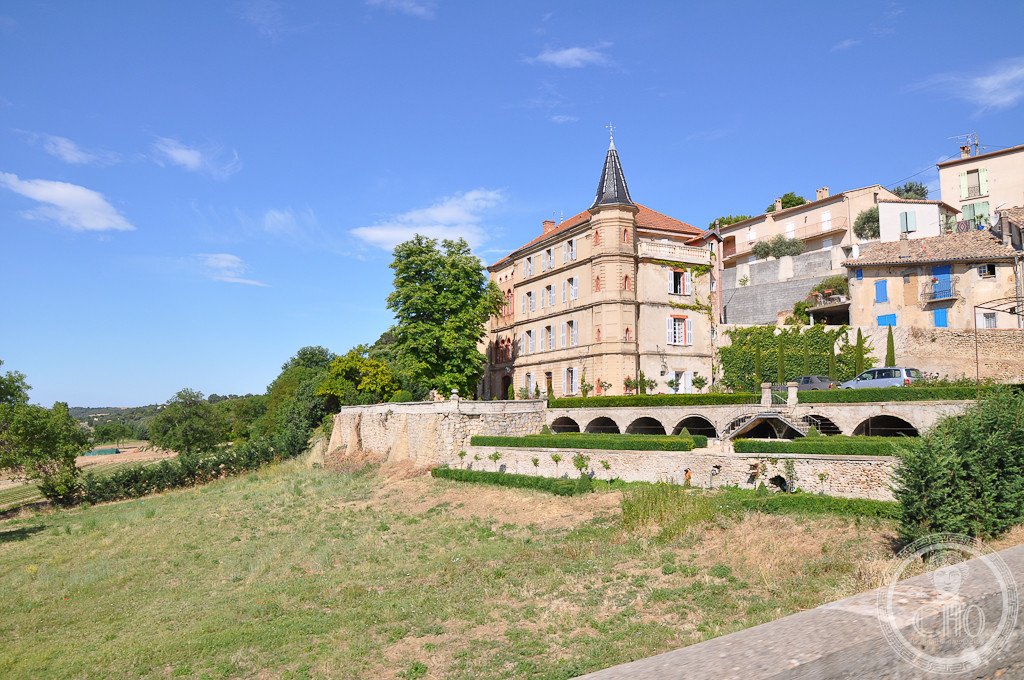
The Plateau de Valensole is a vast limestone tableland in the Alpes-de-Haute-Provence department of southeastern France, rising between 500 and 600 metres above sea level between the Durance and Verdon rivers. It is the largest lavender-growing area in Europe, covering roughly 25,000 hectares, and transforms into a celebrated sea of purple and blue each summer between late June and early August. The town of Valensole, perched on the plateau’s edge, has approximately 3,000 inhabitants and has given its name to the signature local lavender variety, Lavandula angustifolia.
At a glance
- Type
- Agricultural landscape / natural plateau
- Period
- Lavender cultivation intensified from the early 20th century
- Style
- Open Provençal landscape; traditional stone farmhouses (mas)
- Location
- Alpes-de-Haute-Provence, Provence-Alpes-Côte d'Azur, France
- Coordinates
- 43.8100° N, 6.1905° E
Overview
Valensole plateau sits at the heart of Haute-Provence, flanked to the south by the Verdon Gorge and to the north by the Lure mountain ridge. The landscape is shaped by millennia of dry farming: almond orchards, wheat fields and rapeseed alternate with the lavender rows that have made the plateau internationally recognisable. Traditional Provençal stone farmhouses, isolated windmills and small Romanesque chapels punctuate the flat terrain, giving the area an undisturbed rural quality rare in modern southern France.
History
The plateau has been settled since at least the Neolithic period, with dolmens and other prehistoric remains found across the tableland. Under Roman rule the area was part of Gallia Narbonensis and olive and cereal cultivation were the economic base. Lavender distillation developed from the 17th century as a cottage industry supplying the perfume houses of Grasse; it scaled dramatically in the early 20th century when industrial distilleries replaced small stills and demand from the global fragrance industry grew. By the late 20th century Valensole had become the benchmark source for true fine lavender (lavande fine or lavande population), distinct from the hybrid lavandin grown at lower altitudes.
What you see
In peak season (late June to late July) the plateau presents kilometre-long rows of lavender in full bloom, the purple fading to blue-grey at the horizon under a bright Provençal sky. Almond trees flower white in February and March, providing a secondary but equally photogenic spectacle. The village of Valensole retains its medieval street plan with a Romanesque church tower, a small lavender museum and a Saturday market. Distilleries across the plateau welcome visitors for guided tours and essential oil tastings throughout the summer.
Cultural significance
The Valensole plateau is a defining image of Provence and one of the most photographed agricultural landscapes in Europe. Its lavender culture is officially recognised in the Inventaire du patrimoine culturel immatériel of France, and efforts are underway to seek UNESCO Intangible Cultural Heritage status for traditional Provençal lavender cultivation. The plateau also lies within the boundaries of the UNESCO Global Geopark of Haute-Provence, celebrated for its rich deposit of Jurassic ammonite fossils near Digne-les-Bains.
Practical information
- Address
- Plateau de Valensole, 04210 Valensole, Alpes-de-Haute-Provence, France
- Best time to visit
- Late June to early August for lavender bloom; February–March for almond blossom
- Access
- Open landscape; free to visit. Individual distilleries have their own opening hours — check official websites
Getting there
By car: the D6 and D8 roads cross the plateau from Manosque (approx. 20 km west) and Riez (approx. 10 km east); Manosque is on the A51 autoroute. By public transport: Manosque has a TER rail connection from Aix-en-Provence and Marseille; from Manosque, bus lines serve Valensole village on market days. Renting a car is strongly recommended for exploring the full extent of the plateau.
Sources & resources
See the place
Find it on the map
See this place and what’s around it →Historical events at this place (1)
- 2020 Lavanda in Fiore
📷 Become a Cultural Heritage Online photographer
Share your photos of places: they stay published under your name as the author. The more they're seen, the more you get noticed — and soon a contest will reward the most appreciated photos.
Log in or sign up free to add a photo