
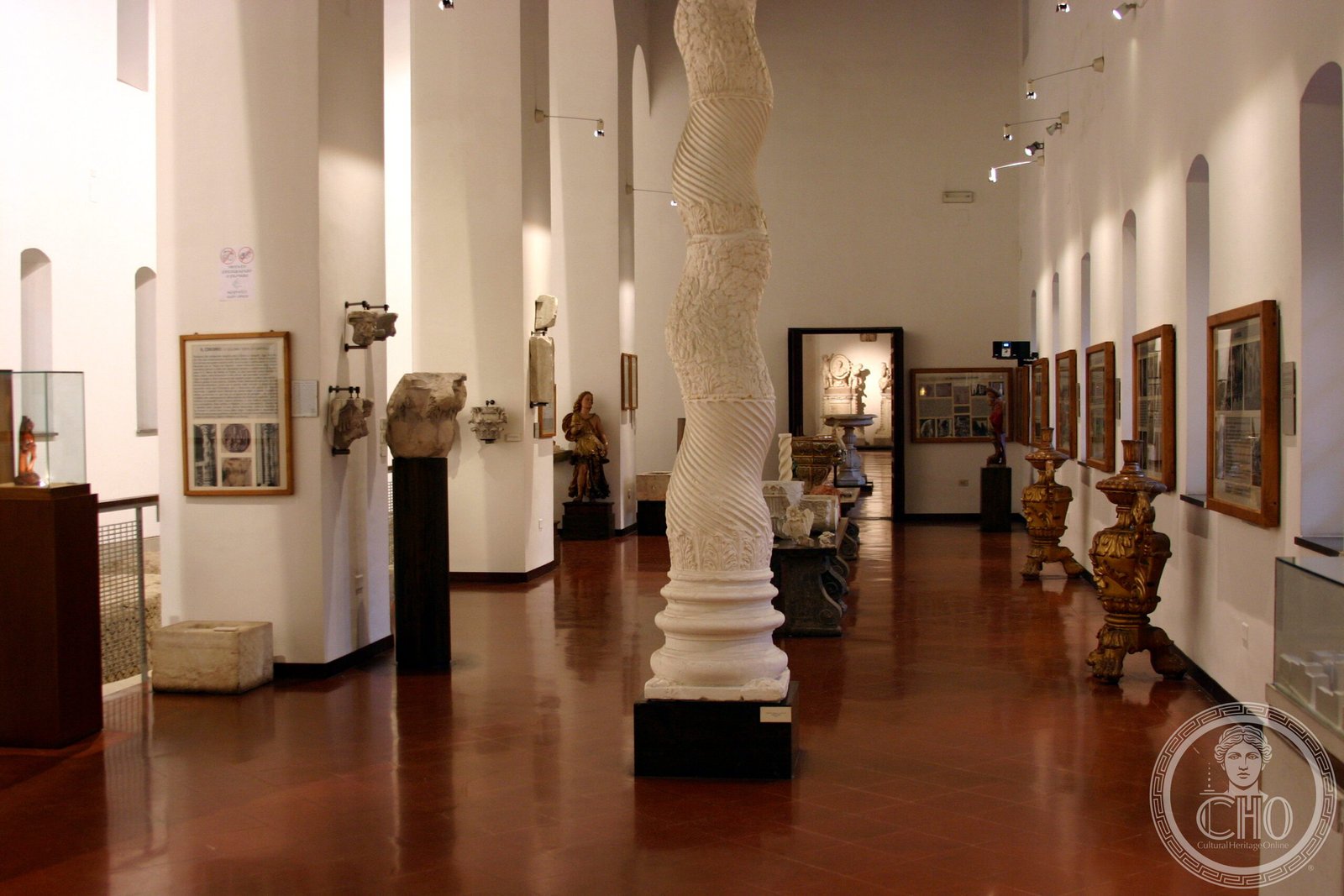
Beneath the Monumental Complex of Santa Chiara in central Naples lie the remains of a Roman bathing establishment dating to the 1st–4th centuries AD, unearthed during post-war reconstruction work in the 1950s. Now accessible through the complex’s museum, the excavations reveal an extraordinary stratigraphic sequence from Roman thermae to medieval monastic occupation, offering visitors an underground journey through more than fifteen centuries of urban life in what is today one of Italy’s most visited historic city centres.
At a glance
- Type
- Underground archaeological site and museum
- Period
- Roman Imperial (1st–4th century AD); medieval layers 14th century onward
- Style
- Roman thermae architecture; Gothic monastic overlay
- Location
- Via Benedetto Croce 16, Naples, Campania, Italy
- Coordinates
- 40.8456° N, 14.2526° E
Overview
The archaeological section of the Santa Chiara Museum presents the stratified remains discovered beneath the Franciscan complex during restoration following the 1943 bombing. The excavations are among the most significant urban archaeological finds in Naples, documenting the continuous occupation of this city block from antiquity through the medieval period. A virtual 360° tour extends access to visitors who cannot physically descend into the site.
History
When Allied bombs destroyed the Baroque interior of Santa Chiara on 4 August 1943, subsequent excavation of the debris revealed extensive Roman structures below the monastic floor level. Archaeologists identified the remains as a substantial thermae complex — public baths — operating from the 1st to at least the 4th century AD. The site was later incorporated into the museum programme of the complex and opened to the public alongside the majolica cloister.
What you see
Visitors descend to view the preserved hypocaust system (underfloor heating) of the Roman baths, sections of mosaic pavement, and the foundations of subsequent medieval building phases. Display cases contain ceramics, amphorae fragments, coins, and small finds recovered from the dig, spanning Roman to Angevin periods. The 360° virtual tour, accessible online, allows remote exploration of the underground chambers with annotated hotspots.
Cultural significance
The excavations provide rare physical evidence of Roman Naples (Neapolis) beneath the medieval street grid, contributing essential data to the urban archaeology of the city. Their inclusion within a functioning Franciscan complex illustrates the layered continuity characteristic of Neapolitan historical topography, and the site forms part of the UNESCO-listed Historic Centre of Naples.
Practical information
- Address
- Via Benedetto Croce 16, 80134 Napoli NA, Italy
- Access
- Reached through the Santa Chiara Museum ticket office inside the complex
- Hours
- Check the official Santa Chiara Museum website for current opening times
Getting there
The complex entrance is on Via Benedetto Croce in the Spaccanapoli area. Take Naples Metro Line 1 to Dante station and walk approximately 10 minutes south-east. Buses R2 and E1 serve the nearby Corso Umberto I.
Sources & resources
See the place
Find it on the map
See this place and what’s around it →📷 Become a Cultural Heritage Online photographer
Share your photos of places: they stay published under your name as the author. The more they're seen, the more you get noticed — and soon a contest will reward the most appreciated photos.
Log in or sign up free to add a photoIs this page about you?
This page is read by travellers and heritage enthusiasts who find it on Google. Tell us how you are connected to this place and we will take it from there.