
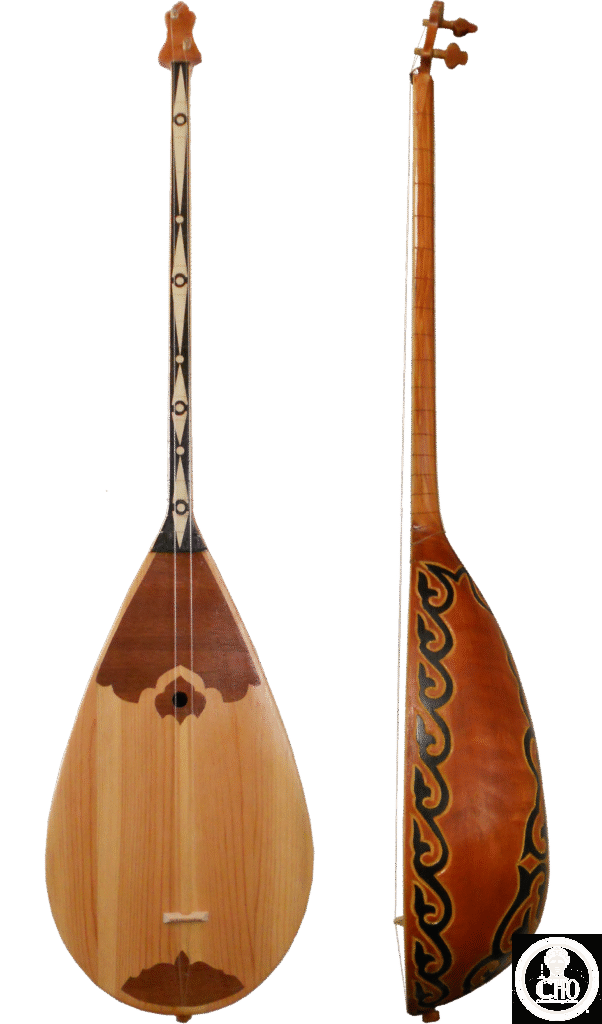
The dombra is a long-necked plucked lute at the heart of Kazakh musical tradition, and the principal national instrument of Kazakhstan. Its repertoire of traditional pieces—known as kuy—forms one of the two most widely recognised symbols of Kazakh musical culture.
At a glance
A solo or ensemble instrument with a slender neck and small body, the dombra is played across Kazakhstan, Uzbekistan, Tajikistan, and among Hazara, Nogai, Bashkir and Tatar communities. Its repertoire of kuy—instrumental compositions that can depict landscapes, emotions, or historical events—represents a living oral tradition passed from master to apprentice.
Origins & history
The dombra is deeply rooted in the musical heritage of Central Asia and the Caucasus. Its name appears in Persian as dambūra, while Kazakh speakers know it as dombyra. The instrument has long been played across multiple cultures and ethnic groups, from Kazakhs and Uzbeks to Tajiks, Hazaras, Nogais, Bashkirs and Tatars, suggesting centuries of shared musical exchange across the region.
The practice
The dombra’s long neck and compact body produce a bright, penetrating sound suited to both intimate and public performance. Players sit with the instrument angled across the body, fingers and sometimes a plectrum drawing melody and rhythm from the two or three strings. The kuy repertoire encompasses instrumental pieces that conjure imagery—rolling steppes, heroic narratives, the emotions of love and loss.
Performances range from solitary recital to ensemble settings. The instrument pairs naturally with the qyl-qobyz, a bowed fiddle, creating the dual foundation of Kazakh musical culture.
Cultural significance
The dombra and its kuy repertoire embody the identity and history of Kazakh and Central Asian peoples. Each composition carries meaning beyond melody—some commemorate historical figures or events, others capture the landscape or spiritual states. Learning and performing kuy is an act of cultural continuity, binding generations across the steppe.
The practice declined during parts of the twentieth century but has undergone revival in recent decades through concert performance, competitions, and formal music education.
Key facts
- Played across Kazakhstan, Uzbekistan, Tajikistan, and among Hazara, Nogai, Bashkir and Tatar communities
- Anchor community: Almaty, Kazakhstan (43.23646, 76.94626)
- UNESCO Intangible Cultural Heritage inscribed 2005 (reference 00996)
- One of two most widely recognised symbols of Kazakh musical culture, alongside the qyl-qobyz bowed fiddle
Where to experience it
Almaty and across Kazakhstan remain the heartland of dombra performance and learning. The tradition thrives in concert halls, music conservatories, cultural festivals, and private homes where masters teach apprentices the repertoire of kuy. Visitors to the region can encounter live performance at cultural venues and may find opportunities to attend competitions or recitals featuring both traditional and contemporary interpretations.
Sources & resources
- UNESCO ICH: Kazakh Traditional Art of Dombra Kuy
- Wikipedia: Dombra
- Cultural Heritage Online
Find it on the map
See this place and what’s around it →📷 Become a Cultural Heritage Online photographer
Share your photos of places: they stay published under your name as the author. The more they're seen, the more you get noticed — and soon a contest will reward the most appreciated photos.
Log in or sign up free to add a photo