
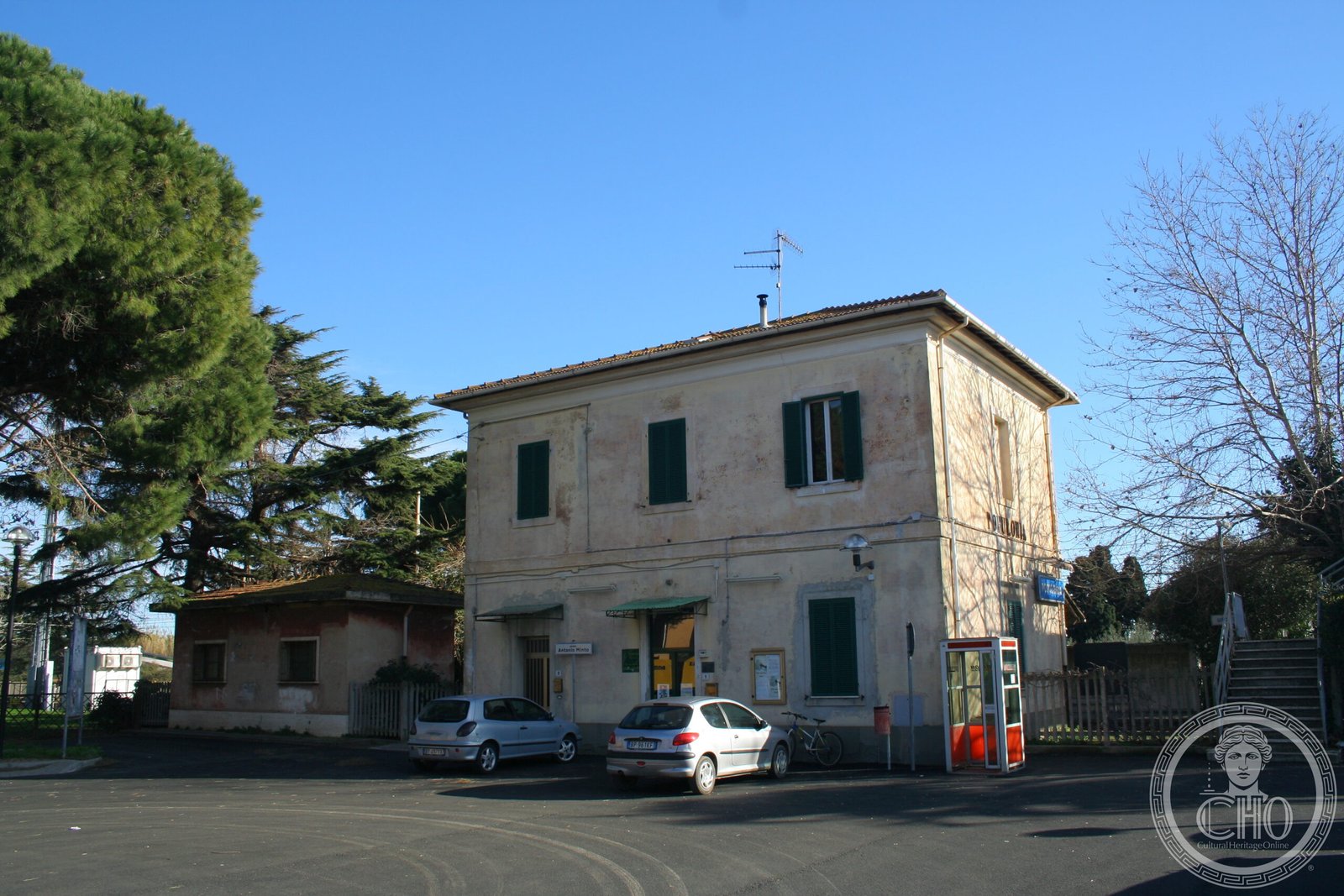
Populonia Station is a historic railway halt on the Tyrrhenian coast of Tuscany, serving the area of Populonia, one of the major cities of ancient Etruria. The station lies on the coastal railway line between Livorno and Rome (the Tirrenica line), set within a landscape of extraordinary historical density: directly above the station, on the promontory of Baratti, stand the remains of Etruscan Populonia — the only Etruscan city built directly on the sea — along with its necropolis, now part of the Archaeological Park of Baratti and Populonia. The station thus functions as the gateway to one of the most significant Etruscan sites in Italy.
At a glance
- Type
- Railway station / gateway to Etruscan heritage site
- Line
- Tirrenica coastal railway (Livorno–Grosseto–Rome)
- Nearby heritage
- Archaeological Park of Baratti and Populonia (Etruscan necropolis and city remains)
- Location
- Populonia, Province of Livorno, Tuscany, Italy
- Coordinates
- 42.9964° N, 10.5382° E
Overview
The coastal zone around Populonia represents one of the richest concentrations of Etruscan heritage in Tuscany. The ancient city, known to the Greeks as Poplonion and to the Romans as Populonium, controlled the iron trade from Elba and became a major Etruscan centre from the seventh century BC. The railway station, built as part of the nineteenth-century expansion of Italy’s coastal rail network, now serves primarily as a summer access point for visitors to the archaeological park and the Gulf of Baratti beaches, creating an unlikely but effective junction of modern infrastructure and ancient landscape.
History
Populonia was the northernmost of the twelve major Etruscan cities, flourishing as a port and metallurgical centre that processed iron ore shipped from Elba. Its necropolis contains tomb types ranging from tumulus graves of the seventh century BC to chamber tombs of the Hellenistic period, reflecting five centuries of Etruscan funerary culture. The Roman conquest ended Populonia’s independence, though the site remained inhabited into late antiquity. The medieval tower of Populonia castle still stands above the promontory. The Tirrenica railway reached this stretch of coast in the late nineteenth century, and the station at Populonia was established to serve local communities and the emerging tourist interest in the coastal area.
What you see
The station building is a modest coastal halt typical of the Tirrenica line, set between the Tyrrhenian Sea and the pine-forested slopes rising towards the Populonia promontory. From the station, a road leads uphill to the Archaeological Park of Baratti and Populonia, which encompasses the necropolis areas of San Cerbone and Le Grotte, the Etruscan city remains, and the medieval castle. The Gulf of Baratti below the promontory offers one of the most scenically intact stretches of Tuscan coastline, with clear water, pebble and sand beaches, and views towards the island of Elba. The Piombino ironworks visible to the north provide an industrial counterpoint that echoes Populonia’s own ancient metallurgical role.
Cultural significance
The Baratti and Populonia archaeological park is among the most important Etruscan sites open to visitors in Tuscany, offering exceptional tomb preservation and an interpretive museum. The juxtaposition of an ancient city, a medieval castle, a nineteenth-century railway station, and a modern beach tourism economy makes the Populonia area an unusually layered heritage landscape. The site is managed by Parchi Val di Cornia, the consortium that also oversees the archaeological parks of Piombino, Vetulonia, and the surrounding area.
Practical information
- Station
- Populonia Station on the Tirrenica line; limited services, check Trenitalia schedules
- Archaeological Park
- Parco Archeologico di Baratti e Populonia; open seasonally, check parchivaldicornia.it for hours and admission
- Nearest town
- Piombino, approximately 10 km south; Campiglia Marittima, 12 km north-east
Getting there
By train: regional services on the Tirrenica line stop at Populonia in summer; check Trenitalia for current timetables as services are infrequent. By car: from Piombino follow the SS398 north along the coast to Baratti; from the north, exit the SS1 Aurelia at Venturina and follow signs towards Populonia. Car is the most practical option for visiting the archaeological park and beaches. Parking is available near the Gulf of Baratti.
Sources & resources
- Populonia — Wikipedia
- Baratti and Populonia Archaeological Park — Wikipedia
- Cultural Heritage Online — Italy
See the place
Find it on the map
See this place and what’s around it →
Historical events at this place (1)
📷 Become a Cultural Heritage Online photographer
Share your photos of places: they stay published under your name as the author. The more they're seen, the more you get noticed — and soon a contest will reward the most appreciated photos.
Log in or sign up free to add a photoIs this page about you?
This page is read by travellers and heritage enthusiasts who find it on Google. Tell us how you are connected to this place and we will take it from there.