
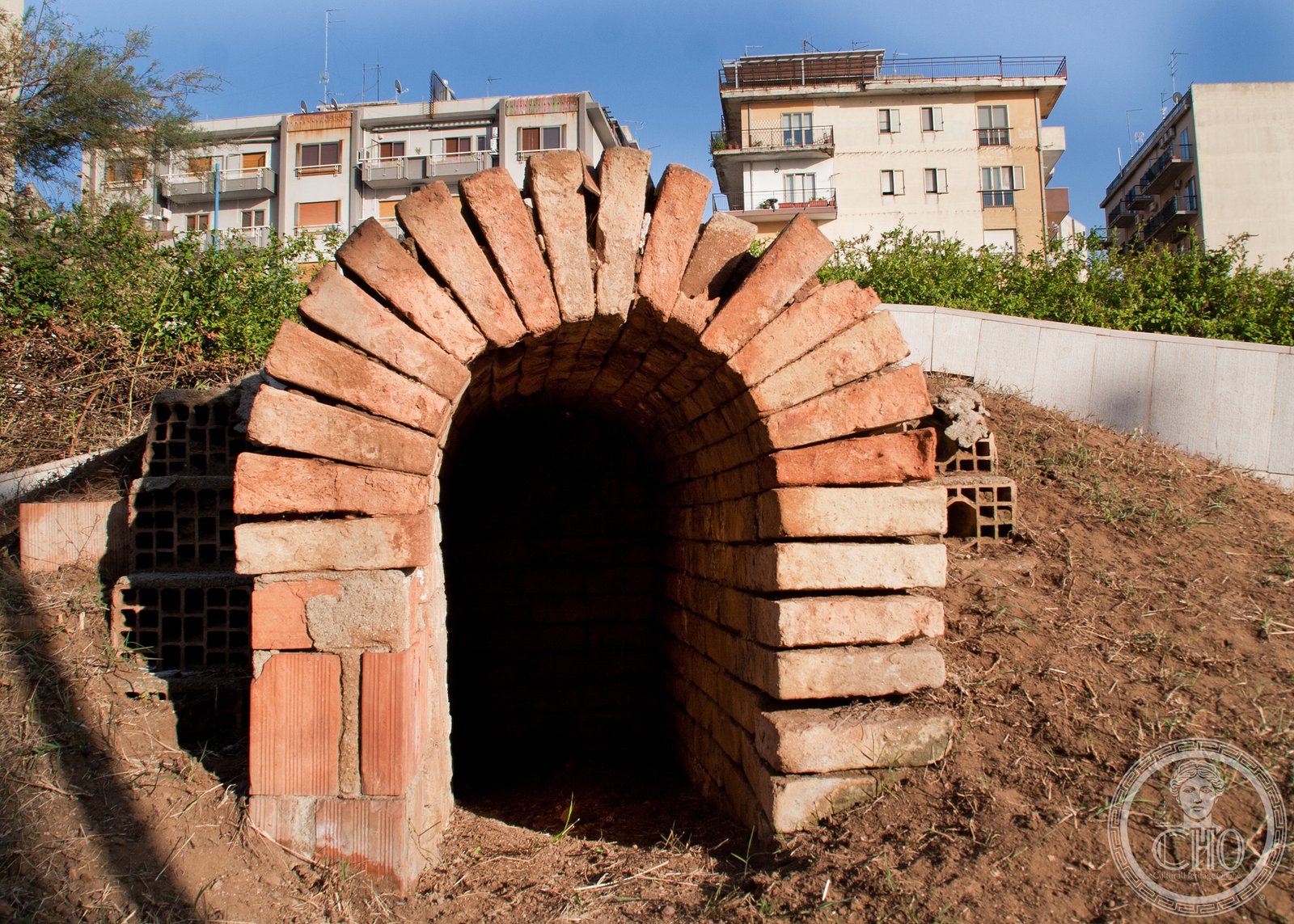
The Hellenistic Tomb in the Sacred Area of the Marina is an ancient funerary and religious site located in Reggio Calabria, Calabria, preserving rare archaeological evidence of Magna Graecia burial customs from the third and second centuries BC. Uncovered in the urban waterfront district, the site forms part of Reggio Calabria’s layered archaeological heritage stretching from the Greek colonial period through the Roman era.
At a glance
- Type
- Hellenistic tomb and sacred area
- Period
- 3rd–2nd century BC (Hellenistic)
- Style
- Magna Graecia funerary and religious architecture
- Location
- Marina district, Reggio Calabria, Calabria, Italy
- Coordinates
- 38.1172° N, 15.6552° E
Overview
The Sacred Area of the Marina preserves Hellenistic funerary structures embedded in the coastal urban fabric of Reggio Calabria, one of the oldest continuously inhabited cities in Italy. The site reflects the religious and burial practices of the Greek colony of Rhegion, founded in the eighth century BC, during its late flourishing under Hellenistic cultural influence. It stands as a rare in-situ survival of ancient sacred topography along what was once the city’s active shoreline.
History
Rhegion (modern Reggio Calabria) was colonised by Chalcidian Greeks around 720 BC and became one of the most important cities of Magna Graecia. During the Hellenistic period, from the late fourth century BC onward, the city expanded and reorganised its sacred and funerary zones along the waterfront. The tombs in the Sacred Area of the Marina date to approximately the third and second centuries BC, a period when Rhegion came under increasing Roman influence before its formal integration into the Republic. Archaeological excavations in the modern city have repeatedly revealed stratified remains spanning Greek, Hellenistic and Roman occupation phases.
What you see
Visitors can observe the preserved funerary structures characteristic of Hellenistic tomb architecture, including chamber-cut elements and associated sacred deposits. The site is situated within the broader Marina district, where successive layers of Reggio Calabria’s long urban history are discernible. Nearby, the Museo Nazionale della Magna Grecia holds a rich collection of finds from the city and its surrounding territory, providing essential context for understanding the tomb and its sacred area.
Cultural significance
The site contributes directly to the study of funerary religion and urban sacred topography in Magna Graecia during the Hellenistic transition, a period when Greek cultural forms merged with Italic and Roman influences. Its survival within a densely occupied modern city makes it a significant point of contact between living urban culture and deep archaeological heritage.
Practical information
- Address
- Marina district, Reggio Calabria, 89100 RC
Getting there
Reggio Calabria is served by Reggio Calabria Airport (REG) and by train via Trenitalia on the Salerno–Reggio Calabria line. The Marina district is reachable on foot from Reggio Calabria Centrale station. Local buses operated by ATAM serve the seafront area.
Sources & resources
Find it on the map
See this place and what’s around it →📷 Become a Cultural Heritage Online photographer
Share your photos of places: they stay published under your name as the author. The more they're seen, the more you get noticed — and soon a contest will reward the most appreciated photos.
Log in or sign up free to add a photo