
A multi-day observance on November 1–2 that brings communities together to honor deceased loved ones through altars, marigolds, sugar skulls, and joyful remembrance.
In UNESCO’s words
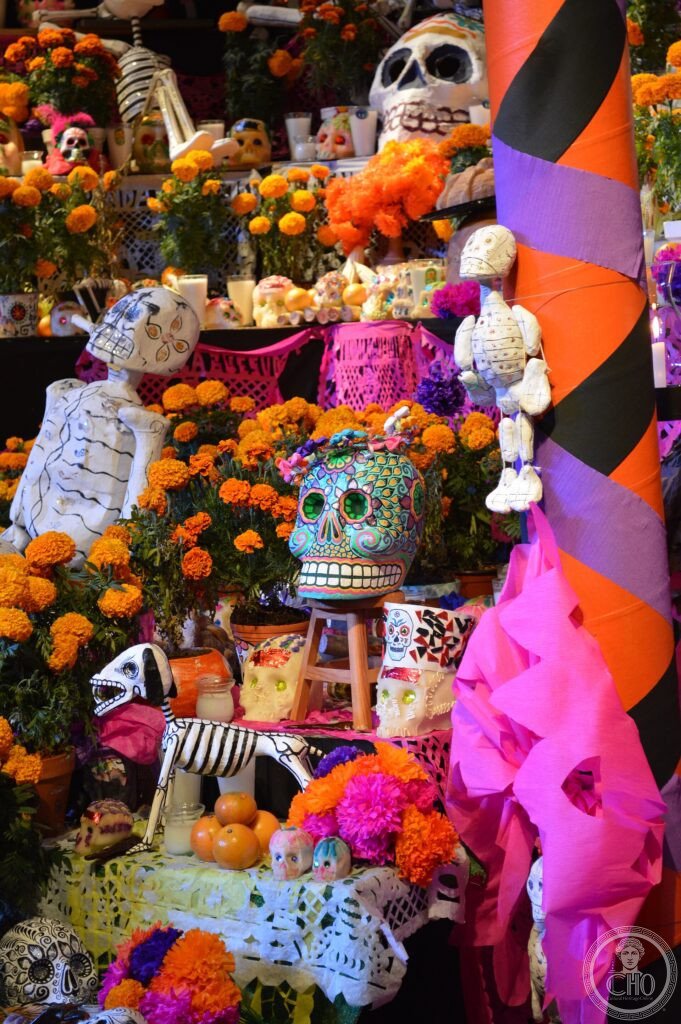
As practised by the indigenous communities of Mexico, el Día de los Muertos (Day of the Dead) commemorates the transitory return to Earth of deceased relatives and loved ones. The festivities take place each year at the end of October to the beginning of November. This period also marks the completion of the annual cycle of cultivation of maize, the country’s predominant food crop. Families facilitate the return of the souls to Earth by laying flower petals, candles and offerings along the path leading from the cemetery to their homes. The deceased’s favourite dishes are prepared and placed around the home shrine and the tomb alongside flowers and typical handicrafts, such as paper cut-outs. Great care is taken with all aspects of the preparations, for it is believed that the dead are capable of bringing prosperity (e.g. an abundant maize harvest) or misfortune (e.g. illness, accidents, financial difficulties) upon their families depending on how satisfactorily the rituals are executed. The dead are divided into several categories according to cause of death, age, sex and, in some cases, profession. A specific day of worship, determined by these categories, is designated for each deceased person. This encounter between the living and the dead affirms the role of the individual within society and contributes to reinforcing the political and social status of Mexico’s indigenous communities. The Day of the Dead celebration holds great significance in the life of Mexico’s indigenous communities. The fusion of pre-Hispanic religious rites and Catholic feasts brings together two universes, one marked by indigenous belief systems, the other by worldviews introduced by the Europeans in the sixteenth century.
Official description, UNESCO Intangible Cultural Heritage List — Indigenous festivity dedicated to the dead
At a glance
El Día de los Muertos is an annual commemoration by indigenous communities in Mexico of the transitory return of deceased relatives and loved ones to Earth. Taking place at the end of October to the beginning of November, the festivities occur as the annual cycle of maize cultivation—the country's predominant food crop—reaches completion. Families prepare their homes and graves to welcome the dead, arranging flowers, candles, and offerings along paths from cemetery to home.
Origins & history
The tradition represents a fusion of pre-Hispanic religious rites with Catholic feasts introduced by Europeans in the sixteenth century. This blending of two universes—one rooted in indigenous belief systems and the other in European worldviews—has created a distinctive practice that brings together contrasting spiritual traditions.
The practice
Families lay flower petals, candles, and offerings along the path from cemetery to home to facilitate the souls' return. The deceased's favourite dishes are prepared and placed around the home shrine and tomb alongside flowers and typical handicrafts such as paper cut-outs. The dead are categorized by cause of death, age, sex, and sometimes profession, with a specific day of worship designated for each person according to these classifications.
Cultural significance
The practice holds great significance in indigenous communities as it affirms the role of the individual within society and reinforces political and social status. Families believe the dead are capable of bringing prosperity—such as an abundant maize harvest—or misfortune depending on how satisfactorily the rituals are executed, making careful preparation of all aspects essential to community wellbeing.
Key facts
- Country: Mexico
- Inscribed: 2008
- UNESCO list: Representative List of the Intangible Cultural Heritage of Humanity
- UNESCO reference: 00054
- UNESCO vocabulary: Religious practice; Rituals; Veneration of the dead
- Map: not shown — UNESCO’s official description of this element names no locality, and a living tradition is practised across a community, not at one address.
Where to experience it
El Día de los Muertos is observed by indigenous communities throughout Mexico and in Mexican communities across the Americas. Each year, from late October through early November, families prepare elaborate altars, decorate tombs with marigolds and candles, and cook the favourite dishes of their deceased relatives. The specific rituals and timing vary by region and community, reflecting different indigenous traditions and local customs. Visitors interested in witnessing these commemorations should contact local tourism offices or community representatives to learn about public celebrations and gatherings happening in their area of interest.
Sources & resources
- UNESCO — official element page: Indigenous festivity dedicated to the dead
- UNESCO — open data record: Intangible Heritage List, reference 00054
- UNESCO — official video: UNESCO film on this element — embedded on this page
- UNESCO — official photograph: Coinciding with the maize harvest, this annual festivity commemorates the transitory return to Earth of deceased relatives or loved ones. People gather at cemeteries and in churches throughout Mexico to leave flower petals, candles and offerings to celebrate and facilitate the return of the souls. — Agustin Estrada
- Reference — Wikipedia (secondary): Day of the Dead — consulted as a secondary reference, not as confirmation
- Cultural Heritage Online: Our archive and city guides

Sources
- S1 — Brandes, Stanley. Skulls to the Living, Bread to the Dead: The Day of the Dead in Mexico and Beyond. Wiley-Blackwell, 2006. ISBN 978-1-4051-5248-8.
- S2 — Carmichael, Elizabeth, and Chloë Sayer. The Skeleton at the Feast: The Day of the Dead in Mexico. University of Texas Press, 1992. ISBN 978-0-292-77658-6.
Spotted an error? Write to editorial@culturalheritageonline.com and we correct it the same day.