
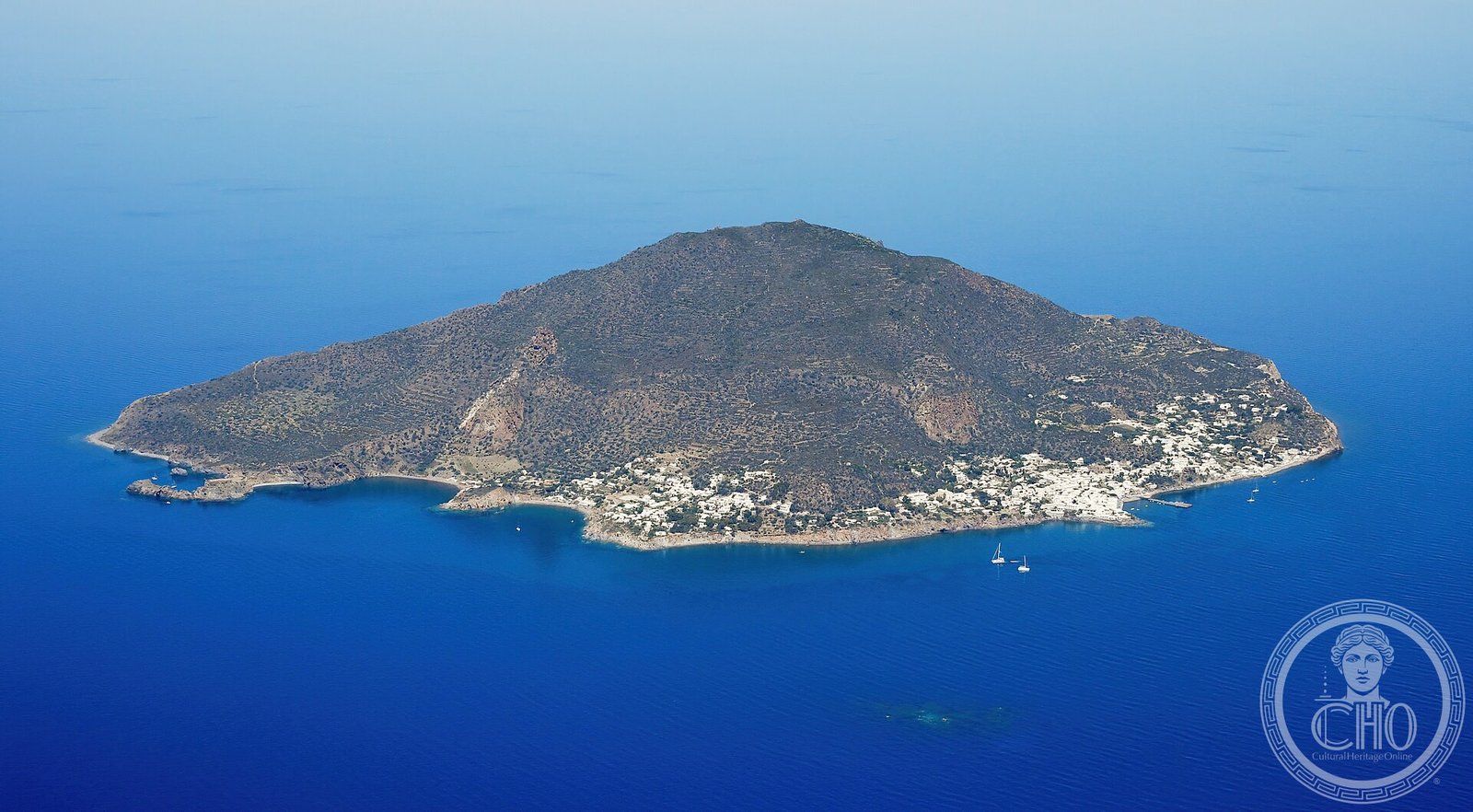
Panarea is the smallest of the seven inhabited Aeolian Islands, a volcanic island chain in the Tyrrhenian Sea north of Sicily. With a permanent population of around 280 residents that swells dramatically in summer, Panarea is renowned for its whitewashed cube houses, crystal-clear waters, and its reputation as one of Italy’s most exclusive summer destinations, attracting international visitors and celebrities to its car-free lanes and fashionable waterfront restaurants.
At a glance
- Type
- Volcanic island, Aeolian archipelago (frazione of Lipari)
- Period
- Inhabited since the Bronze Age; ancient Greek and Roman presence documented
- Style
- Natural heritage; traditional Aeolian vernacular architecture
- Location
- Aeolian Islands, Province of Messina, Sicily, Italy
- Coordinates
- 38.6377° N, 15.0640° E
Overview
Panarea is administratively a frazione of the comune of Lipari and covers an area of approximately 3.4 square kilometres, making it the smallest inhabited island of the Aeolian group. Part of the UNESCO World Heritage-listed Aeolian Islands since 2000, the island is surrounded by a cluster of uninhabited islets — Basiluzzo, Dattilo, Bottaro, and others — that form one of the most scenic seascapes in the central Mediterranean. Panarea’s underwater volcanic activity creates warm, sulphur-tinged waters that attract snorkellers and divers.
History
Human habitation on Panarea reaches back to the Bronze Age, evidenced by the archaeological settlement of Capo Milazzese on the southeastern promontory, where a village of oval huts and Mycenaean-traded ceramics was excavated in the mid-20th century. The ancient Greeks knew the island as Euonymos. Roman and Byzantine periods left traces in the form of pottery and structural remains before the island’s population declined during the medieval era. Permanent resettlement grew only from the 18th century onward, with fishing families establishing the clusters of houses that still define its three hamlets: San Pietro, Drautto, and Iditella.
What you see
Panarea’s built environment is defined by traditional Aeolian architecture: low whitewashed cubic houses with flat terraced roofs, external staircases, and colourful bougainvillea spilling over stone walls. No motorised vehicles are permitted on the island; electric golf carts and donkeys were historically the only transport. The archaeological site at Capo Milazzese, reachable by a scenic path above the sea, displays the foundations of its Bronze Age village. Offshore, the islet cluster and active hydrothermal vents provide some of the most photogenic and biologically diverse marine environments in the Aeolian archipelago.
Cultural significance
Panarea forms part of the Aeolian Islands UNESCO World Heritage Site, recognised for their outstanding geological value as a natural laboratory for the study of island volcanism. The Bronze Age settlement at Capo Milazzese is among the best-preserved prehistoric sites in the southern Tyrrhenian area, providing evidence of far-reaching Bronze Age Mediterranean trade networks through its Mycenaean pottery finds. The island’s distinctive architectural vernacular is considered a defining example of Mediterranean island building culture.
Practical information
- Access
- By hydrofoil or ferry from Milazzo (approx. 2–3 hours); also reachable from Lipari and other Aeolian Islands
- Best season
- June–September; very limited services outside summer months
- Note
- No cars or motorcycles permitted on the island; electric vehicles and walking only
- Accommodation
- Boutique hotels and private villa rentals; book well in advance for July–August
Getting there
The main departure point for Panarea is Milazzo on the Sicilian north coast, reached by train from Messina (approx. 45 minutes). Liberty Lines and Siremar run hydrofoil and ferry services to Panarea’s San Pietro harbour. In peak summer, direct connections from Naples and seasonal routes from Palermo are available. Connections via Lipari and other Aeolian Islands allow island-hopping itineraries.
Sources & resources
Find it on the map
See this place and what’s around it →📷 Become a Cultural Heritage Online photographer
Share your photos of places: they stay published under your name as the author. The more they're seen, the more you get noticed — and soon a contest will reward the most appreciated photos.
Log in or sign up free to add a photo