
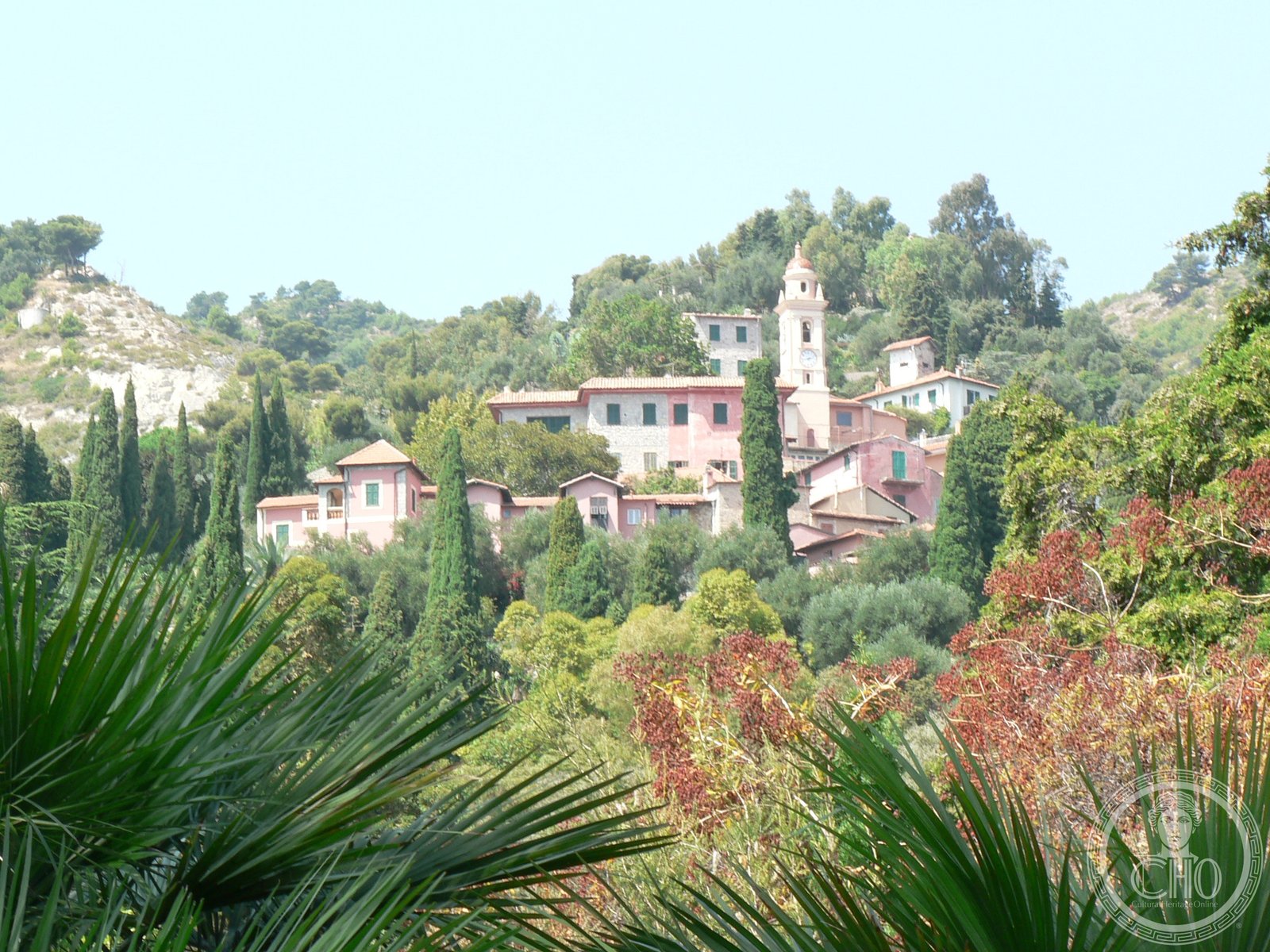
The Hanbury Botanical Gardens (Giardini Botanici Hanbury) are a celebrated 18-hectare botanical garden at Mortola Inferiore, near Ventimiglia in Liguria, established in 1867 by the English merchant and philanthropist Sir Thomas Hanbury on a clifftop estate overlooking the Ligurian Sea. Containing approximately 2,500 plant taxa from Mediterranean climates worldwide, the gardens are managed by the University of Genoa and rank among the most beautiful in Italy.
At a glance
- Type
- Botanical garden and historic park
- Period
- Founded 1867; severely damaged in World War II; acquired by Italian State 1960; managed by University of Genoa since 1983
- Style
- Victorian-era landscape garden with naturalistic Mediterranean planting
- Location
- Corso Montecarlo 43, Mortola Inferiore, 18039 Ventimiglia (IM), Liguria, Italy
- Coordinates
- 43.7827 N, 7.5556 E
- Contact
- Tel: +39 0184 229507 – info@cooperativa-omnia.com – giardinihanbury.com
Overview
The Hanbury Gardens occupy a spectacular clifftop site above the Ligurian Sea on the road from Ventimiglia towards the French border at Menton. Sir Thomas Hanbury purchased the Palazzo Orengo estate in 1867 and transformed it over decades into one of the world’s outstanding botanical collections, working with his botanist brother Daniel Hanbury and landscape designer Ludwig Winter. The gardens span 18 hectares, of which 9 are actively cultivated, and were declared a nature preserve in 2000. A UNESCO World Heritage Site nomination was submitted in 2006.
History
Thomas Hanbury made his fortune as a merchant in Shanghai and returned to Europe in 1867 with both the means and the ambition to create a botanical garden that could test the growing range of Mediterranean and subtropical plants in the mild Ligurian microclimate. His brother Daniel, a Fellow of the Royal Society and pharmacognosist, contributed botanical expertise. The first seed catalogue was issued in 1883, listing 557 species; the landmark 1912 Hortus Mortolensis documented nearly 6,000 species. The gardens suffered severe damage during World War II and were subsequently acquired by the Italian State in 1960; restoration began in earnest after the University of Genoa assumed management in 1983.
What you see
Visitors walk through terraced paths descending towards the sea, discovering major collections of agaves, aloes, and salvias alongside rare fruit trees, palms, succulents, citrus varieties, and Australian species. Mediterranean plants from six climate zones worldwide are represented, making the gardens a living library of botanical diversity. Nineteenth-century stone structures, pergolas, and irrigation channels from the Hanbury era survive among the planting, and the view over the Ligurian Sea from the upper terraces is exceptional.
Cultural significance
The Hanbury Gardens represent a defining expression of Victorian-era botanical philanthropy in the Mediterranean, comparable in ambition to Kew Gardens in Britain. They stand as evidence of the Riviera’s unique microclimate, which has made the western Ligurian coast a laboratory for plant acclimatisation for over 150 years. Their nomination for UNESCO World Heritage status underlines international recognition of their outstanding universal value.
Practical information
Address: Corso Montecarlo 43, Mortola Inferiore, 18039 Ventimiglia (IM), Italy.
Phone: +39 0184 229507.
Email: info@cooperativa-omnia.com.
Website: giardinihanbury.com.
Opening hours: Check the official website, as hours vary by season.
Getting there
The gardens are located on the Corso Montecarlo, the coastal road linking Ventimiglia with Menton (France), approximately 5 km west of Ventimiglia. By car, take the A10 motorway to Ventimiglia and follow signs towards the French border. By rail, Ventimiglia station is served by trains from Genoa and Nice; from the station, taxis or local buses reach the gardens. A shuttle service may operate in peak season – check the official website.
Sources & resources
- Official website – giardinihanbury.com
- Wikipedia – Giardini Botanici Hanbury
- Cultural Heritage Online – culturalheritageonline.com
See the place
Find it on the map
See this place and what’s around it →📷 Become a Cultural Heritage Online photographer
Share your photos of places: they stay published under your name as the author. The more they're seen, the more you get noticed — and soon a contest will reward the most appreciated photos.
Log in or sign up free to add a photo