
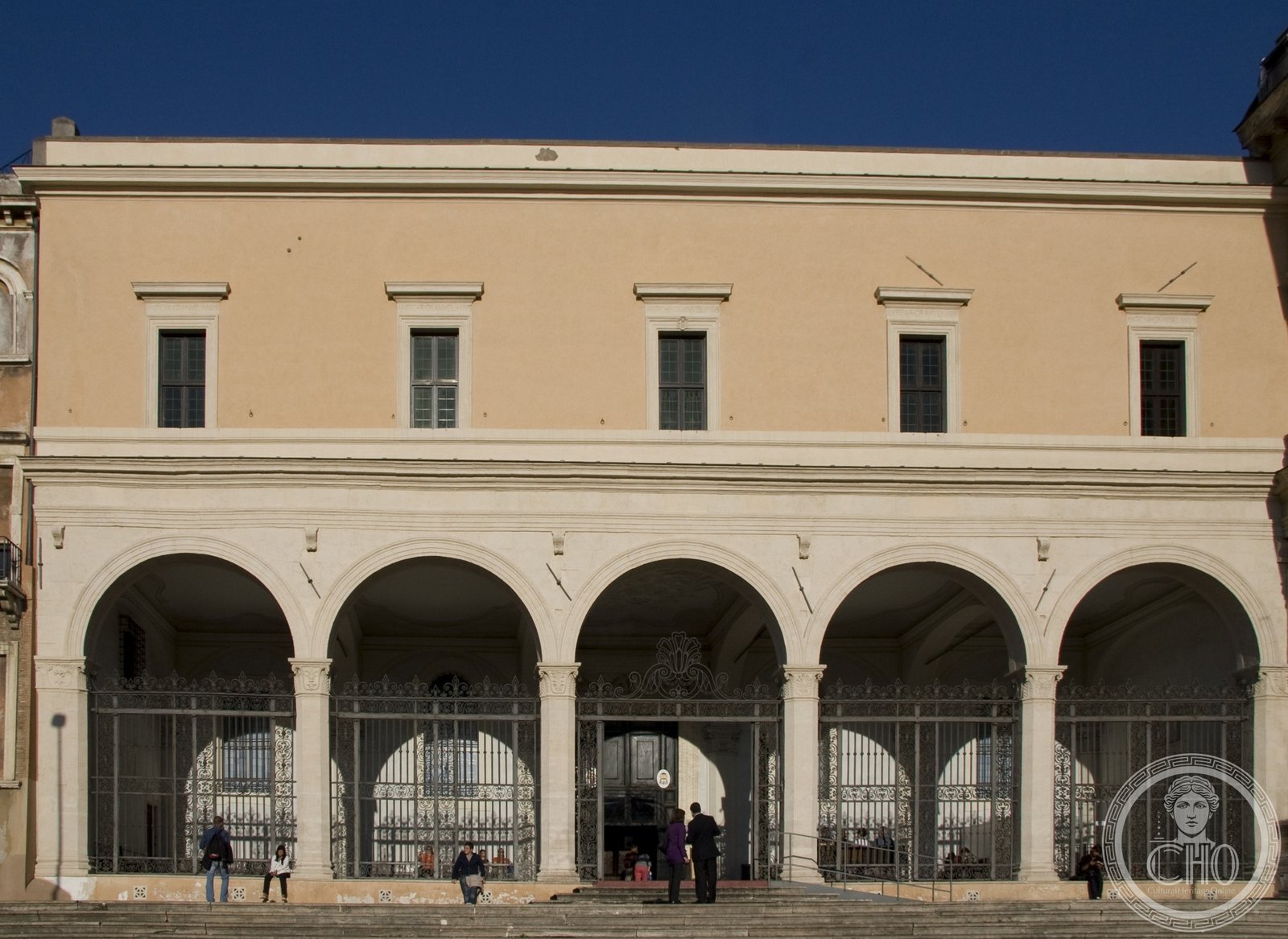
The Basilica of San Pietro in Vincoli (Saint Peter in Chains) is a 5th-century titular basilica on the Esquiline Hill in Rome, celebrated above all for housing Michelangelo’s monumental statue of Moses — the centrepiece of the unfinished tomb of Pope Julius II — alongside the relic of the chains said to have bound Saint Peter during his imprisonment in Jerusalem. The basilica was built under Pope Sixtus III to house the relics donated by Empress Eudoxia and has remained one of Rome’s most visited early Christian monuments since the Renaissance.
At a glance
- Type
- Titular basilica, Roman Catholic
- Period
- Founded c. 432–440 AD under Pope Sixtus III; Renaissance alterations 15th–16th century
- Style
- Early Christian basilica; Renaissance interior elements
- Location
- Piazza di San Pietro in Vincoli, Esquiline Hill, Rome
- Coordinates
- 41.8939° N, 12.4909° E
Overview
San Pietro in Vincoli is one of Rome’s seven pilgrimage basilicas of minor rank, lying a short distance from the Colosseum on a street that climbs the Esquiline. Its plain 15th-century portico gives little warning of the interior’s celebrated contents: Michelangelo’s Moses (completed c. 1515–1516), a superhuman figure of over 2.3 metres seated beneath a complex architectural frame designed by the artist himself, flanked by figures of Leah and Rachel. The chains of Saint Peter, enclosed in a reliquary beneath the high altar, draw pilgrims alongside the art tourists who come for Michelangelo.
History
The basilica was founded circa 432–440 AD by Pope Sixtus III to enshrine the chains given by Empress Eudoxia, wife of Valentinian III, who had received them from Jerusalem. A second set of chains, reportedly those binding Peter in Rome before his execution, was already in the church; when the two sets were brought together, tradition holds they miraculously fused. Pope Julius II, elected in 1503, commissioned Michelangelo to design a freestanding tomb for himself intended for Saint Peter’s Basilica; after Julius’s death in 1513 the project was repeatedly scaled back over four decades, and the reduced version was installed in San Pietro in Vincoli in 1545.
What you see
The interior preserves the three-nave early Christian plan with 20 ancient columns of Pentelic marble dividing the nave from the aisles. Michelangelo’s tomb monument fills the left transept: the Moses figure dominates, its famously “horned” head (a reading of the Hebrew “rays of light”) and tensed musculature among the most analysed sculptures in Western art. The 7th-century mosaic of Saint Sebastian in the crypt is an early medieval treasure, and the coffered nave ceiling bears a 1706 fresco of the Miracle of the Chains by Parrocel and others.
Cultural significance
San Pietro in Vincoli is inseparable from the historiography of Michelangelo’s career: the tortured history of the Julius Tomb, documented in the artist’s own letters over forty years, is a foundational story of Renaissance patronage and the conflict between artistic ambition and political reality. The basilica is also a primary site of early Christian relic veneration in Rome, and its ancient fabric makes it a key monument of 5th-century Roman ecclesiastical architecture.
Practical information
The basilica is open daily, generally 8:00–12:30 and 15:00–19:00 (hours vary seasonally; check the parish website before visiting). Entry to the basilica is free; a small voluntary offering is customary. The church is an active parish and may be closed to tourists during services. Photography is permitted without flash.
Getting there
By metro: Line B to Colosseo station; walk uphill via Via Nicola Salvi to Piazza di San Pietro in Vincoli (approximately 5 minutes). By bus: several bus lines serve Via Cavour or Piazza del Colosseo. On foot from the Roman Forum / Colosseum: a direct uphill path via the ancient Clivus Suburanus leads to the piazza in about 10 minutes.
Sources & resources
See the place
Find it on the map
See this place and what’s around it →Historical events at this place (4)
📷 Become a Cultural Heritage Online photographer
Share your photos of places: they stay published under your name as the author. The more they're seen, the more you get noticed — and soon a contest will reward the most appreciated photos.
Log in or sign up free to add a photo