
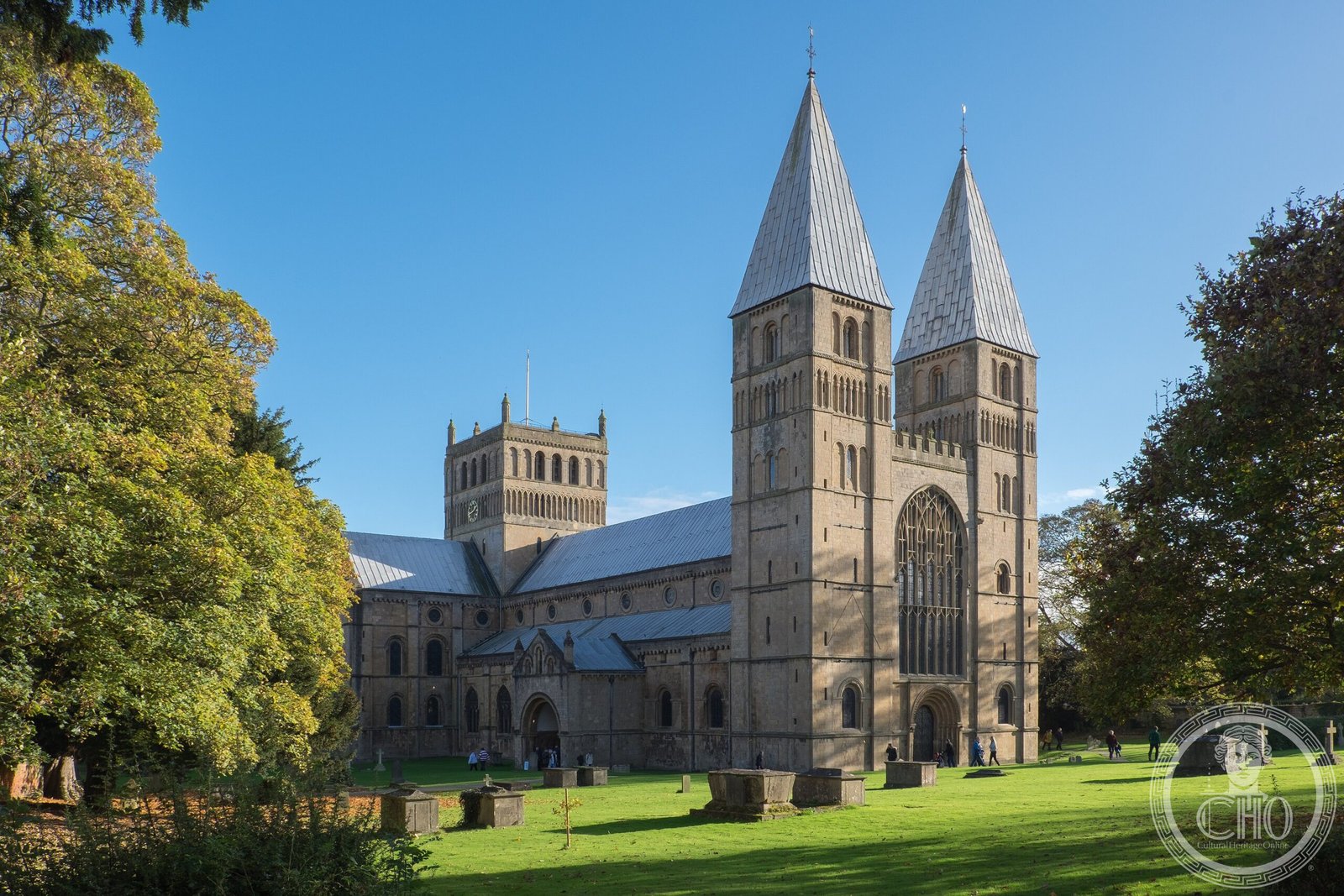
A cathedral born from a medieval archbishop’s vision, Southwell Minster stands as a masterwork of Romanesque and Gothic architecture. Its exceptional carved chapter house and rood screen exemplify the finest ecclesiastical craftsmanship of the English Middle Ages.
At a glance
The Cathedral and Parish Church of the Blessed Virgin Mary serves as the seat of the bishop of Southwell and Nottingham and the mother church of its diocese. This Grade I listed building integrates architectural styles spanning nearly a millennium, from its Romanesque core to its soaring Gothic additions.
History
Archbishop Oscytel founded the original church in 956. When substantially rebuilt between 1108 and around 1150, it emerged in Romanesque style—the form that still dominates the minster today. The chancel underwent its own transformation from 1234 to 1251, recast in Early English Gothic.
During the Middle Ages, Southwell occupied a singular role within the vast diocese of York. Though never formally a cathedral, it functioned as the mother church for its region, a position shared by Ripon Cathedral and Beverley Minster elsewhere in Yorkshire. The archbishop of York maintained a palace beside it.
The church remained collegiate from its inception until 1841, surviving the English Reformation through two dissolutions and re-foundations. In 1884, it was elevated to cathedral status when a new diocese was created for Nottinghamshire and Derbyshire. The Diocese of Derby’s establishment in 1927 later subdivided this territory.
What you see
Romanesque solidity frames the building’s essential character, visible in its massive walls and rounded arches. The 1234–1251 chancel introduces Early English Gothic refinement—pointed arches and heightened verticality.
Two features command attention. The chapter house, completed in 1288, displays carved foliage of exceptional quality—among the finest medieval stone carving in England. The rood screen rivals it in craftsmanship and presence, commanding the space between nave and choir.
Cultural significance
Southwell Minster represents a continuity of sacred purpose spanning over a thousand years. Its survival and transformation reflect the shifting religious and political landscape of medieval and early modern England. The exceptional quality of its carved decoration positions it among England’s supreme examples of medieval ecclesiastical art.
Key facts
- Country: United Kingdom
- Location: Southwell, Nottinghamshire, England
- Coordinates: 53.07666667, −0.95388889
- Founded: 956 by Archbishop Oscytel of York
- Current status: Grade I listed building; cathedral since 1884
- Chapter house completed: 1288
Practical information & getting there
Southwell Minster remains an active cathedral and parish church. For current opening hours, service times, and visitor information, consult the cathedral’s official website or contact the visitor centre on-site.
Sources & resources
Find it on the map
See this place and what’s around it →📷 Become a Cultural Heritage Online photographer
Share your photos of places: they stay published under your name as the author. The more they're seen, the more you get noticed — and soon a contest will reward the most appreciated photos.
Log in or sign up free to add a photoIs this page about you?
This page is read by travellers and heritage enthusiasts who find it on Google. Tell us how you are connected to this place and we will take it from there.