
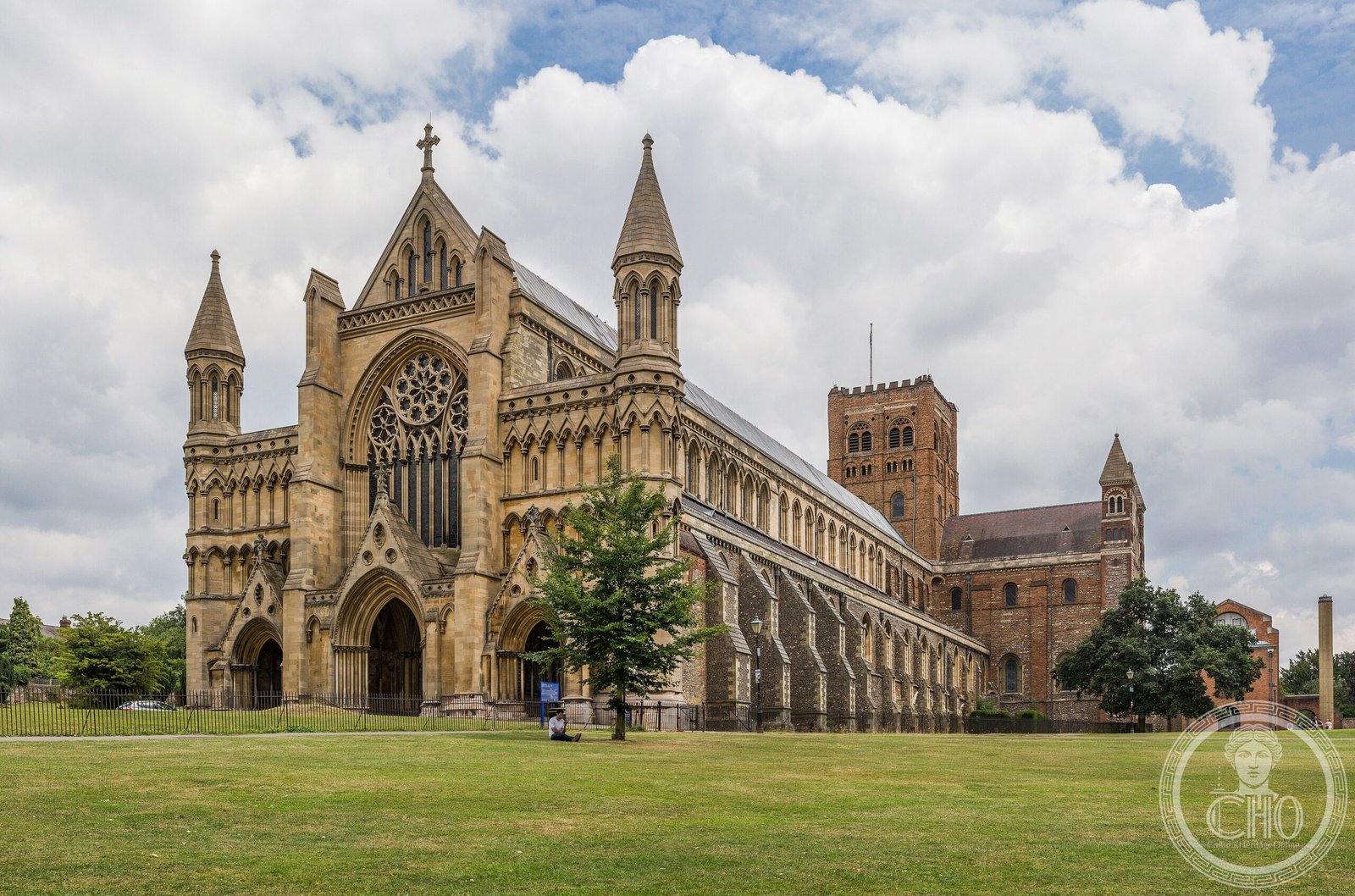
A Norman church with England’s longest cathedral nave, this former abbey seamlessly balances medieval grandeur with parish-church accessibility.
At a glance
St Albans Cathedral stands as both a spiritual landmark and architectural anomaly. Officially the Cathedral and Abbey Church of St Alban, it operates uniquely as a cathedral church with parish responsibilities. Its 85-metre nave—the longest of any English cathedral—dominates the Hertfordshire skyline and draws visitors seeking medieval atmosphere and ecclesiastical history.
History
The site is probably founded in the 8th century, though the present building dates from Norman times, circa 11th century. The abbey functioned as a monastic centre until the Dissolution of the Monasteries in the 16th century, when it ceased to be an abbey. For three centuries it served as a parish church before receiving cathedral status in 1877—a late elevation reflecting both its architectural distinction and historical importance to the Diocese of St Albans.
What you see
The cathedral presents a masterwork of Romanesque design enhanced by later interventions. Norman proportions establish the structural foundation, while Gothic modifications and 19th-century restorations layer medieval spirituality with Victorian sensibility. The extraordinary nave length creates an unusually spacious interior, characteristic of Norman ambition yet refined through centuries of use and revision.
Cultural significance
St Albans Cathedral represents a rare fusion of monastic grandeur and parish intimacy. Its transition from abbey to cathedral exemplifies the English Reformation’s architectural legacy, while its continued dual function—cathedral and parish church—reflects genuine community integration unusual among England’s major ecclesiastical institutions.
Key facts
- Location: St Albans, United Kingdom (51.750556°N, 0.342222°W)
- Nave length: 85 metres—longest in any English cathedral
- Architecture: Norman/Romanesque (11th century) with Gothic and 19th-century additions
- Founded: Probably 8th century; present building 11th century
- Status change: Abbey until 1536; parish church 1536–1877; cathedral from 1877
Practical information & getting there
The cathedral welcomes visitors as an active parish church. It functions under a dean serving as rector with full parish responsibilities. Contact the cathedral directly for service times, visiting hours, and any access information.
Sources & resources
Find it on the map
See this place and what’s around it →📷 Become a Cultural Heritage Online photographer
Share your photos of places: they stay published under your name as the author. The more they're seen, the more you get noticed — and soon a contest will reward the most appreciated photos.
Log in or sign up free to add a photoIs this page about you?
This page is read by travellers and heritage enthusiasts who find it on Google. Tell us how you are connected to this place and we will take it from there.