
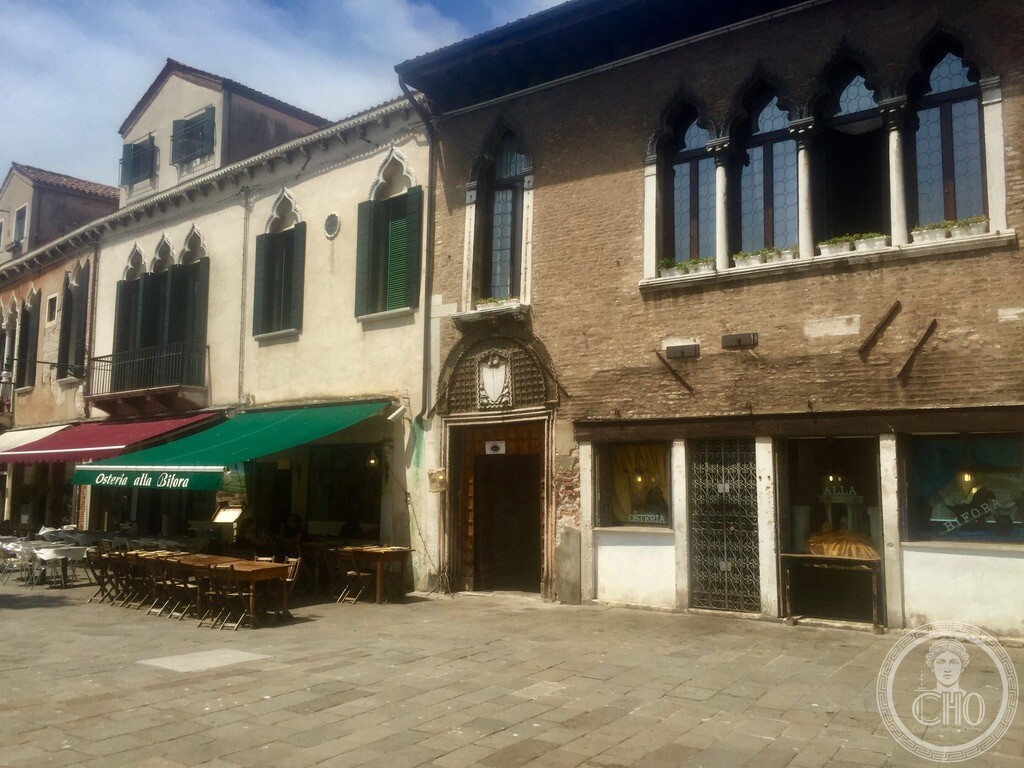
Osteria Alla Bifora is a traditional Venetian osteria located in the Dorsoduro sestiere, one of the most characterful and architecturally cohesive districts of Venice. Taking its name from the bifora — the distinctive two-light Gothic window that punctuates the facades of Venetian palaces — the osteria situates itself within the layered visual and social history of a neighbourhood that is home to the Accademia galleries, the Peggy Guggenheim Collection, and the Campo Santa Margherita, one of Venice’s most lively public squares.
At a glance
- Type
- Traditional Venetian osteria (wine bar and restaurant)
- Period
- Contemporary establishment in a historic setting
- Style
- Venetian, cicchetti and wine tradition; informal
- Location
- Dorsoduro, Venice, Italy
- Coordinates
- 45.4341° N, 12.3233° E
Overview
Dorsoduro is one of Venice’s six historic sestieri, occupying the southern part of the city between the Grand Canal to the north and the Giudecca Canal to the south. Its name — meaning “hard back” or “hard ridge” — reflects the relatively firm ground beneath it, which made it one of the most stable zones of the early city. The district balances an active residential community with world-class cultural institutions, and its canal-side streets and campos are lined with a density of historic Gothic and Renaissance architecture unmatched outside the city centre. Osteria Alla Bifora takes its identity from this context, positioning itself as a place shaped by Venetian architectural heritage.
History
The bifora window — a pointed or rounded arch divided by a central column into two lights — is one of the defining motifs of Venetian Gothic architecture, appearing on the Ca’ d’Oro, the Palazzo Ducale, and countless residential palaces throughout the city. The form flourished from the 13th to the 15th century during Venice’s commercial and artistic peak, when Levantine and Byzantine influences fused with northern Gothic in a style that became uniquely Venetian. An osteria named after this architectural element signals a deliberate identification with the city’s medieval material culture and with the tradition of convivial hospitality that the osteria represented for working Venetians long before tourism defined the city’s economy.
What you see
Two awnings, one deep red and one green, shade a run of outdoor tables set directly on Campo Santa Margherita’s paving. Above the door, the pointed Gothic window that gives the osteria its name looks out over the square from the piano nobile; the ground floor keeps its worn brick and stone doorframe, with the osteria’s name lettered across the green awning. Cicchetti and Venetian wines are served at the bar and at the outdoor tables, in the everyday rhythm of one of the city’s largest and least touristic squares.
Cultural significance
Osterie in Dorsoduro serve a district that is at once a neighbourhood for Venetian students and long-term residents and a destination for culturally serious visitors drawn by the Accademia and Guggenheim. Establishments that maintain authentic wine-and-cicchetti service in this environment contribute to the social continuity of a city under sustained pressure from mass tourism and residential depopulation.
Practical information
- Address
- Dorsoduro, Venice (near Campo Santa Margherita area; coordinates 45.4341° N, 12.3233° E)
- Notes
- Traditional osteria format; cicchetti served at the bar, seated dining also available
Getting there
Take vaporetto line 1 or 2 to Ca’ Rezzonico, or line 5.1/5.2 to Accademia. From either stop, the Dorsoduro neighbourhood and Campo Santa Margherita are within a 5–10 minute walk through the sestiere’s calli and campielli. Water taxi services are also available to any private landing near the destination.
Sources & resources
Photo gallery
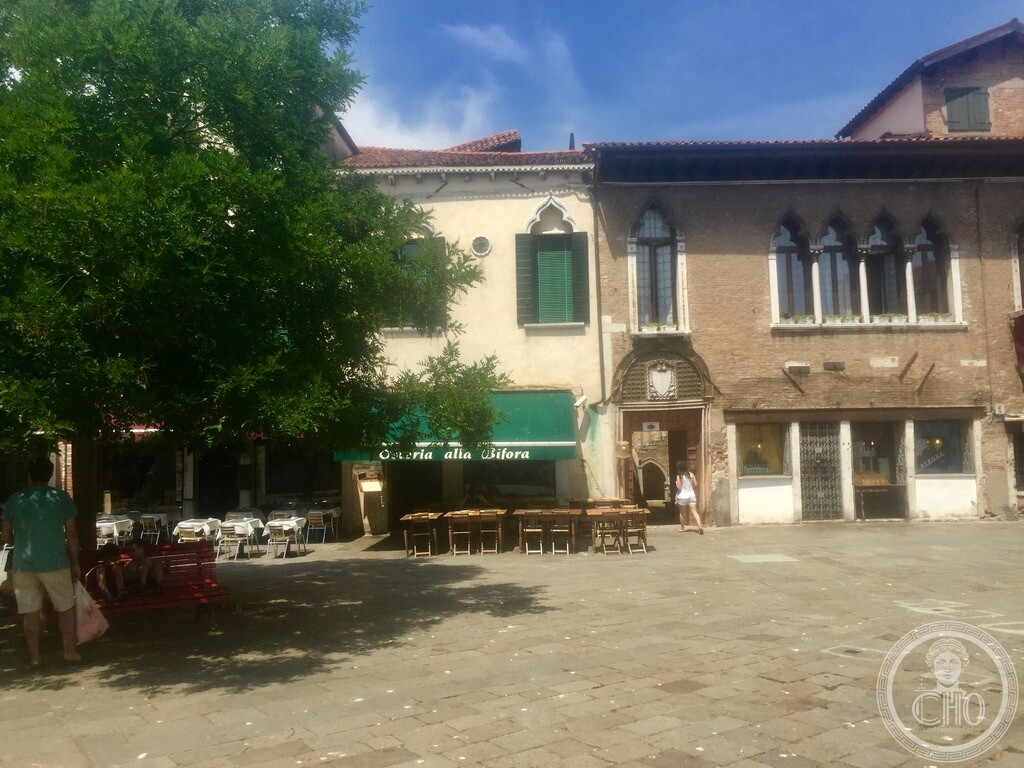
Photographs contributed by a Cultural Heritage Online member.
Find it on the map
See this place and what’s around it →📷 Become a Cultural Heritage Online photographer
Share your photos of places: they stay published under your name as the author. The more they're seen, the more you get noticed — and soon a contest will reward the most appreciated photos.
Log in or sign up free to add a photo