
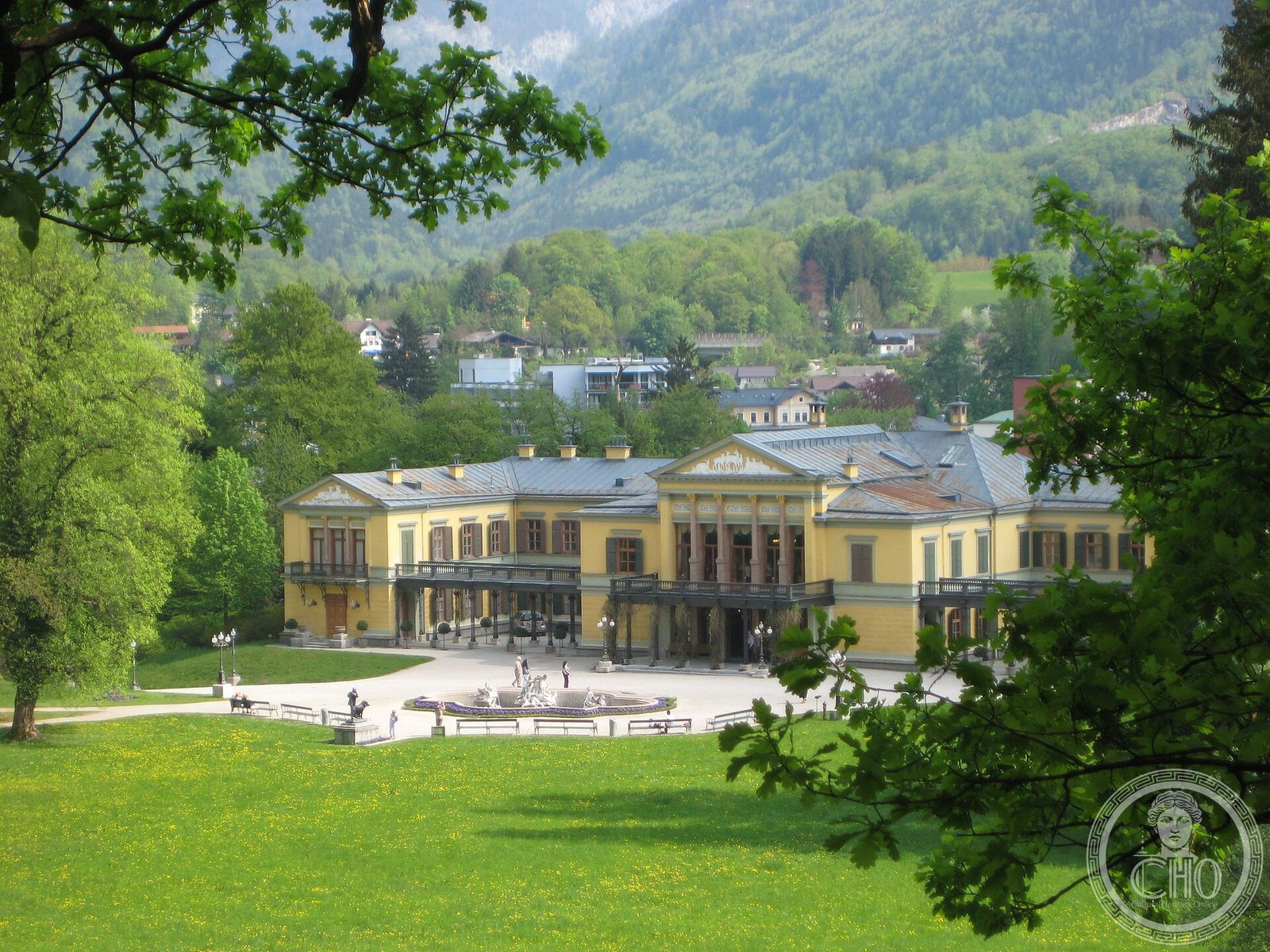
The Kaiservilla is the former summer residence of Emperor Franz Joseph I of Austria in Bad Ischl, Salzkammergut. Built in the mid-19th century as a wedding gift from Archduchess Sophie to the imperial couple, the villa became the place where Franz Joseph spent every summer for over six decades, and where he signed the declaration of war that triggered the First World War in July 1914.
At a glance
- Type
- Imperial summer villa and museum
- Period
- Constructed 1853–1854; used by Habsburg court until 1914
- Style
- Neo-classical with Biedermeier interiors
- Location
- Jainzen 38, 4820 Bad Ischl, Upper Austria
- Coordinates
- 47.7151° N, 13.6207° E
Overview
Set in a forested park above the Traun River on the outskirts of Bad Ischl, the Kaiservilla embodies the Habsburg court’s attachment to the Salzkammergut lake district, which served as the empire’s informal summer capital throughout the 19th century. The villa remained in the possession of the Habsburg family after 1918 and today belongs to the Archduke Markus and is open to visitors as a house museum, its interiors preserved largely as Franz Joseph left them. Bad Ischl itself was designated a UNESCO World Heritage Site as part of the Salzkammergut cultural landscape in 2023.
History
Archduchess Sophie gave the Ischl villa as a wedding gift to Emperor Franz Joseph I and Empress Elisabeth (Sisi) upon their marriage in 1854, cementing the imperial family’s decades-long connection to the spa town. Franz Joseph visited every summer without exception, using the villa as a retreat for hunting in the surrounding mountains and for informal diplomacy away from the Vienna court. It was here, on 28 July 1914, that Franz Joseph signed the declaration of war against Serbia — a document that set in motion the chain of events leading to the First World War. The villa has remained Habsburg family property since the fall of the empire.
What you see
The villa is built in a modest neo-classical style that belies its imperial status, reflecting Franz Joseph’s famously austere personal tastes — the emperor slept on a narrow military cot even here. Interior rooms preserve the original furniture, hunting trophies, family portraits, and personal effects of the imperial couple, offering an intimate portrait of Habsburg domestic life. The surrounding park, with its mature trees and views over the Traun valley, is open for walking. A separate museum building displays imperial memorabilia.
Cultural significance
The Kaiservilla is one of the few Habsburg imperial residences still owned by the family and preserved in near-original condition, giving it exceptional historical authenticity. As the place where the First World War was formally initiated, it carries a weight of European historical memory beyond its architectural merit. Its inclusion within the Salzkammergut UNESCO World Heritage landscape further underlines its international cultural importance.
Practical information
- Address
- Jainzen 38, 4820 Bad Ischl, Austria
- Hours
- Open seasonally (typically May–October); check the official Kaiservilla website for current schedule and admission fees
- Admission
- Paid entry; guided tours available
Getting there
Bad Ischl is served by regional train from Salzburg (approx. 1 h 20 min via Attnang-Puchheim). By car, the B158 road connects Bad Ischl to Salzburg (55 km) and to Hallstatt (20 km). The Kaiservilla park entrance is a 15-minute walk from the Bad Ischl town centre.
Sources & resources
See the place
Find it on the map
See this place and what’s around it →📷 Become a Cultural Heritage Online photographer
Share your photos of places: they stay published under your name as the author. The more they're seen, the more you get noticed — and soon a contest will reward the most appreciated photos.
Log in or sign up free to add a photoIs this page about you?
This page is read by travellers and heritage enthusiasts who find it on Google. Tell us how you are connected to this place and we will take it from there.