
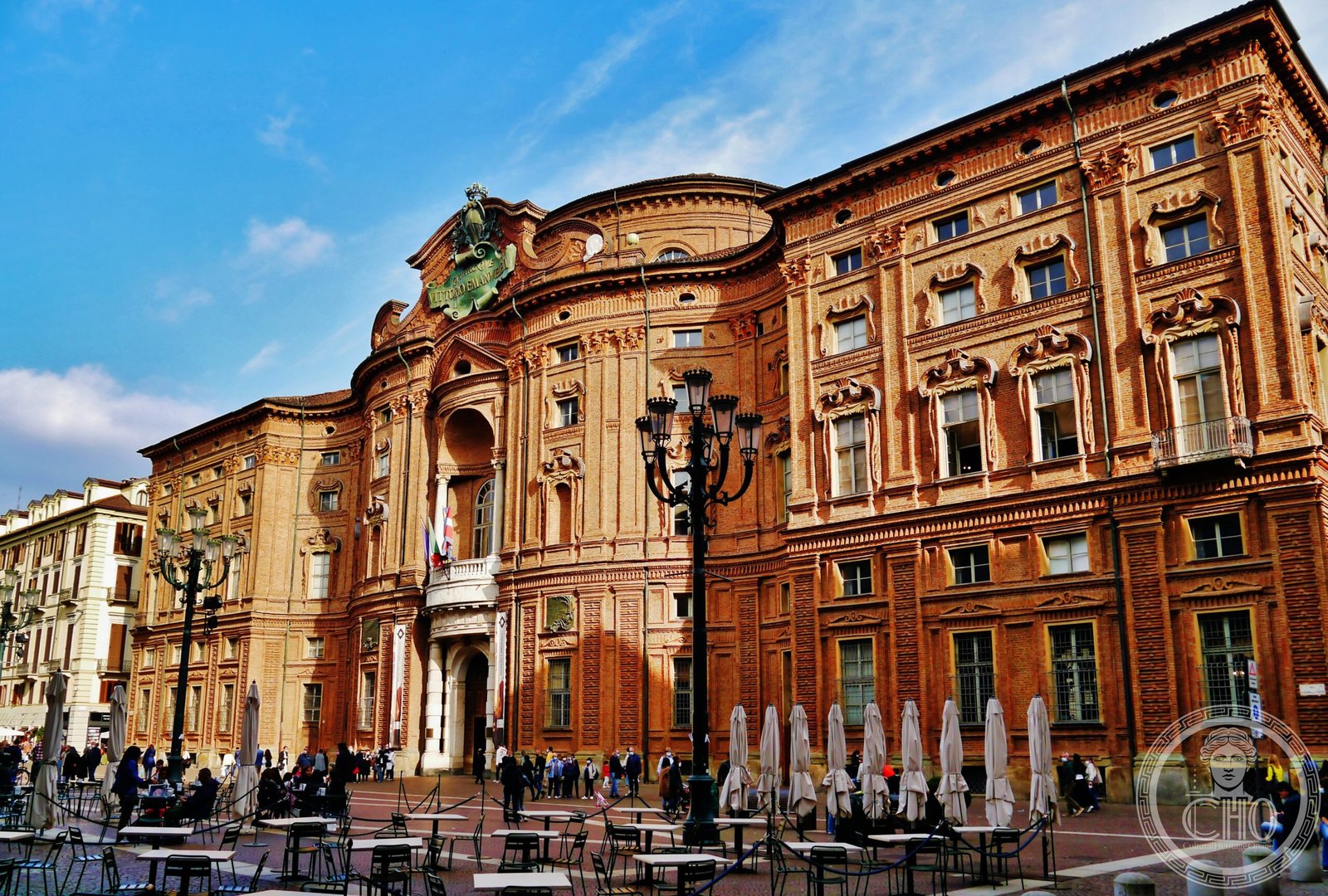
Palazzo Carignano is a landmark Baroque palace in central Turin designed by Guarino Guarini and built from 1679 for the Carignano branch of the House of Savoy. Its extraordinary undulating brick façade — the only example of civic Baroque architecture applying the concave-convex-concave rhythm to a secular building — made it an instant model for Piedmontese architecture. The palace was the birthplace of King Victor Emmanuel II (1820) and served as the Chamber of Deputies of the Kingdom of Sardinia from 1848 to 1861; today it houses the National Museum of the Risorgimento, the most important museum dedicated to Italian unification.
At a glance
- Type
- Baroque royal palace; national museum
- Period
- Construction begun 1679; eastern wing added 18th century
- Style
- Baroque (Guarini); later additions in Neoclassical register
- Location
- Via Accademia delle Scienze 5, Turin, Piedmont, Italy
- Architect
- Guarino Guarini (original design, 1679)
- Patron
- Emmanuel Philibert, Prince of Carignano
- Current use
- National Museum of the Risorgimento
- Coordinates
- 45.0690° N, 7.6853° E
- UNESCO
- World Heritage Site, 1997 — Residences of the Royal House of Savoy
Overview
Palazzo Carignano stands on Via Accademia delle Scienze in Turin’s historic centre, a short block from Piazza San Carlo. Built entirely in brick — an unusual choice for a palace of this ambition — it demonstrates Guarini’s mastery of complex geometry applied to secular architecture. The building is inseparable from the history of Italian unification: its chambers debated the Statuto Albertino (1848) and produced many of the votes that led to the proclamation of the Kingdom of Italy in 1861.
History
Construction began in 1679 on a commission from Emmanuel Philibert, Prince of Carignano, and was directed by Guarino Guarini, the mathematician-priest who had already transformed Turin’s skyline with the Chapel of the Holy Shroud. The palace was completed in stages, with the eastern façade — more restrained in character — added later. On 14 March 1820 it became the birthplace of Victor Emmanuel II, the future first king of a united Italy. Between 1848 and 1861 its grande salle hosted the elected Chamber of Deputies of the Kingdom of Sardinia, making it the parliamentary cradle of modern Italy.
What you see
The western façade on Piazza Carignano is Guarini’s tour de force: a continuous undulating surface of brick and stone that alternates concave and convex curves, borrowing the rhythm from Borromini’s Roman church façades but scaling it to a grand secular context. Interior frescoes by Stefano Legnani and stucco busts by Pietro Somazzi adorn the principal rooms. The Museum of the Risorgimento fills the historic chambers with documents, uniforms, portraits, weapons, and period objects tracing the story of Italian unification from the 18th-century reform movements to 1870.
Cultural significance
As the birthplace of Victor Emmanuel II and the seat of the Sardinian Parliament, Palazzo Carignano is arguably the single building most closely identified with the Risorgimento. Its UNESCO inscription in 1997 as part of the Savoy Residences recognises both its architectural originality — Guarini’s façade is unique in European Baroque — and its central role in European political history of the 19th century.
Practical information
- Address
- Via Accademia delle Scienze 5, 10123 Torino TO, Italy
- Museum
- National Museum of the Risorgimento Italiano; check official website for current hours and admission
Getting there
The palace is in Turin’s pedestrianised historic centre, a 10-minute walk from Turin Porta Nuova railway station. GTT metro line 1 serves nearby Porta Nuova. Multiple tram and bus routes stop along Via Po and Corso Vittorio Emanuele II, within a few minutes’ walk. The palace is also easily reached on foot from Piazza Castello (5 minutes).
Sources & resources
See the place
Find it on the map
See this place and what’s around it →📷 Become a Cultural Heritage Online photographer
Share your photos of places: they stay published under your name as the author. The more they're seen, the more you get noticed — and soon a contest will reward the most appreciated photos.
Log in or sign up free to add a photoIs this page about you?
This page is read by travellers and heritage enthusiasts who find it on Google. Tell us how you are connected to this place and we will take it from there.