
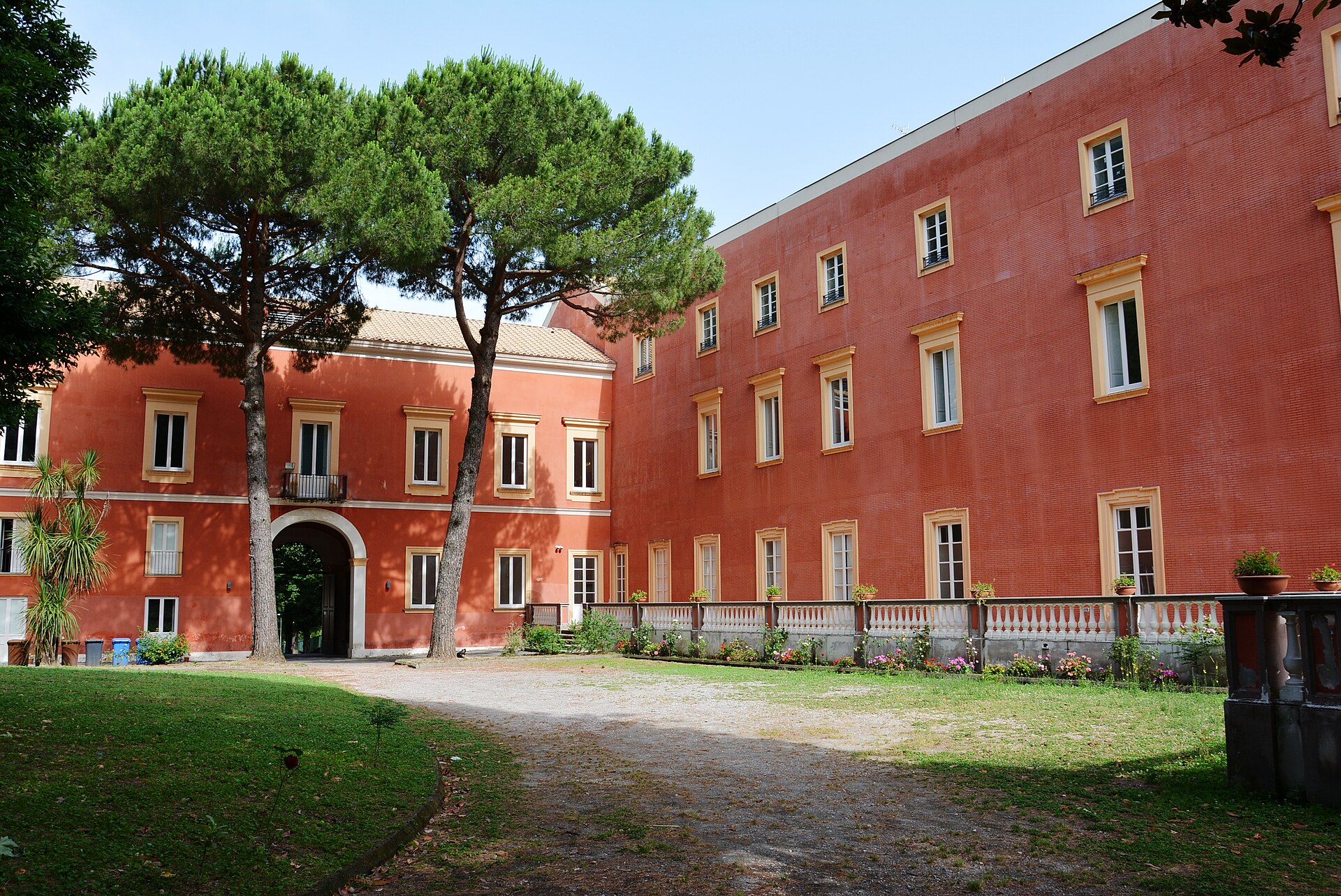
The Royal Palace of Quisisana is a historic royal residence at Castellammare di Stabia, on the southern shore of the Bay of Naples, whose name derives from the Latin phrase “qui si sana” — here one heals — reflecting the therapeutic mineral springs that made this location a favoured retreat for royalty and aristocracy. Originally a medieval royal hunting lodge, it was developed by the Bourbon kings of the Two Sicilies in the eighteenth and nineteenth centuries into a full summer palace set within an extensive park, exploiting both the mild climate and the celebrated mineral waters of Stabia.
At a glance
- Type
- Royal summer palace and park
- Period
- Medieval origin; Bourbon development 18th–19th century
- Style
- Neoclassical with earlier medieval core
- Location
- Castellammare di Stabia, Metropolitan City of Naples, Campania, Italy
- Coordinates
- 40.6852° N, 14.4893° E
Overview
Quisisana sits at the foot of Monte Faito above Castellammare di Stabia, a town historically famous for its mineral springs and for its ancient Roman predecessor, Stabiae, whose villas were buried by the eruption of Vesuvius in 79 AD. The palace became one of the preferred summer retreats of the Bourbon court of Naples, complementing the grander Reggia di Caserta for ceremonial functions with a more intimate and therapeutically oriented residence. Its park, extending across the hillside, connects the palace to the thermal spring area that gave the property its name and reputation.
History
The site’s royal history begins in the Angevin period, when the Kings of Naples established a hunting retreat here, exploiting forests on the slopes of Monte Faito. The name Quisisana appears in medieval documents as a reference to the healing properties of the local waters. Bourbon king Ferdinand I of the Two Sicilies significantly enlarged and formalized the complex in the late eighteenth and early nineteenth centuries, adding the neoclassical residential wings and commissioning landscape improvements to the park. The palace received notable royal and diplomatic visitors throughout the nineteenth century, and its therapeutic mineral water establishment attracted an international clientele alongside the court.
What you see
The palace complex comprises a central residential block with neoclassical façades flanked by wings that housed courtly services, stables, and guest accommodation. The park, planted in the English landscape style fashionable among Italian royal courts in the early nineteenth century, contains specimen trees, fountains, and paths designed to frame views toward the bay and toward Vesuvius. The thermal spring infrastructure, partially surviving, represents the specific character of this royal residence as a place of leisure combined with the fashionable cure-culture of the period. The surrounding area of Castellammare retains the fabric of its nineteenth-century spa-town development.
Cultural significance
Quisisana represents the intersection of royal patronage, therapeutic culture, and the Romantic-era valorisation of landscape in the Kingdom of the Two Sicilies. Together with the Reggia di Portici, the Reggia di Caserta, and the Palazzo Reale di Napoli, it forms part of a network of Bourbon royal residences that defined the cultural geography of Campania and established lasting patterns of aristocratic leisure in the volcanic landscape around the Bay of Naples.
Practical information
The palace is located in Castellammare di Stabia. For current visiting arrangements, opening hours, and access conditions, check with the Comune di Castellammare di Stabia or the relevant regional heritage authority (Regione Campania / MiC). Parts of the park may be accessible independently.
Getting there
Castellammare di Stabia is served by the Circumvesuviana railway (Naples–Sorrento line), with frequent departures from Naples Centrale; journey time approximately 40 minutes. By car, take the A3 motorway (Naples–Salerno) and exit at Castellammare di Stabia. The palace sits above the town centre, reachable on foot uphill or by local transport. A cable car (funivia) connecting Castellammare to Monte Faito departs near the town centre and passes the general area.
Sources & resources
See the place
Find it on the map
See this place and what’s around it →📷 Become a Cultural Heritage Online photographer
Share your photos of places: they stay published under your name as the author. The more they're seen, the more you get noticed — and soon a contest will reward the most appreciated photos.
Log in or sign up free to add a photoIs this page about you?
This page is read by travellers and heritage enthusiasts who find it on Google. Tell us how you are connected to this place and we will take it from there.