
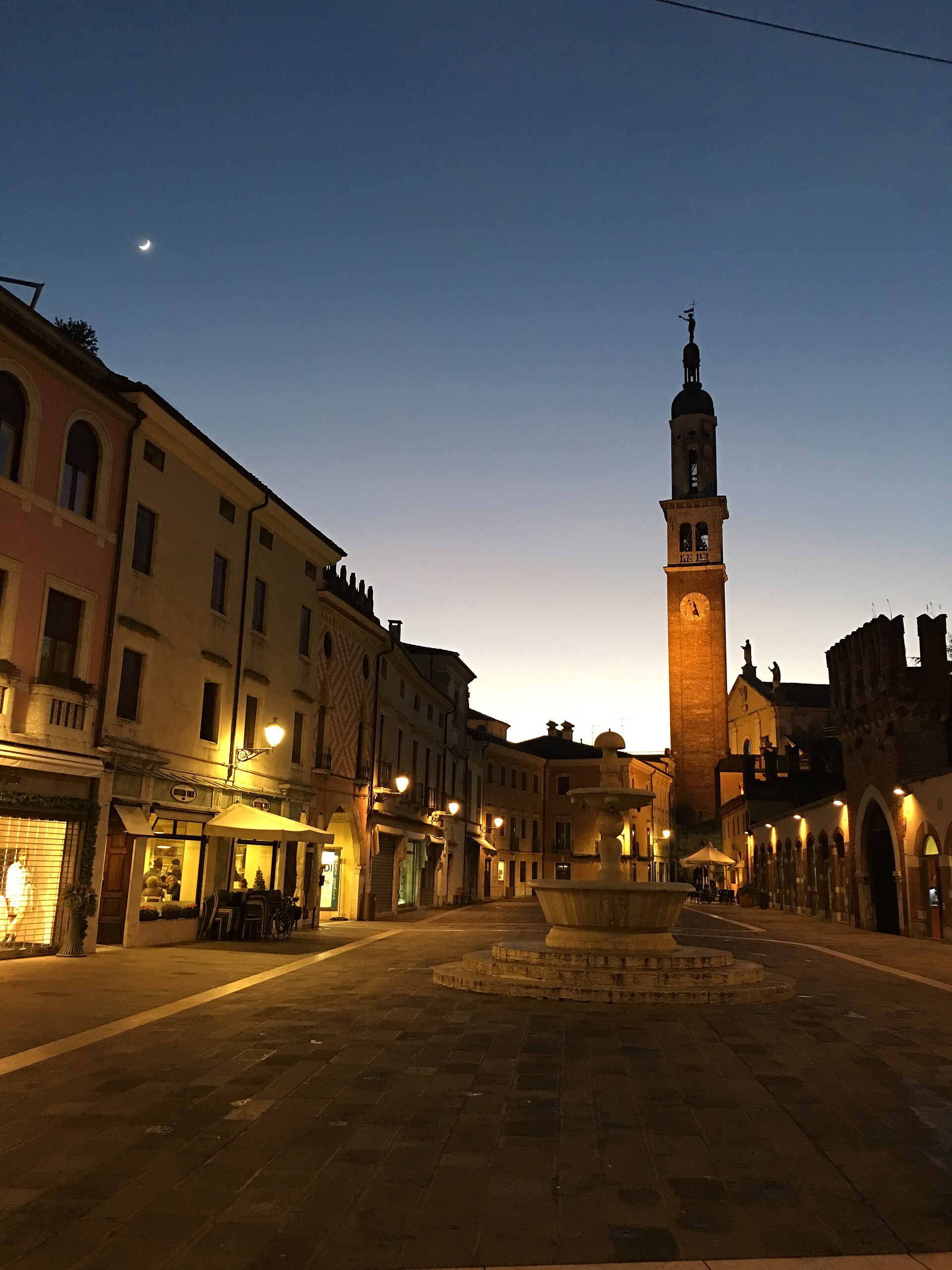
Thiene
Thiene is a town and comune in the province of Vicenza, in the Veneto region of northeastern Italy, situated approximately 75 kilometres west of Venice at the foot of the Piccole Dolomiti. Known for its medieval castle and the industrial heritage of the Val d’Astico, Thiene is also a gateway to the Altopiano di Asiago and the World War I memorials of the surrounding highlands.
At a glance
- Type
- Town and comune
- Province
- Vicenza, Veneto, Italy
- Period
- Medieval origins; industrialisation from the 19th century
- Style
- Gothic castle; Palladian villas in the surrounding territory
- Coordinates
- 45.7067° N, 11.4780° E
Overview
Thiene occupies a strategic position in the upper Vicenza plain, linking the industrial valleys of the sub-Alpine zone with the Palladian landscape of the Veneto lowlands. The town’s population of roughly 24,000 makes it one of the larger centres in the Altovicentino area, a district known for a dense network of small and medium manufacturers producing textiles, machinery and footwear. Its historic centre preserves the Castello Porto-Colleoni, one of the best-conserved late-Gothic fortified residences in the Veneto.
History
Settlement in the Thiene area dates to prehistoric and Roman times, as evidenced by finds in the surrounding countryside. The medieval castle was constructed in the late fourteenth century for the Porto family, a prominent Vicentine dynasty, and subsequently passed to the Colleoni of Bergamo — relatives of the celebrated condottiere Bartolomeo Colleoni. During the era of the Venetian Republic, Thiene functioned as a market town serving the agricultural and pastoral economy of the Val d’Astico. The nineteenth century brought significant change: the arrival of textile mills transformed Thiene into one of the early nodes of industrial development in the Veneto, a process that accelerated after Italian unification.
What you see
The Castello Porto-Colleoni (c. 1390) is the town’s most arresting monument — a crenellated quadrangular complex with corner towers and a frescoed interior hall retaining late-Gothic decorative cycles. The town centre around Piazza Ferrarin retains a modest but coherent fabric of palazzi, arcaded streets and the collegiate church of Sant’Maria Assunta. The surrounding territory is dotted with Venetian-era villas, including Villa Porto, now used as a public space and venue.
Cultural significance
Thiene’s castle is one of the few secular Gothic buildings in the Veneto to survive largely intact, making it a significant monument for the study of late-medieval noble domestic architecture in northeastern Italy. The Altovicentino industrial district around Thiene is also of historical interest as one of the earliest examples of the “diffuse industrialisation” model that would become a defining feature of the Veneto economy in the twentieth century.
Practical information
- Castello Porto-Colleoni
- Guided visits available; check official website for current hours and booking
- Tourist office
- IAT Thiene, Piazza Ferrarin
Getting there
Thiene is served by the Vicenza–Schio railway line, with regular trains from Vicenza (journey approximately 25 minutes). By road, the SP46 connects Thiene to Vicenza to the south and Schio to the north. The town is approximately one hour by train from Verona and 90 minutes from Venice.
Sources & resources
See the place
Find it on the map
See this place and what’s around it →📷 Become a Cultural Heritage Online photographer
Share your photos of places: they stay published under your name as the author. The more they're seen, the more you get noticed — and soon a contest will reward the most appreciated photos.
Log in or sign up free to add a photo